Archery Blog
Compound Bow Draw Length: Master Yours in 7 Steps
Jun
The right compound bow draw length is the single setting that decides whether you shoot tight groups or fight your bow every time you draw it. Set it half an inch too long and your bow arm collapses on every shot. Set it half an inch too short and you bleed about five feet per second of arrow velocity and most of your forgiveness. Yet a 2023 ATA dealer survey found that more than four out of ten new compound owners walk out of a shop with a draw length set by guesswork, not measurement.
This guide walks you through every method real shops and pro shooters use, the symptoms that tell you your current setting is wrong, and how to actually adjust it on the bows people are buying in 2026.
What Compound Bow Draw Length Actually Measures
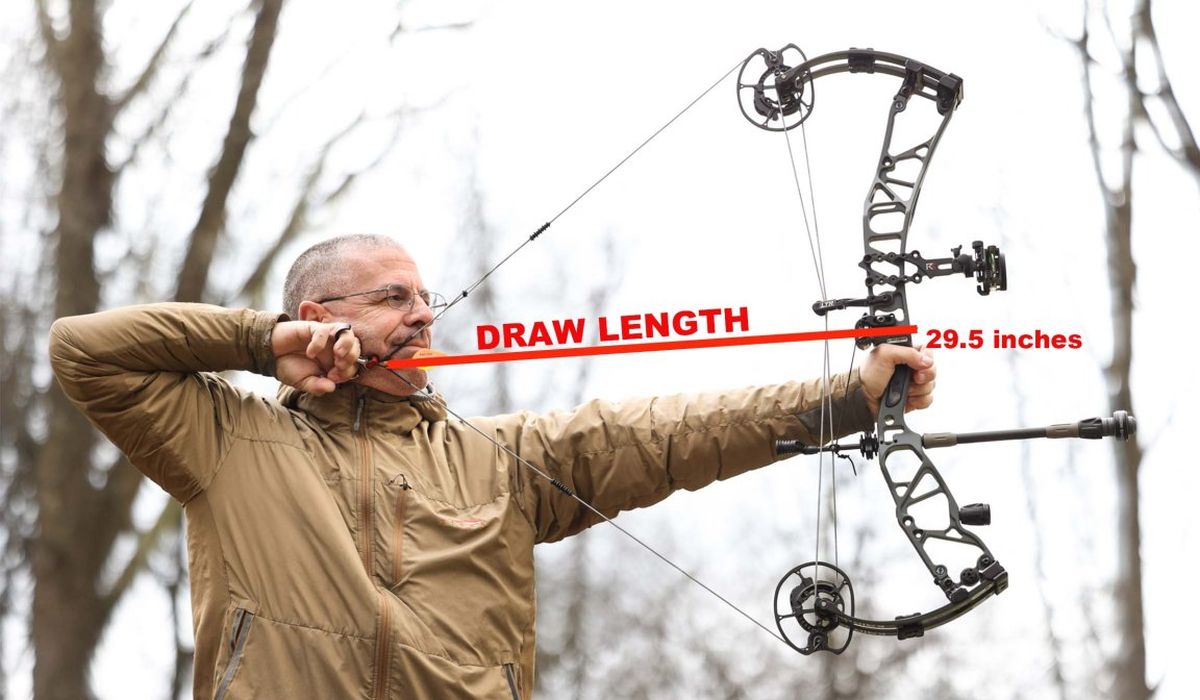
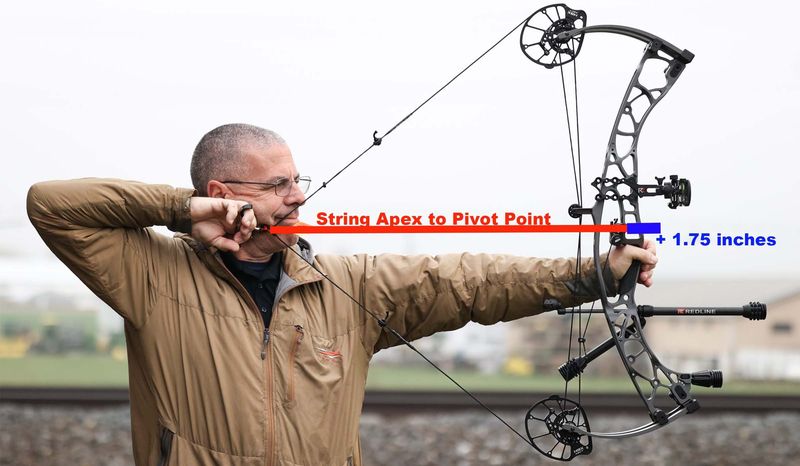
Draw length is the distance, in inches, from the deepest part of the bowstring at full draw back to the pivot point of the grip — plus 1.75 inches. That extra 1.75 inches is the AMO (Archery Manufacturers Organization) standard, baked into every compound bow spec sheet since the 1970s. When a Hoyt or a Mathews lists a “28-inch draw,” that number already includes the 1.75-inch offset.
Why does the spec include a fudge factor? Because measuring from the grip pivot would make the number depend on grip thickness, riser shape, and where you choose to call the throat. Adding 1.75 inches gave the industry one universal number every manufacturer, retailer, and shooter could agree on.
How to Measure Draw Length: The Wingspan Method
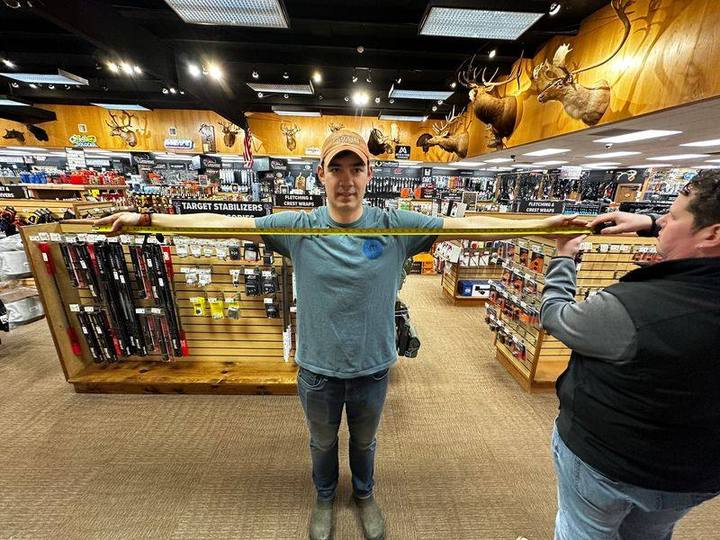
The wingspan formula is the fastest reliable estimate for picking a starting draw length. Stand against a wall, arms straight out at shoulder height, palms forward but not strained. Have a partner measure tip-to-tip from your middle fingers across your chest. Divide by 2.5. That number is your starting draw length in inches.
Example: a 70-inch wingspan divided by 2.5 lands you at 28 inches. A 72.5-inch wingspan gives you 29. If you fall between sizes — say 28.4 — round down rather than up. Long is more dangerous than short.
The math holds up because the human wingspan-to-draw ratio stays surprisingly constant across body types. A 5’6″ archer with long arms and a 6’2″ archer with short arms can both land at the same 29-inch draw. Don’t pick draw length off a “height chart” — pick it off the wingspan.
The Anchor-Point Method: A Better Real-World Check
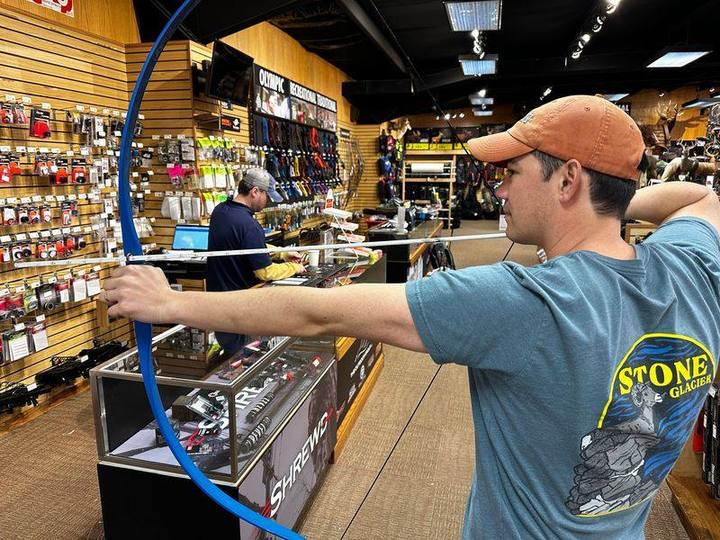
The wingspan formula gets you close. The anchor-point method confirms it. Stand sideways to a wall, bow arm extended toward it as if drawing. Have a partner measure from the corner of your mouth — your anchor — straight out to where your knuckles meet the imaginary string. That distance is your true mechanical draw length.
Pro shop fitters use this method because it accounts for shoulder mobility, neck length, and the actual position your hand wants to find at full draw. Wingspan tells you what your body could do. Anchor measurement tells you what it will do.
Watch your archery stance during the measurement. A closed stance shortens the apparent draw length by an inch or more compared to a square stance. Measure in the stance you actually shoot from, not whatever your fitter prefers.
Compound Bow Draw Length Chart by Wingspan
Here is the wingspan-to-draw chart real shops post on the wall. Use it as a starting point, not a final answer — every chart is wrong for the shooter who has unusually long forearms or a short neck.
| Wingspan (in) | Suggested Draw Length | Typical Height Range |
|---|---|---|
| 60 – 62 | 24″ | 5’0″ – 5’2″ |
| 63 – 65 | 25″ – 25.5″ | 5’2″ – 5’4″ |
| 66 – 68 | 26″ – 26.5″ | 5’5″ – 5’7″ |
| 69 – 71 | 27″ – 27.5″ | 5’8″ – 5’10” |
| 72 – 74 | 28″ – 28.5″ | 5’11” – 6’1″ |
| 75 – 77 | 29″ – 29.5″ | 6’1″ – 6’3″ |
| 78 – 80 | 30″ – 30.5″ | 6’3″ – 6’5″ |
| 81+ | 31″+ | 6’5″+ |
This is a draw length chart, not a draw length verdict. Treat the number as your opening bid. The shot you make at full draw, with eyes closed, settling into the wall — that tells the real story.
Draw Length Too Long: The Symptoms That Wreck Accuracy
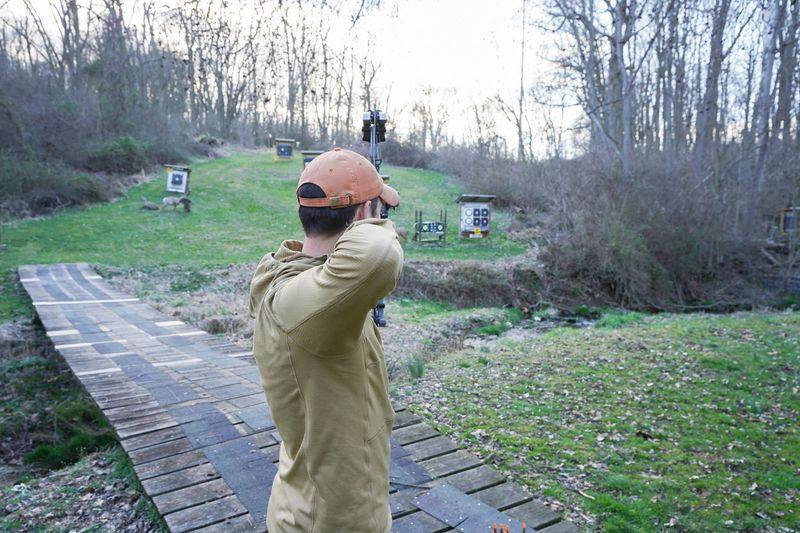
The single most common compound bow setup error is a draw length that runs too long. New shooters chase speed and reach for an extra inch. Big mistake. Three tells say your draw is too long: a bow arm that locks straight or hyperextends, a head that tilts forward to meet the string, and an anchor that wants to creep back behind your ear instead of settling at the corner of your mouth.
Long draw also kills the wall. Compound cams give you a hard stop only when the cables roll into their valley. Stretched past your real draw, you sit on the front side of the cam wall, never feeling the lock that makes back tension possible. Every shot becomes a creep. Every group opens up.
The truth is, most archers who think they shoot a 30 actually shoot a 28.5. Drop half an inch and watch your groups shrink.
Draw Length Too Short: The Hidden Power Loss
A draw length set too short feels comfortable. That’s the trap. You can hold longer, your anchor feels relaxed, and your release stays clean. But you have given up arrow speed and forgiveness without realizing it.
Every inch of lost draw length subtracts roughly 10 feet per second of arrow velocity on a modern compound. Lose half an inch and you lose five fps — enough to drop your maximum effective range on whitetails by about three yards. At 50 yards on a 3D target, that’s the difference between a 10 and an 8.
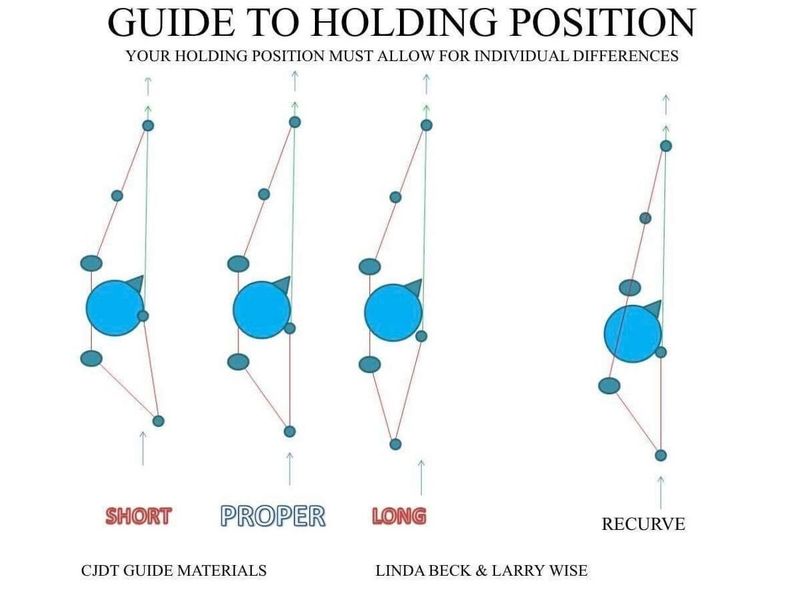
Short draw also crowds your release hand against your face. The string slaps your nose, your knuckles dig into your cheek, and your anchor point drifts every shot because there is no room to settle. The fix is a quarter to half inch longer — measured, not guessed.
How to Adjust Draw Length on a Compound Bow
Modern compound bows fall into three camps for adjustment. Knowing yours saves a trip to the shop.
Modular cams (Hoyt RX, Bowtech, PSE Evolve) use draw-specific modules that bolt onto the cam. Adjust in half-inch increments by swapping or rotating the module, no bow press required for most. Each module is stamped with its draw length range.
Rotating-module cams (Mathews Phase4, Mission, older Hoyts) let you adjust draw length by repositioning the module on a series of indexed holes. Loosen a screw, rotate the module to the new number, retorque. Five minutes of work.
Cable-attachment-point cams (some Diamond, older PSE) require a bow press to move the cable post. If your bow uses this system, take it to a shop. Pressing your own compound without the right fixtures is how strings get destroyed.
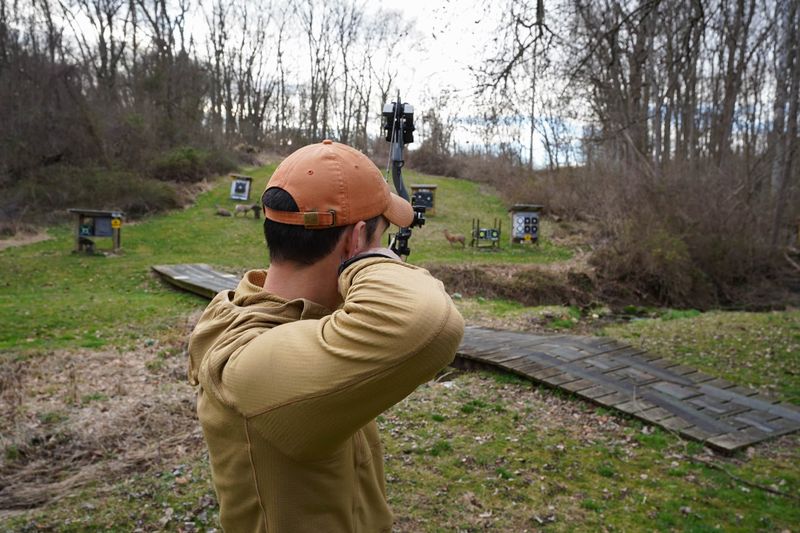
After every adjustment, recheck your peep height, your D-loop position, and your sight tape. Changing draw length by half an inch moves your peep about three-eighths of an inch up or down the string. Don’t shoot before re-tying that peep.
How Release Aids Change Your Effective Draw Length
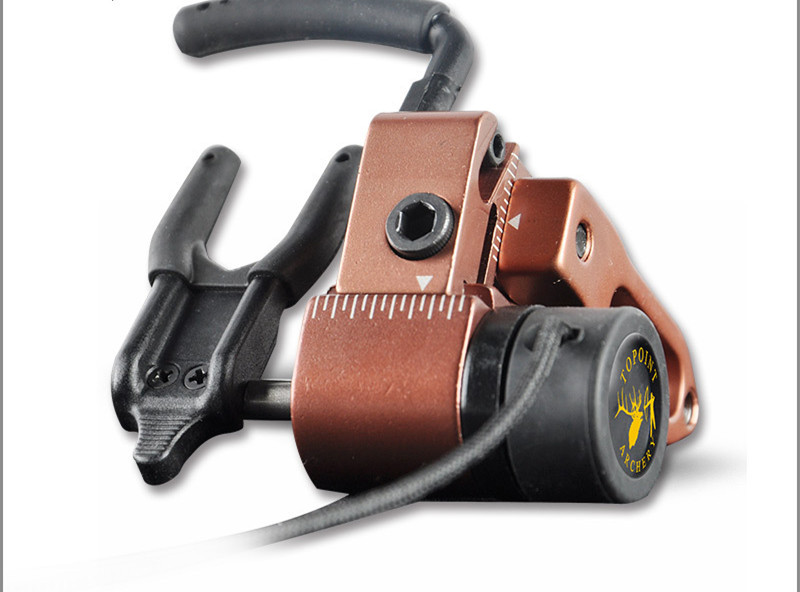
Switching from an index-finger release to a thumb-button release can add three quarters of an inch to your effective draw. Switching to a hinge can add another quarter inch on top of that. If you change release styles mid-season, your bow needs to come down half an inch to match — or you need to retrain a closer anchor.
This is why elite-level shooters set draw length last, after the release has been chosen and the anchor index has been built. Setting draw before release is backwards. Watch John Dudley explain the sequencing if you want to hear it from a coach who has fit Olympic shooters.
Three Mistakes Bow Shops Still Make at Fitting
Even good pro shops get draw length wrong, usually for one of three reasons. First, they measure in a tucked-up shooting stance instead of a square one, costing the archer half an inch. Second, they cap draw length at the longest module the in-stock bow supports — instead of ordering the right size cam. Third, they let the customer “feel” a longer draw because the speed reading on the chronograph looks better on the sales floor.
The truth is, most compound bow buyers leave with a draw set to the bow’s convenience, not the shooter’s body. Re-measure six months in. If your real draw is shorter than what is on your bow, the fix is free and your groups will thank you.
When to Re-Measure Draw Length
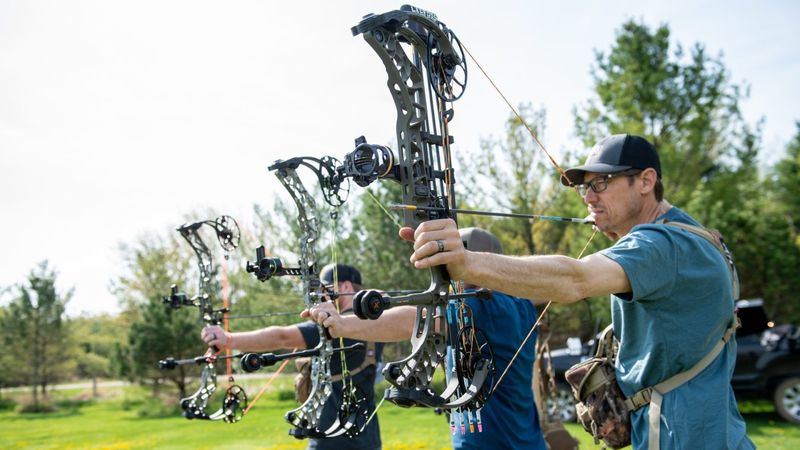
Draw length is not a one-time number. Shoulder mobility changes with age, training, and injury. A 35-year-old powerlifter who took up archery often shortens by a quarter inch within the first year as his back finally relaxes into proper alignment. A new shooter who builds up rotator-cuff strength may lengthen by the same amount over the same period.
Re-measure once a year, every spring before hunting season. Re-measure after any shoulder injury. Re-measure after switching release styles, switching anchor points, or switching from a target to a hunting setup. Five minutes with a tape now beats a full year of fighting a bow that no longer fits.
The Bottom Line on Draw Length
Get the draw length right and every other tuning step gets easier. Get it wrong and no amount of paper tuning, sight calibration, or arrow building will fix what is happening at full draw. Pick a number off the wingspan formula, confirm it with the anchor-point check, then verify it on the range with eyes-closed shots into a blank bale. If your bow arm wants to bend at full draw and your release hand wants to settle naturally at your jaw, you found it. If anything fights you, the number is wrong. Pick the right compound bow for your spec, then build the rest of the rig around the draw length, not the other way around.
Sources
- Outdoor Life — How to Measure Draw Length — Wingspan and anchor-point measurement walkthroughs with photos
- Nock On Archery — How to Measure Draw Length — John Dudley’s two-method coaching guide
- Mission Archery by Mathews — Finding Your Draw Length — Manufacturer wingspan formula and fit chart
- Bowhunting.com — How to Determine Draw Length — Why correct draw length matters for accuracy
- Archery Trade Association (ATA) — AMO standard reference for the 1.75-inch draw length offset
