Archery Blog
Arrow FOC Tuning: 7 Steps to Build Hard-Hitting Arrows
Jun
Arrow FOC tuning is the difference between a hunting arrow that punches through a shoulder blade and one that wedges in bone. The term — short for Front of Center — describes the percentage of an arrow’s total weight that sits in the front half of the shaft. Get it dialed and your arrow stabilizes faster in flight, drives deeper on impact, and forgives small form errors. Get it wrong and the same bow throws fliers you can’t explain.
This guide walks through the exact FOC tuning process Easton, Lancaster Archery, and field testers like John Dudley have spent decades refining. Seven steps. A formula, a balance test, and a real way to land between 10% and 18% — the band where most bowhunters see the cleanest pass-throughs.
What Arrow FOC Means — and Why It Matters
Front of Center is a balance ratio, not a weight. An 11% FOC arrow has 11% more of its total mass forward of the geometric center of the shaft than behind it. Higher numbers tip the balance toward the broadhead. Lower numbers pull it back toward the nock and fletching.
The reason FOC matters comes down to physics. A nose-heavy arrow flies like a dart — the front weight pulls the tail in line during release recovery, which damps oscillation and tightens groups past 40 yards. On impact, that forward mass keeps driving when the rear of the arrow tries to flex. Ashby Bowhunting Foundation testing on big game has shown FOC above 19% measurably improves penetration through heavy bone, while bare-shaft target archers chase numbers as low as 7% to maximize speed and forgiveness at short range.
The truth is, most bowhunters spend hours obsessing about kinetic energy and almost no time on balance. That’s backwards. KE without balance is a fast wobble.
The Arrow FOC Formula (And the Numbers That Actually Win)
The AMO formula is simple: FOC% = 100 × (A − L/2) ÷ L, where L is the arrow length from the nock throat to the back of the insert, and A is the distance from the nock throat to the balance point with the point and insert installed.
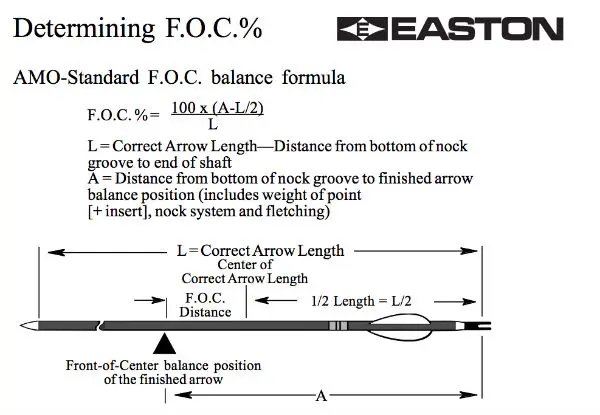
The ranges to plan around:
- 7–10% FOC — target archers prioritizing speed and flat trajectory at indoor distances.
- 10–15% FOC — standard hunting band. Most factory arrow setups land here.
- 15–20% FOC — high-FOC hunting builds. Better penetration, slightly slower, fly well past 60 yards.
- Above 20% FOC — Extreme FOC (EFOC). Reserved for traditional bowhunters chasing elk, moose, or African plains game.
Easton’s published guidance is that FOC under 7% produces erratic flight, and FOC over 18% starts to cost meaningful trajectory drop. Anything inside that 10–18% window is workable. Pick where you sit on the band based on what you hunt.
Step 1: Weigh Every Component Before You Build
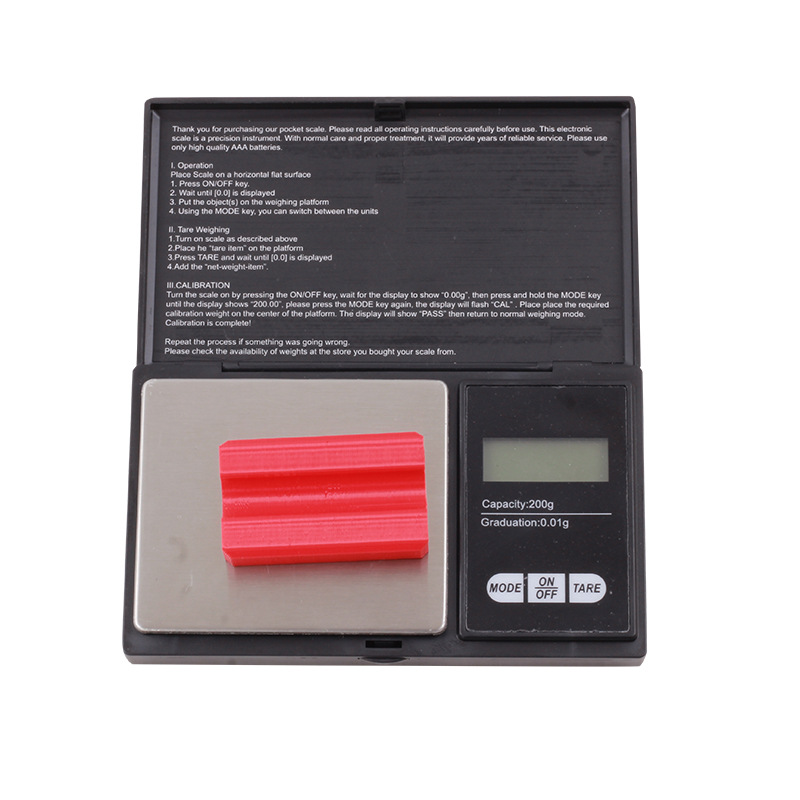
You cannot tune FOC on guesswork. Before you cut a shaft or glue an insert, weigh each piece on a grain scale: bare shaft, fletching, nock, insert, point. Manufacturer-stated weights are nominal — actual weights wander by 2–6 grains per part, and that spread is enough to swing FOC by a full point.
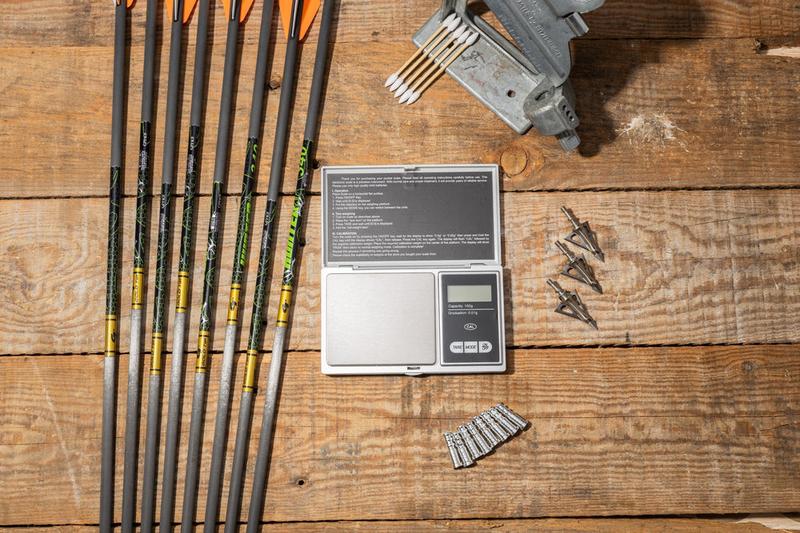
Sort your shafts within ±0.5 grains for a hunting dozen. The ones that are closest get fletched together as a matched flight set. The outliers go into your stump-shooting quiver. Pro tournament shooters do this religiously; bowhunters mostly don’t, which is why their groups open up past 50 yards.
Step 2: Pick a Point Weight Range, Not a Number
Point weight is the single biggest lever in arrow FOC tuning. Going from 100 grains to 125 grains on a 460-grain hunting arrow typically adds about 2–3% FOC. Going from 125 to 150 adds another 2%. The math is non-linear at the extremes because total arrow weight is climbing too — but inside the working hunting range, 25 grains of point swap moves your balance roughly two FOC points.
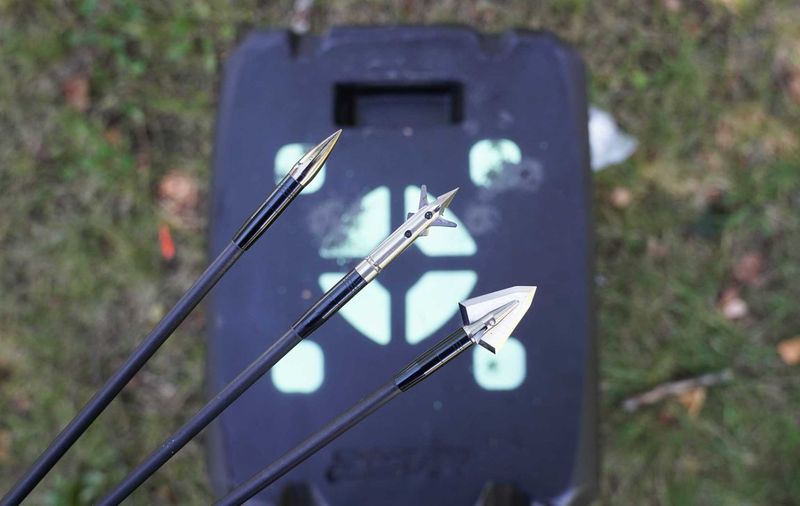
For most modern compound setups in the 60–70 lb range, 125-grain heads are the sweet spot. Heavy enough to push FOC into the 12–15% range with a standard insert, light enough to keep arrow speed above 270 fps for forgiving pin gaps. Traditional shooters and EFOC builders go heavier — 175 to 250 grains — but only after matching shaft spine accordingly. See our arrow spine chart before you make that swap.
Step 3: Adjust Insert Weight to Dial the Last Few Percent
Once your point weight is locked, brass inserts let you fine-tune FOC without rebuilding the arrow. A standard aluminum insert weighs 15–20 grains. Brass replacements run 50, 75, or 100 grains. Drop in a heavier insert and you add front-end weight without changing the point — which means your broadhead tuning stays intact.
The trade-off is total arrow weight climbs. A 100-grain brass insert in place of a 20-grain aluminum adds 80 grains to your arrow, which costs roughly 8–10 fps. That speed loss only matters if you’re already inside ethical range — past 50 yards, it changes pin spacing. Inside 40 yards, you won’t feel it.
Step 4: Tune Spine to Match the Heavier Head
Adding point weight without adjusting spine is the most common arrow FOC tuning mistake. A 350-spine shaft tuned for a 100-grain point will react under-spined the moment you bolt on a 150-grain head — the heavier tip whips the front of the shaft sideways out of the rest, throwing tails left or right depending on hand.
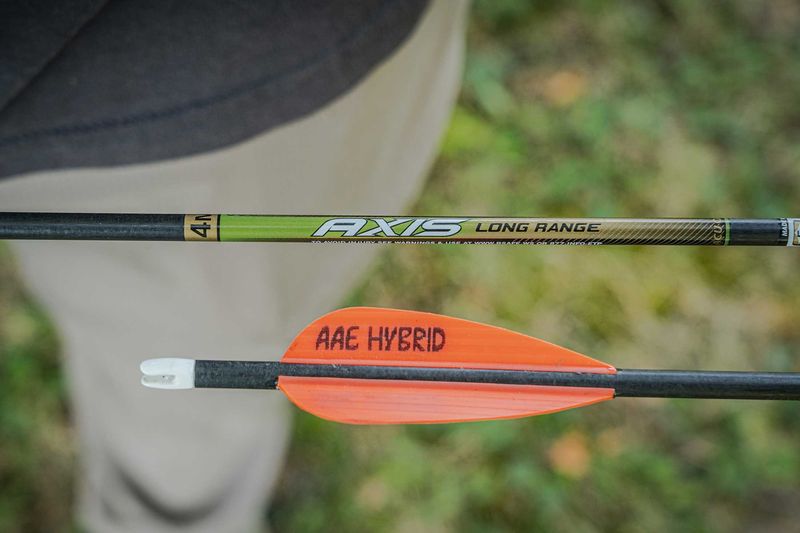
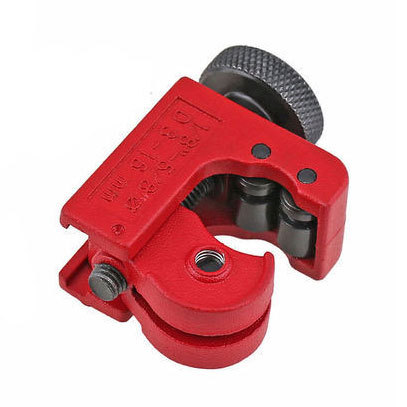
The fix is to step up to a stiffer spine. Going from a 340 to a 300 spine handles roughly 25–50 extra grains of front weight on a 28-inch arrow. Some hunters also shorten the shaft by an inch, which effectively stiffens spine without changing the chart entirely. Either approach works. Both together is faster.
Step 5: Verify FOC With a Real Balance Test
Spec sheets lie. The only number that matters is the one your finished arrow actually measures. Lay the completed arrow — point installed, fletching glued, nock seated — across the edge of a steel ruler or a triangular wooden block. Slide it until it balances perfectly. The point where it teeters is your balance point.
Measure from the nock throat to the balance point. That’s A in the formula. Measure from the nock throat to the back of the insert. That’s L. Plug both into FOC% = 100 × (A − L/2) ÷ L. A 29-inch arrow that balances at 16.5 inches gives you FOC% = 100 × (16.5 − 14.5) ÷ 29 = 6.9%. Too low. Either swap to a heavier point or a brass insert and re-measure.
Step 6: Confirm Flight With a Paper Test
FOC affects how an arrow recovers from release. A heavy front end damps tail kick, but only if the spine is matched. Paper tuning at six feet tells you instantly whether the build is right. Shoot through a piece of butcher paper. A clean bullet hole means spine, FOC, and rest position all agree.
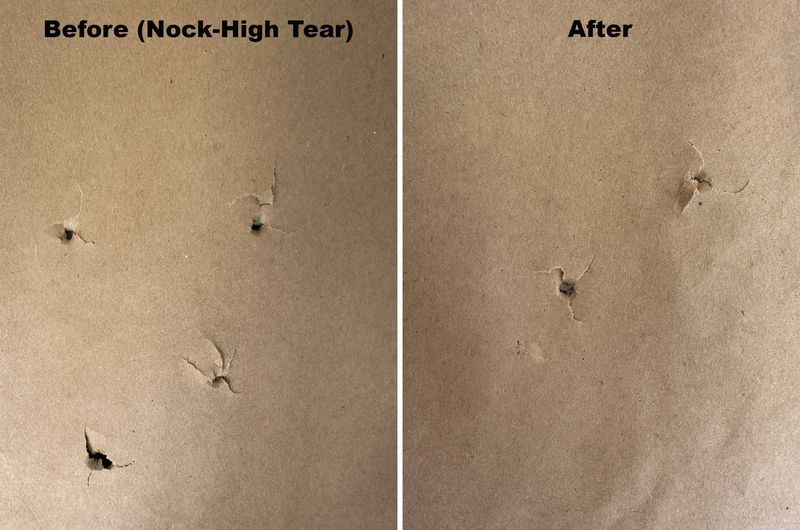
Nock-high tears point to rest height or cam timing. Nock-left or nock-right tears on a right-handed bow usually mean the arrow is under-spined for its new point weight — exactly what happens if you raised FOC without going stiffer. If paper rips persist after rest adjustment, that’s your tell. Step up the spine. For deeper guidance on cleaning these up, our compound bow tuning walkthrough covers cam and rest fixes in order.
Step 7: Field-Test on a 3D Target Before You Hunt
A tuned FOC arrow performs differently on a 3D foam buck than a paper face. Shoot at 20, 30, and 40 yards. Watch the group size. Watch how far the arrow buries. A high-FOC build that paper-tuned clean should bury two to four inches deeper into a Rinehart than your old setup at the same yardage. If it doesn’t, your insert and point weights aren’t holding through release.
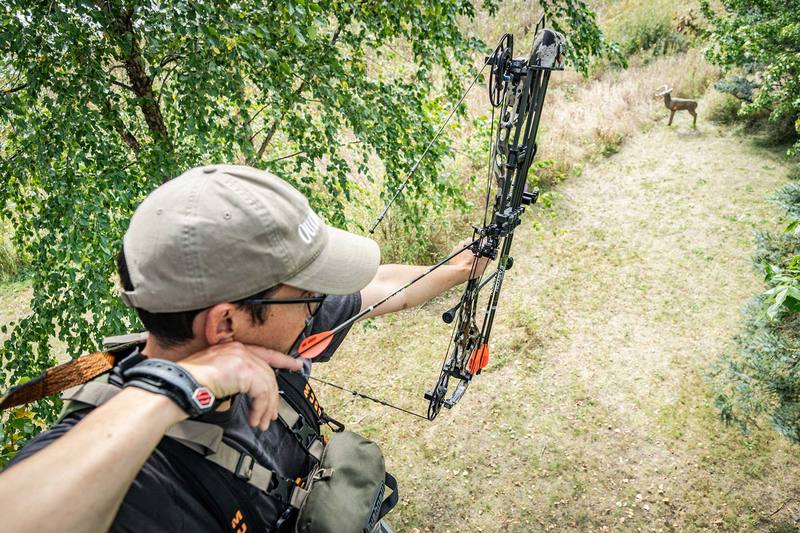
This is also where you swap field points for broadheads. The two should impact within 2 inches of each other at 30 yards on a well-tuned bow. If they don’t, the issue is rarely FOC — it’s broadhead alignment or rest contact. Walk through our broadhead tuning sequence before blaming the arrow.
High Arrow FOC vs Low FOC: When Each Wins
The argument over high versus low FOC tends to get tribal. The honest answer is that both work — they’re optimized for different jobs.
Low FOC (7–10%) gives you flatter trajectory and faster downrange arrival. That matters for 3D shooters guessing yardages and target archers shooting 50m round. It also forgives sloppy form because the arrow recovers faster from rest contact. The penalty is wind drift and shallow penetration on bone.
High FOC (15–20%) carries momentum through the shoulder of an elk, drives through ribs at a quartering angle, and resists wind better than light builds. The penalty is trajectory drop past 50 yards and a slower arrow that gives an alert animal more time to duck the string. For most North American whitetail and turkey hunters, 12–14% is the practical compromise. For elk, mule deer, and any African plains game, 16–18% earns its keep.
Common Arrow FOC Mistakes That Cost You Penetration
Three mistakes show up over and over in shop builds.
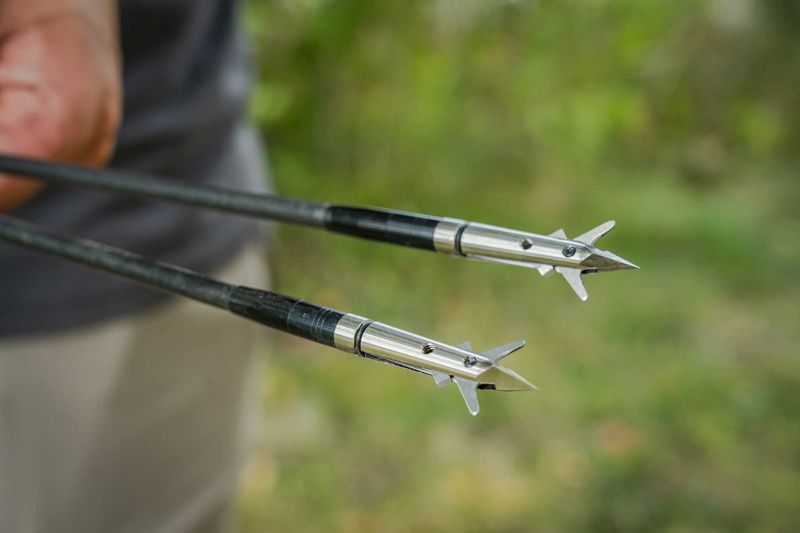
First, calculating FOC with the field point but hunting with a different broadhead weight. A 100-grain field point and a 100-grain fixed-blade broadhead don’t balance identically — broadheads sit slightly forward of where a field point’s center of mass lives. Recalculate balance with the actual hunting head installed.
Second, ignoring nock and vane weight. Lightweight pin nocks and 2-inch Blazer vanes raise FOC by 1–2 points compared to standard nocks and 4-inch shield-cut vanes. If you switch fletching style mid-season, your FOC quietly drifts. Re-balance.
Third, chasing FOC numbers past 20% on a compound without matching spine. Extreme FOC works on trad gear because the bow is naturally forgiving of spine variance. Compounds at modern poundages and speeds need spine tightly matched. Going to 22% FOC on an under-spined arrow gives you flier groups, not pass-throughs.
Final Thoughts: The Practical FOC Target for Most Bowhunters
If you’re a whitetail hunter shooting a 70-lb compound at 28 inches of draw, build for 12–14% FOC with a 125-grain head, a 50-grain brass insert, and a spine one step stiffer than the manufacturer chart suggests. That puts you in the band where arrow flight stays fast, groups stay tight at 40 yards, and the arrow still drives through both lungs on a broadside shot.
If you’re chasing elk or any quartering shot opportunity, push toward 16% with a 150-grain head. Accept the 8–10 fps trade. The penetration math pays you back the first time you bury an arrow to the fletching on a bull at 35 yards. Watch the video below before you commit to a build — Backwoods Pursuit walks through the same balance test with a finished hunting arrow on camera, which makes the math click faster than reading it.
Tune once. Confirm with paper and a 3D target. Then trust the arrow when the shot opportunity comes.
Sources
- Easton Archery — What is F.O.C. and How Does It Affect Arrow Flight? — Original AMO formula and Easton’s published FOC range guidance.
- Lancaster Archery Supply — What is F.O.C. and How Does It Affect My Arrows? — Practical balance-test instructions and shop tuning advice.
- Bowhunting.com — Understanding Arrow FOC % — Field testing notes and penetration ranges for hunting builds.
- GrizzlyStik — Forward of Center Calculation — Extreme FOC data and big-game penetration testing summary.
