
Archery Blog
Archery Aiming Methods Compared: Instinctive, Gap, String Walking & Sights
Jun
Walk onto any archery range and watch six different shooters at full draw, and you will see six different ways of pointing an arrow at a target. One stares straight at the gold and lets the shot break. Another lines up a pin behind a peep. A third creeps her fingers down the string before she even nocks. They are all aiming — but the mental and physical mechanics behind each method are wildly different, and choosing the wrong one for your bow, eyes, or shooting distance is one of the fastest ways to plateau.
This guide breaks down the six aiming methods you will actually encounter in modern archery — instinctive, gap shooting, string walking, face walking, point-of-aim, and sighted shooting — and compares them on accuracy, learning curve, distance range, and which bow style each one suits. By the end you should know which method to commit to, and which to leave alone.
What “Aiming” Actually Means in Archery
Aiming is not just “look at the target.” It is the process of aligning three things: the arrow’s launch path, the target’s location, and the small visual or physical reference that tells your brain the alignment is correct. The reference can be a sight pin, the tip of the arrow, a mark on the string, the shooter’s knuckle on the jaw, or — in instinctive shooting — nothing at all except a trained subconscious estimate.
Every aiming method is just a different answer to the same question: how do I tell my body that the arrow is pointed where I want it to land? Because gravity drops the arrow throughout flight, every method also has to account for distance. That distance compensation is where most of the differences between aiming styles actually live.
Method 1: Instinctive Aiming
Instinctive shooters look at the target and only the target. There is no conscious thought about arrow tip, gap, or pin. The shooter draws, anchors, focuses hard on the spot they want to hit, and releases when the body says it is ready. The brain has built up an internal model — through thousands of arrows — that translates “I want to hit that spot” into the correct muscle adjustments to angle the bow upward by the right amount.
Instinctive aiming is fast, intuitive at short range, and feels almost effortless once it clicks. It dominates traditional archery, bowhunting from elevated stands, and 3D field shooting where targets appear at unknown distances. The downside is a long learning curve and a hard ceiling on distance — most instinctive shooters break down past 30 yards, and almost no one shoots elite-level instinctive at 70 meters.
Best for: Traditional recurve, longbow, and selfbow shooters at distances under 25 yards. Bowhunters who need to release fast on moving game.
Avoid if: You shoot competition target rounds, struggle with consistency past 20 yards, or have less than a year of regular practice to invest in building the subconscious model.
Method 2: Gap Shooting
Gap shooting is the workhorse of barebow recurve. The shooter uses the arrow tip as a sight reference and consciously holds it a measured distance below, above, or directly on the target depending on range. At a known short range you might hold the arrow tip a fist-width below the bullseye; at longer ranges the tip rises until it sits directly on the gold, and beyond that you hold above.
The gap method demands repeatable form because the entire system relies on the arrow tip being in a consistent position relative to your eye. Move your anchor or change arrow weight and the gap chart rewrites itself. But once locked in, gap shooting is brutally accurate — most elite barebow archers, including World Archery medalists, shoot some variant of gap or split-vision.
The Point-On Distance
Every gap shooter has a “point-on” distance — the range where the arrow tip sits exactly on the bullseye with no holdover or holdunder. For most barebow setups this falls between 45 and 60 yards. Inside point-on, you aim below the target. Outside it, you aim above. Knowing your point-on yardage is the first thing any new gap shooter needs to establish.
Method 3: String Walking
String walkers solve the distance problem by changing where their fingers grip the string. Instead of hooking the string just below the nock at every distance, the shooter walks their fingers down the string for closer targets and up toward the nock for farther ones. This tilts the arrow up or down at full draw and effectively changes the trajectory while keeping the arrow tip aimed directly at the bullseye.
String walking is the dominant aiming method in modern competitive barebow because it lets the archer point directly at the target at every distance, eliminating the holdover guesswork of gap shooting. The trade-off is that you need a tab with crawl markers, a calibrated chart of finger positions for each distance, and a rule set that permits the technique — World Archery barebow allows it, but many traditional clubs and historical-style rounds do not.
- Strength: Arrow tip aims directly at the target at all known distances
- Weakness: Requires precise crawl markers and known distances — useless for unknown-distance 3D
- Gear needed: A tab with calibrated stitching or markings
Method 4: Face Walking
Face walking is the less popular cousin of string walking. Instead of changing finger position on the string, the shooter changes anchor position on the face — chin anchor for long distance, jaw anchor for medium, cheekbone for close. Moving the anchor higher or lower on the face changes the angle of the arrow without touching the string grip.
Most coaches discourage face walking for two reasons. First, every anchor change is also a sight-picture change — your eye is now in a different position relative to the arrow, so any cross-wind or form error gets amplified. Second, multiple anchor points are far harder to repeat consistently than multiple string crawls. A handful of elite archers use face walking effectively, but it is rare. Most barebow programs that allow it still teach string walking as the primary method.
Method 5: Point-of-Aim
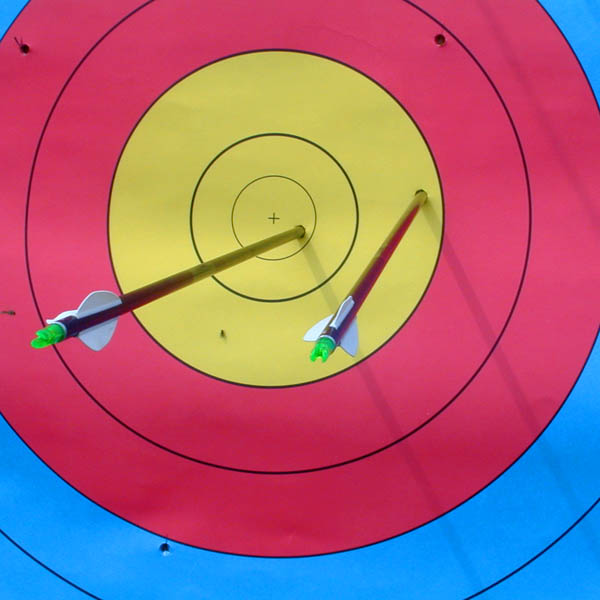
Point-of-aim is an old-school method that predates modern sights. The shooter picks a secondary aiming reference somewhere in the environment — a mark on the ground in front of the target, a piece of grass, a screw on a target frame — and points the arrow tip at that reference, knowing from practice that doing so will land the arrow in the bullseye. It is essentially gap shooting with the gap replaced by a fixed visual landmark.
Howard Hill and many golden-age field archers used point-of-aim extensively before sights were widely adopted. Today it is largely a curiosity, used mostly in historical-style competitions where sights and string-walking tabs are banned. Its weakness is obvious: it only works on flat, predictable ranges where a stable secondary landmark exists. In the woods or in wind, the method falls apart.
Method 6: Sighted Shooting
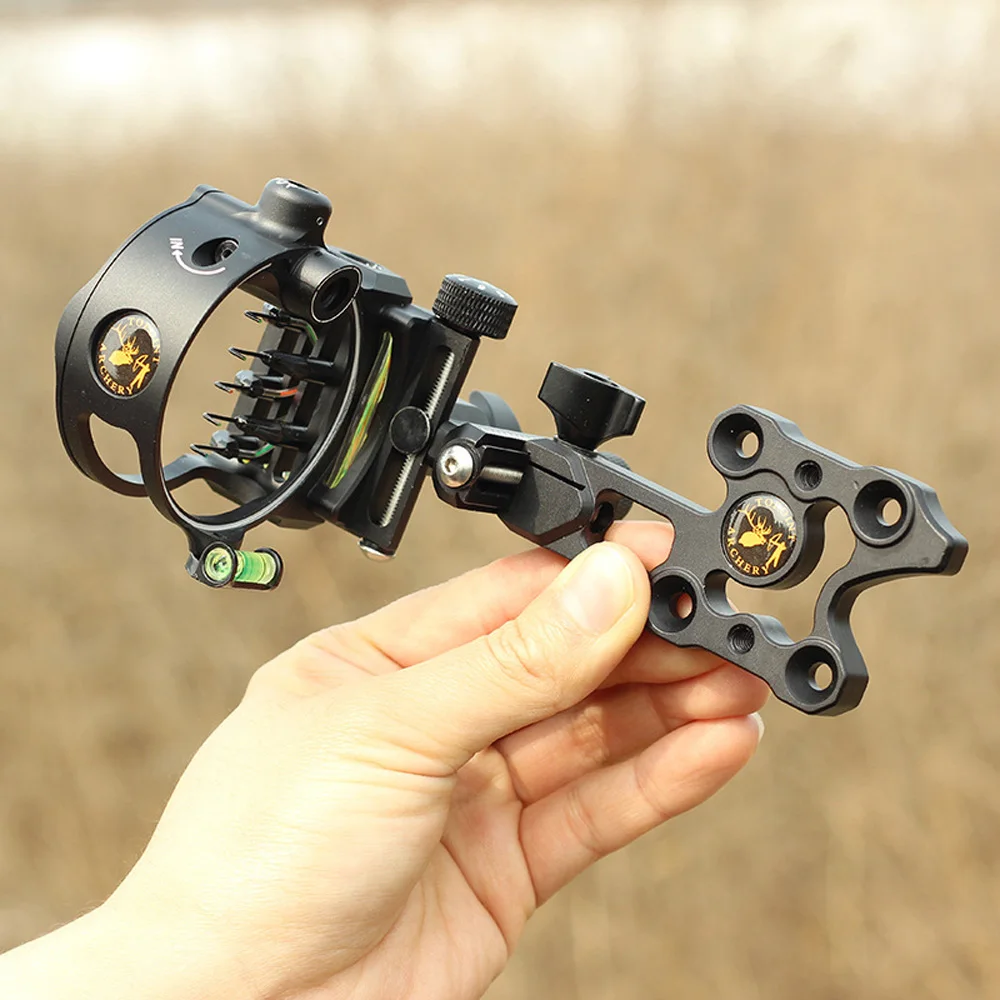
The most precise method and the one most modern archers use. The shooter mounts a sight to the riser with one or more pins, calibrates each pin to a known distance, then aligns the appropriate pin with the target at full draw. Olympic recurve shooters use a single moveable pin they slide up or down the sight bar based on range. Compound shooters typically use multi-pin sights with 3, 5, or 7 fixed pins, or single-pin slider sights with a yardage tape.
Sighted shooting is the most forgiving method for new archers because the aiming reference is explicit and tunable. Miss high? Move the pin up. Miss left? Move it right. Within a few sessions a beginner can shoot tight groups at 20 yards — something that takes a year of practice with instinctive aiming. The cost is gear complexity, the need to know the exact distance, and — for traditional shooters — a feeling that you have outsourced the art of archery to a piece of aluminum.
Aiming Methods Compared at a Glance
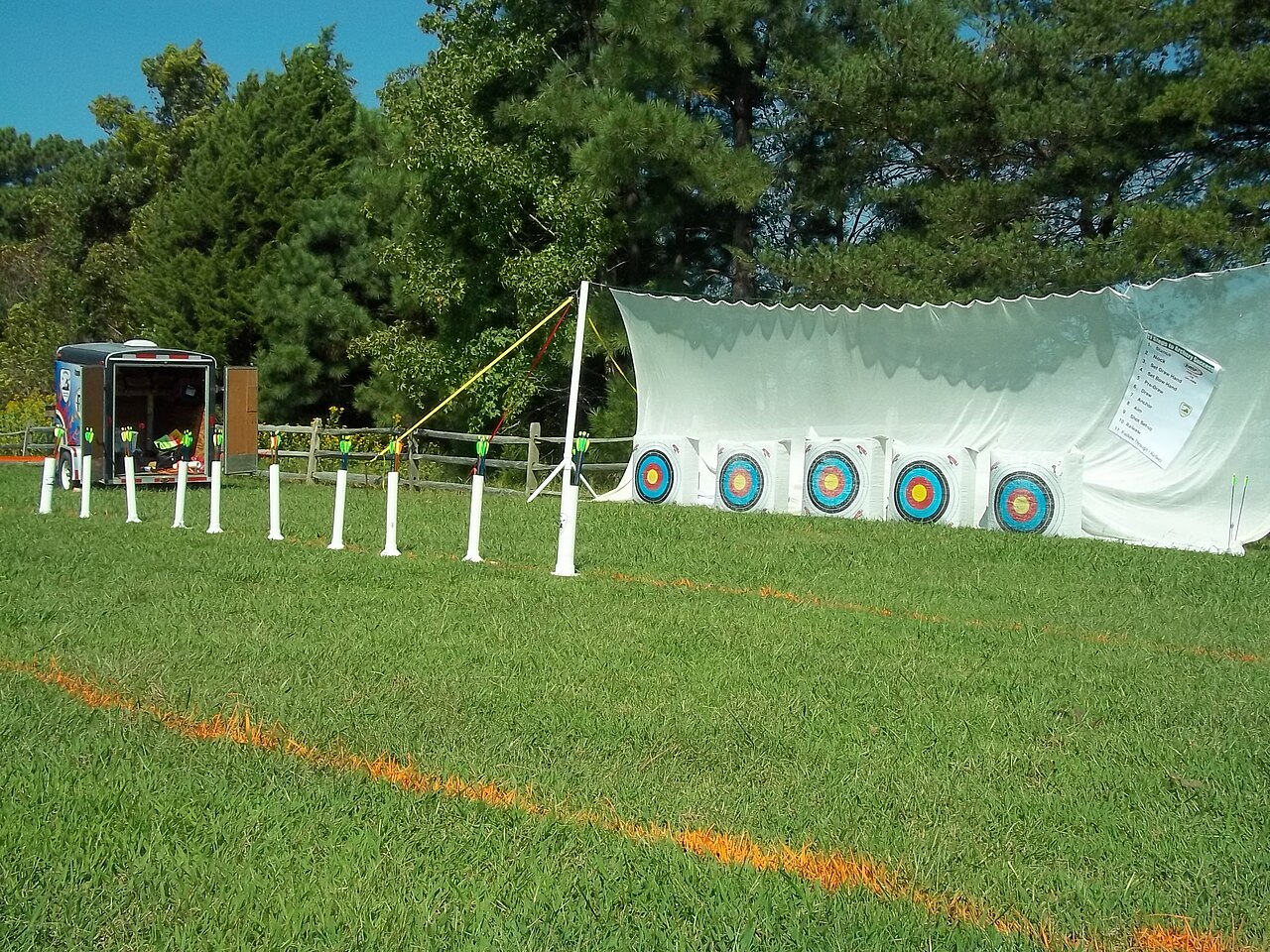
Here is how the six methods stack up across the criteria that matter most when choosing one to commit to.
- Accuracy ceiling: Sighted > String walking > Gap > Face walking ≈ Point-of-aim > Instinctive
- Learning curve to 20-yard groups: Sighted (weeks) < Gap (months) < String walking (months) < Instinctive (year+)
- Works at unknown distances: Instinctive ✓, Gap ✓ (with experience), Sighted ✗ (unless rangefinder), String walking ✗
- Bow style fit: Compound and Olympic recurve → sighted. Barebow recurve → string walking or gap. Traditional longbow → instinctive or gap.
- Rules compliance: Sighted is banned in barebow and traditional divisions. String walking is banned in traditional divisions. Instinctive is allowed everywhere.
Which Method Should You Choose?
The honest answer depends on three things: what bow you shoot, what division you compete in (or aspire to), and how much practice time you can commit. A weekend bowhunter with a compound and a tree stand will get faster, more reliable results with a multi-pin sight than with anything else. A barebow recurve shooter chasing World Archery medals needs to learn string walking — it is what the podium uses. A longbow traditionalist who wants the feeling of pure archery should stick with instinctive and accept the distance ceiling.
The One Mistake Everyone Makes
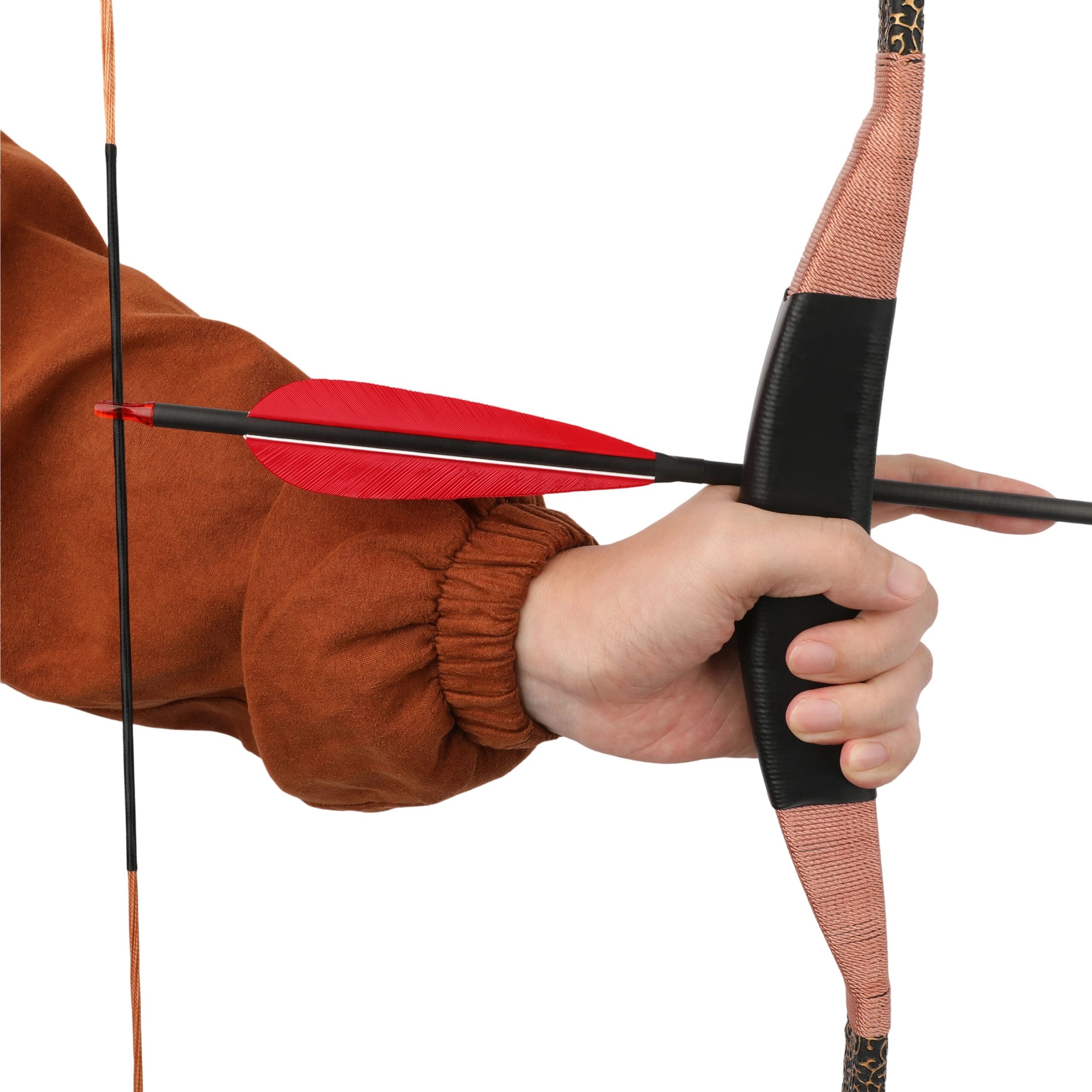
The single most common error is switching methods every few months because progress feels slow. Every aiming method has a frustration valley where the brain has not yet built the reflexes the method requires, and abandoning ship at month three guarantees you will never reach the plateau on the other side. Pick a method appropriate to your bow and division, then give it at least a full year of consistent practice before you reevaluate. The shooters who win are not the ones with the best method — they are the ones who chose a workable method and stopped shopping.
Form Has to Match the Method
One more thing worth saying clearly: no aiming method survives bad form. Every system in this article assumes a repeatable anchor, a clean release, and consistent bow arm placement. If your anchor drifts by a quarter inch between shots, your gap chart is fiction, your string-walking crawls are noise, and your instinctive subconscious has nothing stable to model. Spend at least as much time on form as on aiming, and ideally more.
A useful diagnostic: shoot a six-arrow group at 18 meters with your eyes closing after each anchor (don’t release blind — just check that you can find anchor with eyes closed). If the group is tight, your form is repeatable enough that aiming method becomes the limiting factor. If it sprays, form is the bottleneck and no amount of method-shopping will fix it.
Final Word
There is no “best” aiming method in archery — only the right method for the bow in your hand, the rules of your division, and the kind of shooting you actually love. Sighted shooting will win you ribbons fastest. String walking will take you to the top of barebow. Instinctive will give you a relationship with the bow that no other method can. Pick the one that fits the archer you want to become, and put in the arrows.
Sources
- World Archery — Rules, equipment divisions, and barebow technique references
- USA Archery — Coaching curricula and aiming method standards
- Wikipedia — Field Archery — Background on instinctive, point-of-aim, and historical aiming methods
- Wikipedia — Barebow — String walking, face walking, and gap shooting in modern barebow competition
Browse archery bows, arrows, and accessories at the Archery Supplier shop →
