
Bow Tuning
Recurve Bow Tuning Guide | Bare Shaft, Paper & Walk-Back
Mar
What Is Recurve Bow Tuning and Why Does It Matter?
Recurve bow tuning is the process of adjusting your bow, arrow rest, and arrows so everything works together to produce clean, consistent arrow flight. A well-tuned recurve sends arrows flying straight from the moment they leave the string. A poorly tuned one fights you at every distance.
Think of it this way: even if your shooting form is solid, a bow that’s out of tune will scatter arrows across the target. Tuning eliminates the variables that aren’t related to your shooting. Once your equipment is dialed in, every miss becomes useful feedback about your form rather than a mystery caused by bad arrow flight.
Whether you’re shooting an Olympic-style setup on a Hoyt Xceed riser or a traditional Bear takedown recurve, the tuning principles stay the same. The three most popular methods—bare shaft tuning, paper tuning, and walk-back tuning—each give you different information about how your arrows are behaving. Most experienced archers use a combination of all three.
Pre-Tuning Setup: Get the Basics Right First
Before you start any tuning method, your bow needs a proper baseline setup. Skipping this step is the most common mistake archers make. Here’s what to check:
Brace Height
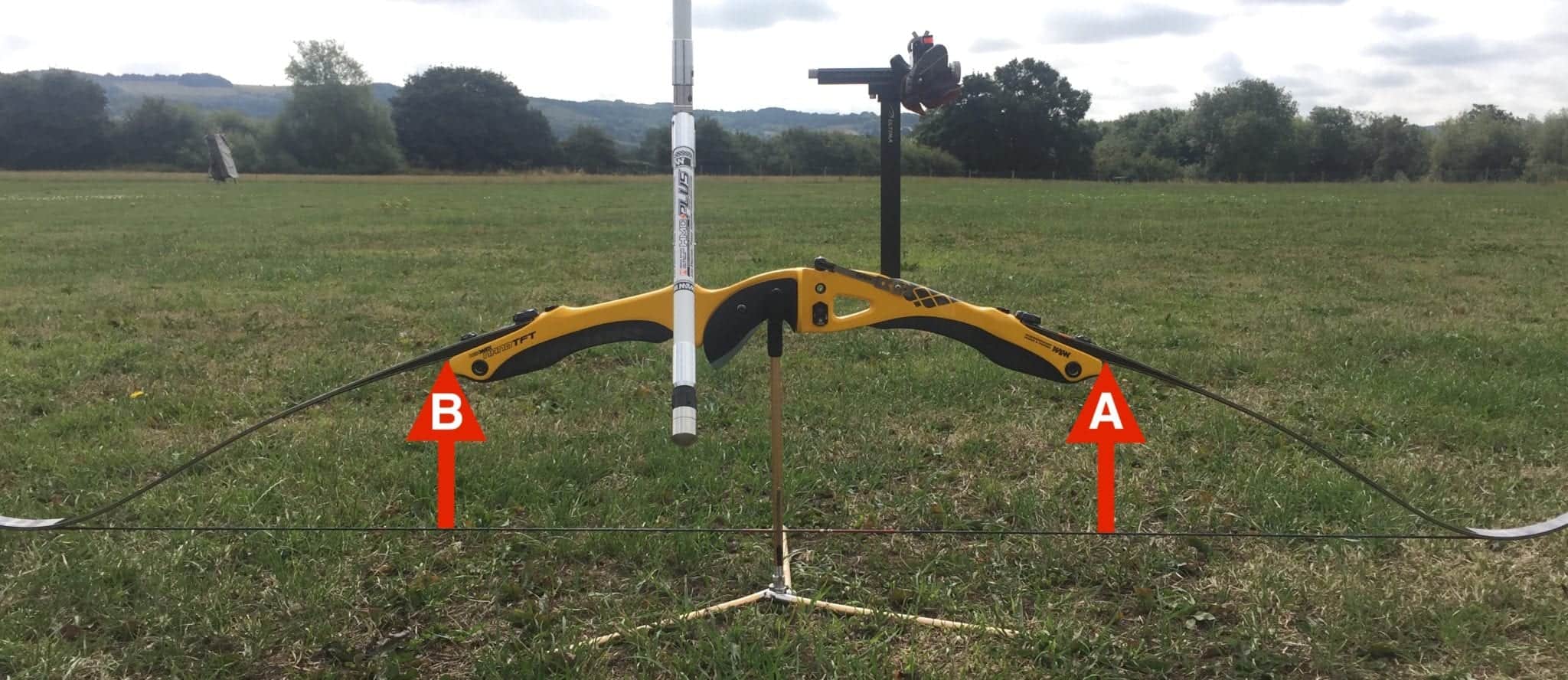
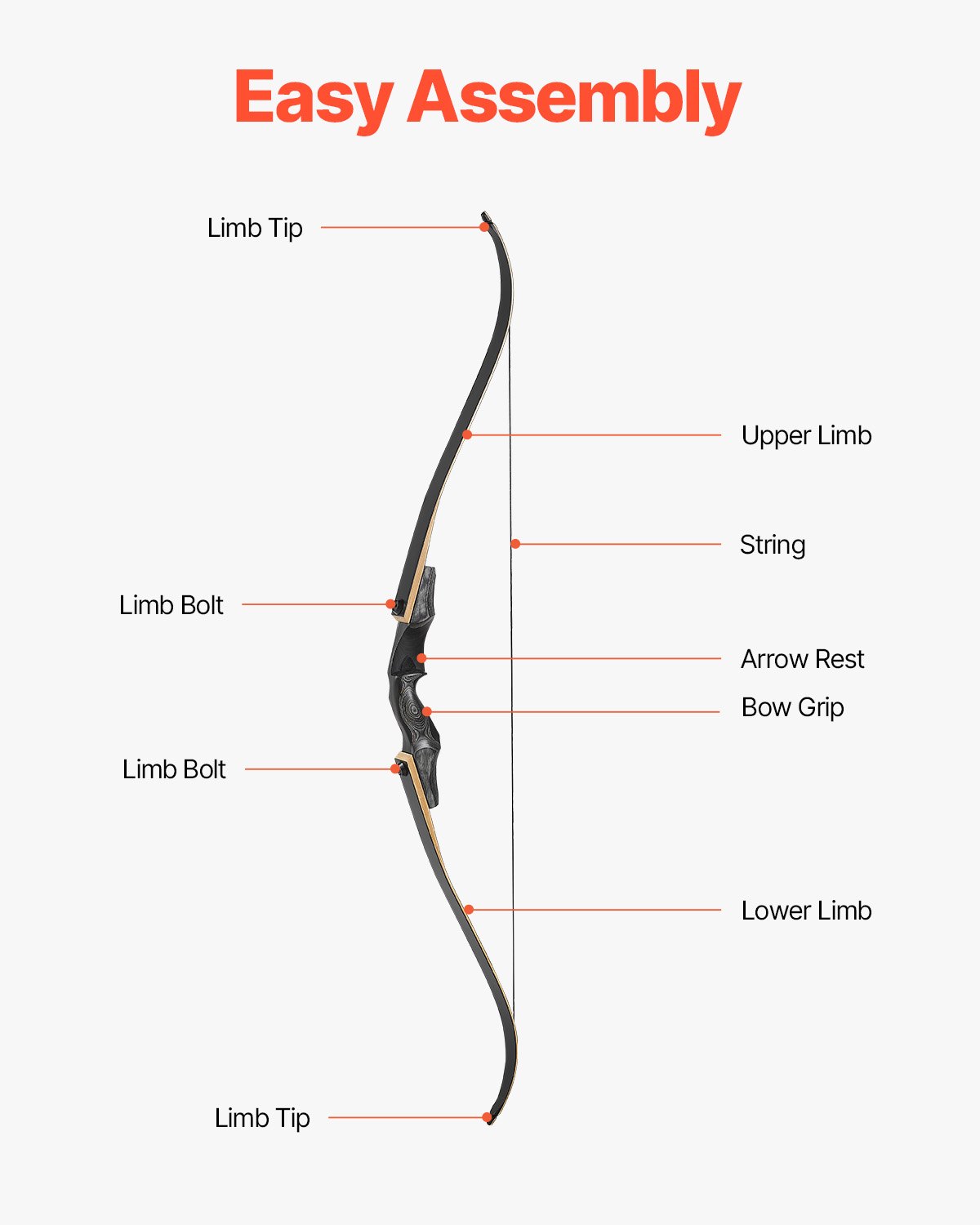
Brace height is the distance from the deepest part of the grip (or the pressure point on the throat) to the string. Every recurve bow has a recommended brace height range, usually printed on the limbs or listed in the manual.
For most 68-inch Olympic recurves, that range falls between 8.5 and 9.5 inches. Start in the middle of the range and adjust by adding or removing twists from the bowstring. More twists increase brace height; fewer twists decrease it.
Shoot a few arrows at each setting and listen. A properly set brace height produces a clean, quiet shot. If the bow sounds “slappy” or excessively loud, adjust up or down in quarter-inch increments until the noise smooths out.
Nocking Point
Your nocking point tells the arrow where to sit on the string. Using a bow square (T-square), set your initial nocking point about 1/8 inch above perpendicular from the arrow rest. This is your starting point—you’ll fine-tune it during the tuning process.
If you’re using brass nock sets, crimp one above and one below the nock position. If you prefer a tied nocking point (common in competitive recurve), use serving thread and tie it snug enough that the arrow hangs from the string without falling off, but can be knocked free with a light tap near the nock.
Center Shot
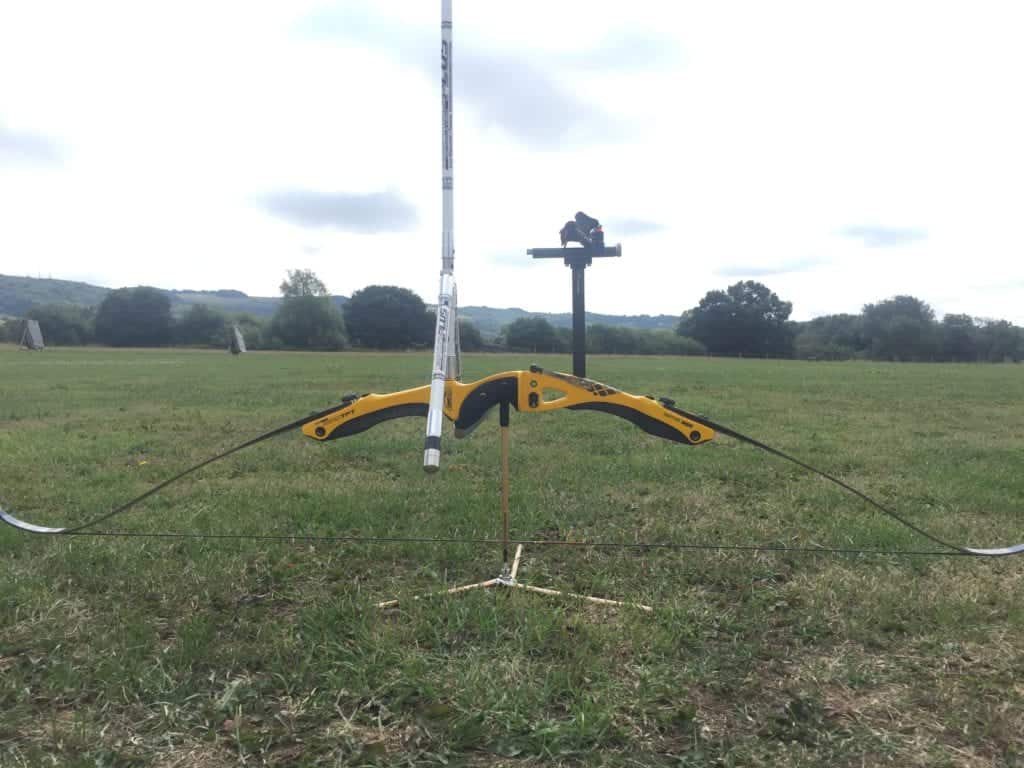
Center shot is the left-right alignment of your arrow relative to the bowstring and riser. For recurve bows with a plunger button (like the Beiter or Shibuya DX), set the arrow point so it sits just slightly outside the string line when viewed from behind the bow.
A common starting point: look down the string from behind the bow so the string bisects the limbs evenly. The arrow point should peek out just barely to the left of the string (for right-handed archers). This accounts for the archer’s paradox—the arrow bends around the riser as it leaves the bow.
Set your plunger button to medium tension as a starting point. You’ll adjust this during bare shaft tuning.
If you’re new to selecting the right arrow spine, get that sorted before diving into tuning. Arrows that are wildly wrong for your setup won’t tune no matter what you do.
Bare Shaft Tuning: The Gold Standard for Recurve
Bare shaft tuning is the most widely used method among competitive recurve archers, from club-level shooters to Olympic medalists like Brady Ellison and An San. It tells you whether your arrows are matched to your bow’s power and whether your nocking point and plunger are set correctly.
What You Need
- 3-4 fletched arrows (your normal shooting arrows)
- 2-3 bare shafts (identical arrows with no fletching)
- A target at 15-20 meters (start closer if needed)
- A calm day with minimal wind
Step-by-Step Process
1. Shoot a group of fletched arrows. Fire 3-6 fletched arrows at the target and note where they group. Don’t worry about hitting the bullseye—focus on grouping.
2. Shoot your bare shafts into the same target. Alternate between fletched and bare shafts if possible. This helps account for any changes in your form as you fatigue.
3. Read the pattern. Compare where the bare shafts land relative to the fletched group. For a right-handed archer:
- Bare shaft hits LEFT of the fletched group: Arrow spine is too stiff. Increase point weight, turn up draw weight slightly, or switch to a weaker spine shaft.
- Bare shaft hits RIGHT: Arrow spine is too weak. Decrease point weight, turn down draw weight, or switch to a stiffer spine.
- Bare shaft hits HIGH: Nocking point is too low. Raise it in small increments (1/16 inch at a time).
- Bare shaft hits LOW: Nocking point is too high. Lower it slightly.
4. Adjust and repeat. Make one change at a time. After each adjustment, shoot another round of fletched and bare shafts. You’re aiming for the bare shafts to land inside or very close to the fletched group.
5. Fine-tune with the plunger button. Once the bare shafts are on the correct horizontal plane, use your plunger button tension to move them left or right. Stiffer plunger tension pushes bare shafts to the left (for right-handed shooters); softer tension lets them drift right.
A perfectly tuned bow will have the bare shafts grouping with the fletched arrows at 20+ meters. If you can get them within a couple of inches at 18 meters, you’re in excellent shape.
Paper Tuning: A Quick Diagnostic Tool

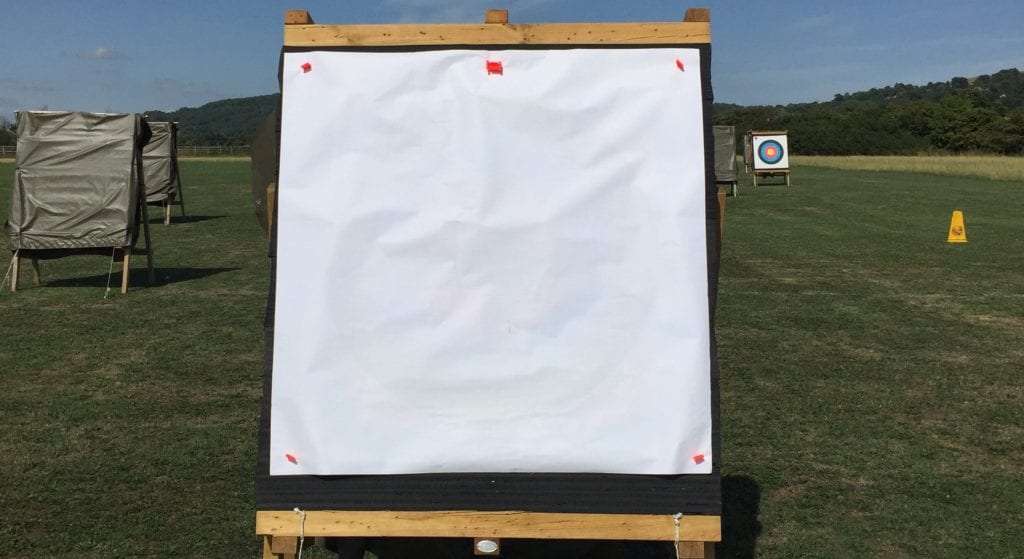
Paper tuning works by shooting an arrow through a sheet of paper stretched across a frame. The tear pattern in the paper tells you how the arrow is oriented as it flies. While paper tuning is more commonly associated with compound bow setups, it’s also useful as a starting diagnostic for recurve bows.
Setting Up Your Paper Tuning Station
You need a frame (a simple wooden or PVC frame works) with a sheet of paper taped or clamped to all four sides so the paper is taut. Position the frame at chest height, with a target backstop 4-6 feet behind it. Stand about 6-8 feet from the paper.
Step-by-Step Process
1. Take a clean shot through the paper. Use good form and a smooth release. One arrow is all you need per test.
2. Read the tear. A perfect tear shows a clean hole with three vane slices radiating out (a “bullet hole”). This means the arrow was flying perfectly straight when it passed through.
3. Interpret imperfect tears:
- Nock high tear: The tail of the arrow (nock end) is higher than the point. Lower your nocking point or raise your rest.
- Nock low tear: Nock end is below the point. Raise your nocking point or lower your rest.
- Nock right tear (right-handed): Arrow spine may be too stiff, or your plunger is too soft. Move the rest away from the riser or stiffen plunger tension.
- Nock left tear (right-handed): Arrow spine may be too weak, or your plunger is too stiff. Move the rest toward the riser or soften plunger tension.
4. Adjust and re-shoot. Make small adjustments and shoot through a fresh section of paper each time.
Limitations for Recurve
Keep in mind that recurve arrows oscillate significantly as they leave the bow (archer’s paradox), so paper tuning results can vary depending on your exact distance from the paper. It’s best used as a rough diagnostic rather than a final tuning method for recurve. Bare shaft tuning gives more reliable results for fine-tuning.
Walk-Back Tuning: Dialing In Your Center Shot
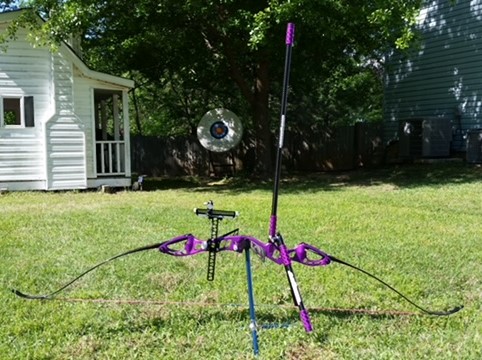
Walk-back tuning (sometimes called walk-back testing) is specifically designed to verify and fine-tune your center shot alignment. It’s the best method for ensuring your arrows aren’t drifting left or right as distance increases.
What You Need
- A target with a vertical reference line (use tape to mark a plumb line from top to bottom)
- Your normal fletched arrows
- A range where you can shoot from 10 to at least 40 meters
Step-by-Step Process
1. Sight in at close range. Set your sight so you’re hitting dead center on the vertical line at 10 meters (or whatever your closest comfortable distance is).
2. Do NOT adjust your sight from this point forward. This is the key to walk-back tuning. Leave the sight exactly where it is.
3. Step back to 15 meters and shoot 3 arrows. They’ll hit lower on the target (because your sight is set for 10 meters), and that’s expected. What matters is whether they’re still on the vertical line or drifting left/right.
4. Continue stepping back. Shoot groups at 20, 25, 30, and 40 meters—all with the same sight setting. Mark or note each group.
5. Read the pattern. If your center shot is correct, all groups will form a vertical line straight down the target. If the groups drift to one side as you move back, your center shot needs adjustment:
- Arrows drift LEFT as distance increases (right-handed archer): Move your rest or plunger button slightly to the right (away from the riser).
- Arrows drift RIGHT: Move your rest or plunger button slightly to the left (toward the riser).
6. Repeat until straight. Adjust in tiny increments—a half-turn on your plunger button can make a visible difference at 30+ meters.
Walk-back tuning is particularly effective because it removes your sight from the equation and isolates center shot alignment. Many top coaches, including those at World Archery events, recommend this as a regular check after any equipment change.
Common Tuning Problems and Fixes
Even with careful tuning, you’ll run into issues. Here are the most common problems and their solutions:
Fishtailing (Horizontal Arrow Oscillation)
If your arrows wobble left and right in flight, the most likely causes are incorrect arrow spine, plunger tension that’s too soft or too stiff, or inconsistent finger release. Check your arrow spine chart to make sure you’re in the right ballpark, then adjust plunger tension.
Porpoising (Vertical Arrow Oscillation)
Arrows that bounce up and down in flight usually point to a nocking point that’s too high or too low. Adjust in 1/16-inch increments and re-test with bare shafts.
Inconsistent Groups at Distance
If you group well at 18 meters but scatter at 50+, the usual culprit is a center shot that’s slightly off. Run a walk-back test to check.
Bare Shaft Won’t Tune In
If you can’t get bare shafts to group with fletched arrows no matter what you adjust, your arrow spine is probably too far off. Visit an archery shop and have your setup measured on a spine tester. Easton’s arrow selection charts are a great starting resource for finding the right shaft.
Arrows Flying Quiet But Missing
Clean arrow flight doesn’t always mean a perfectly tuned bow. If arrows fly silently but consistently miss in one direction, re-check your center shot with a walk-back test and verify your brace height hasn’t changed (bowstrings stretch over time).
Tips for Maintaining a Tuned Bow
Getting your bow tuned is only half the battle. Keeping it tuned takes regular attention:
- Check brace height before every session. Bowstrings stretch, especially newer ones. Carry a ruler or bow square in your case and measure before you start shooting.
- Inspect your nocking point regularly. Tied nocking points can slip over time, and brass nocks can loosen. If your groups suddenly open up, check the nocking point first.
- Wax your bowstring. Regular waxing extends string life and keeps the string’s performance consistent. Check out our bowstring maintenance guide for the full breakdown.
- Re-tune after any equipment change. New arrows, new string, new limbs, even a new plunger button—any change means you should at least run a quick bare shaft test.
- Keep a tuning log. Write down your brace height, nocking point position, plunger settings, and bare shaft results. When something goes wrong later, you’ll know exactly what “correct” looks like.
- Store your bow properly. Unstring your bow after each session (for takedown recurves) or store it in a temperature-stable environment. Limb performance changes with extreme heat or cold.
Recommended Tuning Video
This video from Online Archery Academy covers bare shaft tuning for recurve bows in detail:
Final Thoughts
Tuning a recurve bow isn’t a one-time event. It’s an ongoing process that evolves as your form improves, your equipment changes, and the seasons shift. Start with the pre-tuning basics (brace height, nocking point, center shot), then work through bare shaft tuning for the most detailed feedback. Use paper tuning as a quick diagnostic, and run walk-back tests whenever you suspect your center shot is off.
The goal isn’t perfection on day one. It’s building an understanding of how your bow responds to adjustments so you can diagnose and fix issues quickly. The better you know your equipment, the more time you’ll spend shooting well instead of chasing problems.
For more resources on proper technique, the World Archery equipment guide provides an excellent overview of Olympic recurve setup and shooting fundamentals. And Jake Kaminski’s Tuning for Performance book, available through Lancaster Archery Supply, is worth every page if you want to go deeper.
Browse archery bows, arrows, and accessories at the Archery Supplier shop →
