Archery Blog
Best Hunting Arrows for Compound Bows | Selection & Setup Guide
Mar
Picking the right hunting arrows for your compound bow matters more than most bowhunters realize. You can drop a thousand dollars on the fastest cam system on the market, but if your arrows don’t match your draw length, draw weight, and intended game, you’re leaving accuracy and lethality on the table.
Arrow selection isn’t guesswork. It’s a blend of physics, personal preference, and field-tested knowledge that separates clean harvests from frustrating misses. Whether you’re a first-time bowhunter building your initial arrow setup or a seasoned archer looking to fine-tune your rig for the upcoming season, this guide walks you through every variable that matters.
Arrow Shaft Materials: Carbon vs. Aluminum vs. Hybrid
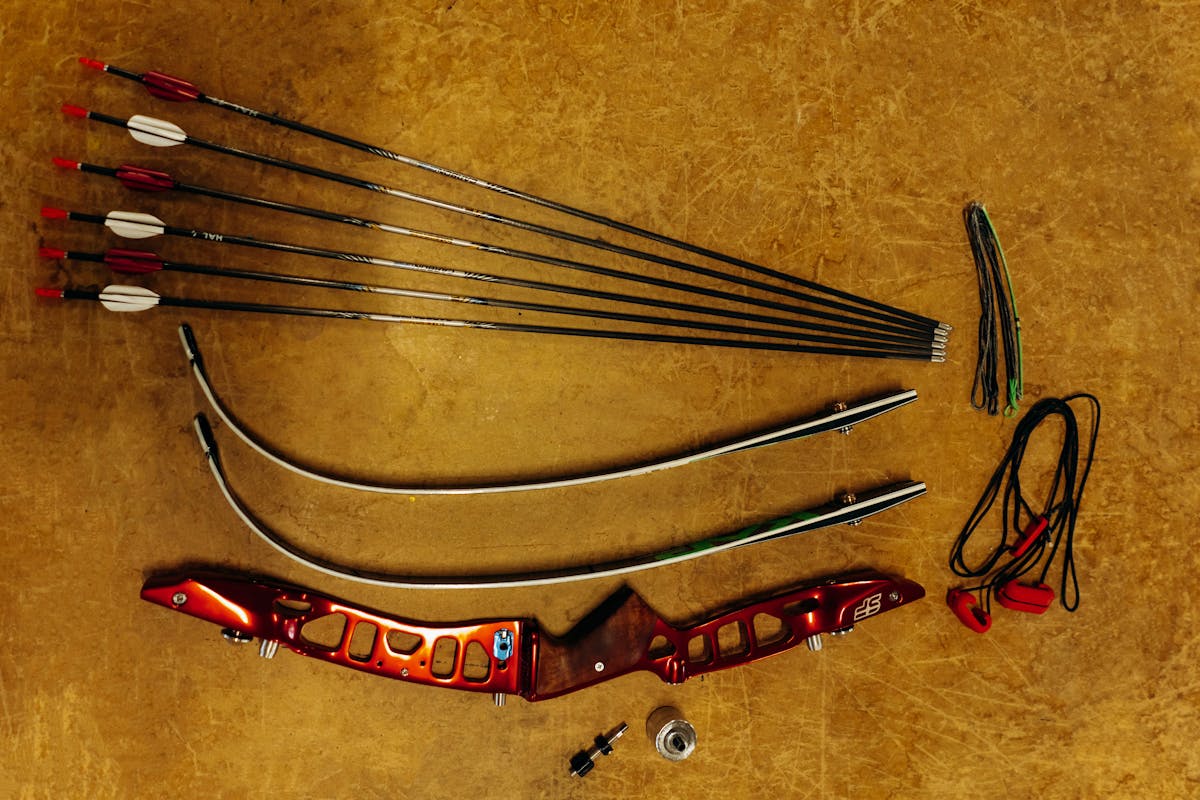
The shaft is the backbone of your arrow. Three main materials dominate the hunting market right now, and each brings something different to the treestand.
Carbon shafts have become the gold standard for bowhunting. They’re lightweight, durable, and maintain excellent spine consistency across the batch. Brands like Easton, Gold Tip, and Victory Archery have pushed carbon arrow technology forward with tighter tolerances — some holding straightness to ±.001 inches. Carbon arrows also resist bending. If they take a hard hit, they’ll either survive intact or shatter, which is actually a safety advantage over aluminum that can develop invisible micro-bends.
Aluminum shafts (like the classic Easton XX75) are heavier and more affordable. They’re still popular among target shooters and beginners because they’re forgiving and easy to tune. For hunting, though, aluminum has largely been replaced by carbon — except in hybrid form.
Carbon-aluminum hybrids like the Easton Full Metal Jacket (FMJ) wrap an aluminum sleeve around a carbon core. The result? A smaller-diameter shaft with added weight for superior penetration and exceptional durability. Many elk and big-game hunters swear by FMJs because the extra mass drives broadheads deeper, and the micro-diameter profile cuts through wind better.
For most whitetail hunters running a 60-70 pound compound bow, a quality carbon shaft in the 300-400 spine range is the sweet spot. If you’re chasing elk, moose, or African game, consider stepping up to a hybrid or heavier carbon arrow to boost your total arrow weight and front-of-center (FOC) percentage.
Arrow Spine: Matching Stiffness to Your Bow
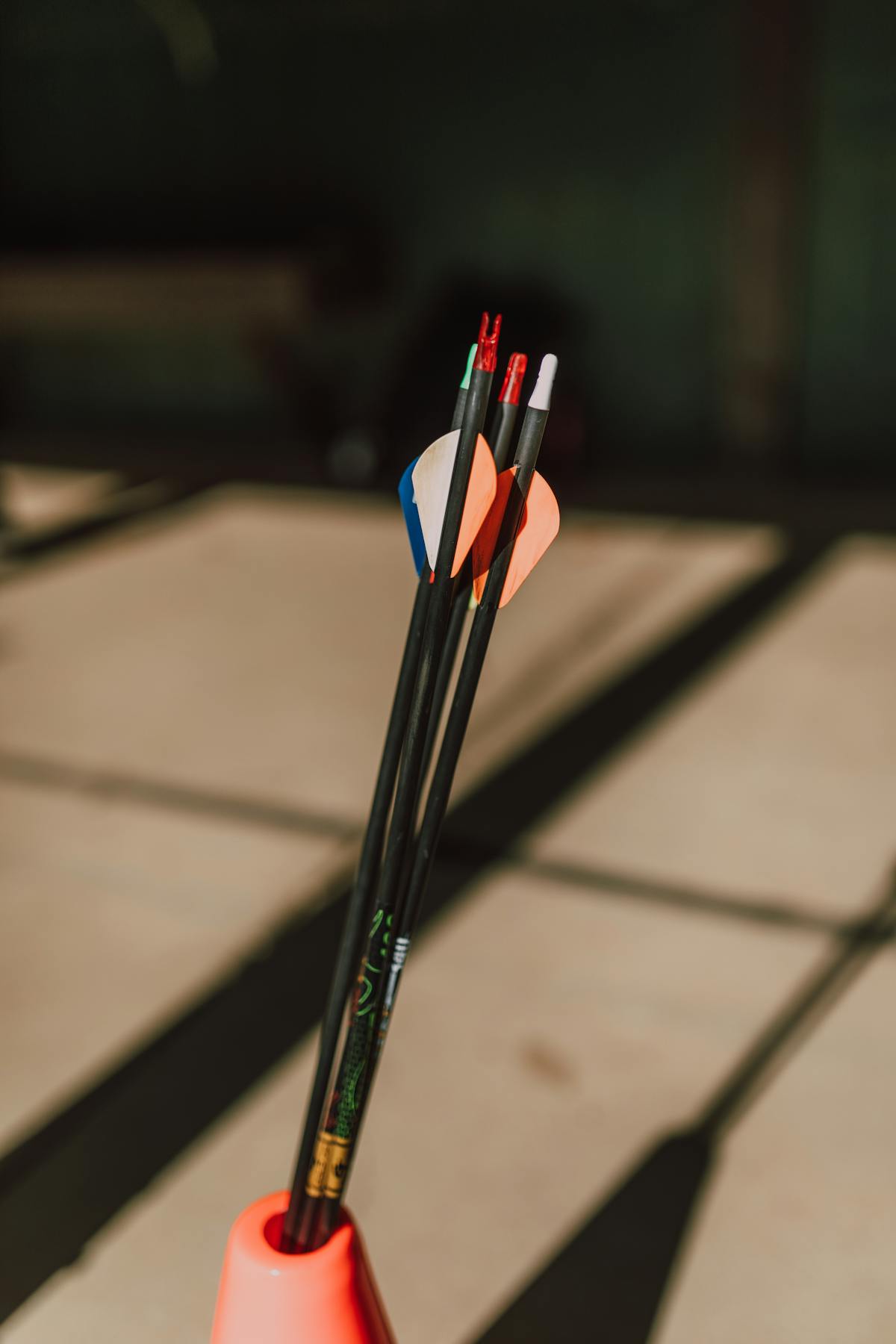
Arrow spine is the single most important specification when selecting hunting arrows. Spine measures how much the shaft flexes when a specific weight is hung from the center of the arrow. Every arrow leaving a compound bow flexes — it’s called archer’s paradox — and the amount of flex needs to match your setup for consistent flight.
Three factors drive spine selection:
- Draw weight — Higher poundage requires stiffer (lower number) spine. A 70-pound bow typically needs 300-340 spine arrows.
- Draw length — Longer draw lengths increase the effective force on the arrow, requiring stiffer spine.
- Point weight — Heavier broadheads and inserts weaken the effective spine, potentially requiring you to go one spine category stiffer.
Most arrow manufacturers publish detailed arrow spine charts that cross-reference your draw weight and arrow length to recommend a spine rating. Use these charts as a starting point, then paper-tune and bare-shaft test to dial it in.
A spine that’s too weak will cause the arrow to flex excessively, producing erratic flight and poor broadhead performance. Too stiff, and the arrow won’t flex enough around the riser, kicking outward and landing off-target. Either way, you lose accuracy and penetration — two things you can’t afford to waste in the field.
Total Arrow Weight and FOC: Why Heavier Hits Harder
The archery industry spent years chasing speed. Lighter arrows, faster bows, higher FPS numbers on the box. But experienced bowhunters have shifted the conversation toward momentum, kinetic energy, and total arrow weight — because dead-flat trajectory means nothing if your arrow doesn’t have enough mass to punch through a rib cage.
Total arrow weight is measured in grains (GPI × arrow length + components). Here’s a general framework:
- Under 350 grains — Too light for ethical hunting on most game. High risk of deflection and poor penetration.
- 400-450 grains — Solid range for whitetail and mule deer. Good balance of speed and energy.
- 450-550 grains — Ideal for elk, bear, and larger game. Excellent penetration and momentum.
- 550+ grains — Heavy arrow setups for maximum penetration. Popular among single-bevel broadhead enthusiasts and African game hunters.
Front-of-center (FOC) refers to how much of the arrow’s weight sits forward of the midpoint. Higher FOC improves broadhead flight, increases penetration, and helps the arrow recover from any in-flight disturbances. Most hunting setups benefit from 10-15% FOC. Hardcore penetration rigs push 18-20% and beyond by using heavy inserts and outserts.
To calculate FOC, find the balance point of your finished arrow (with broadhead installed), measure from the nock throat to the balance point, then use this formula:
FOC % = [(Balance Point – Arrow Midpoint) ÷ Arrow Length] × 100
If your FOC comes in under 10%, you’ll likely struggle with broadhead flight. Add weight up front — heavier inserts, brass outserts, or switch to a heavier broadhead — until you reach at least 12%.
Fletching Options for Hunting Arrows
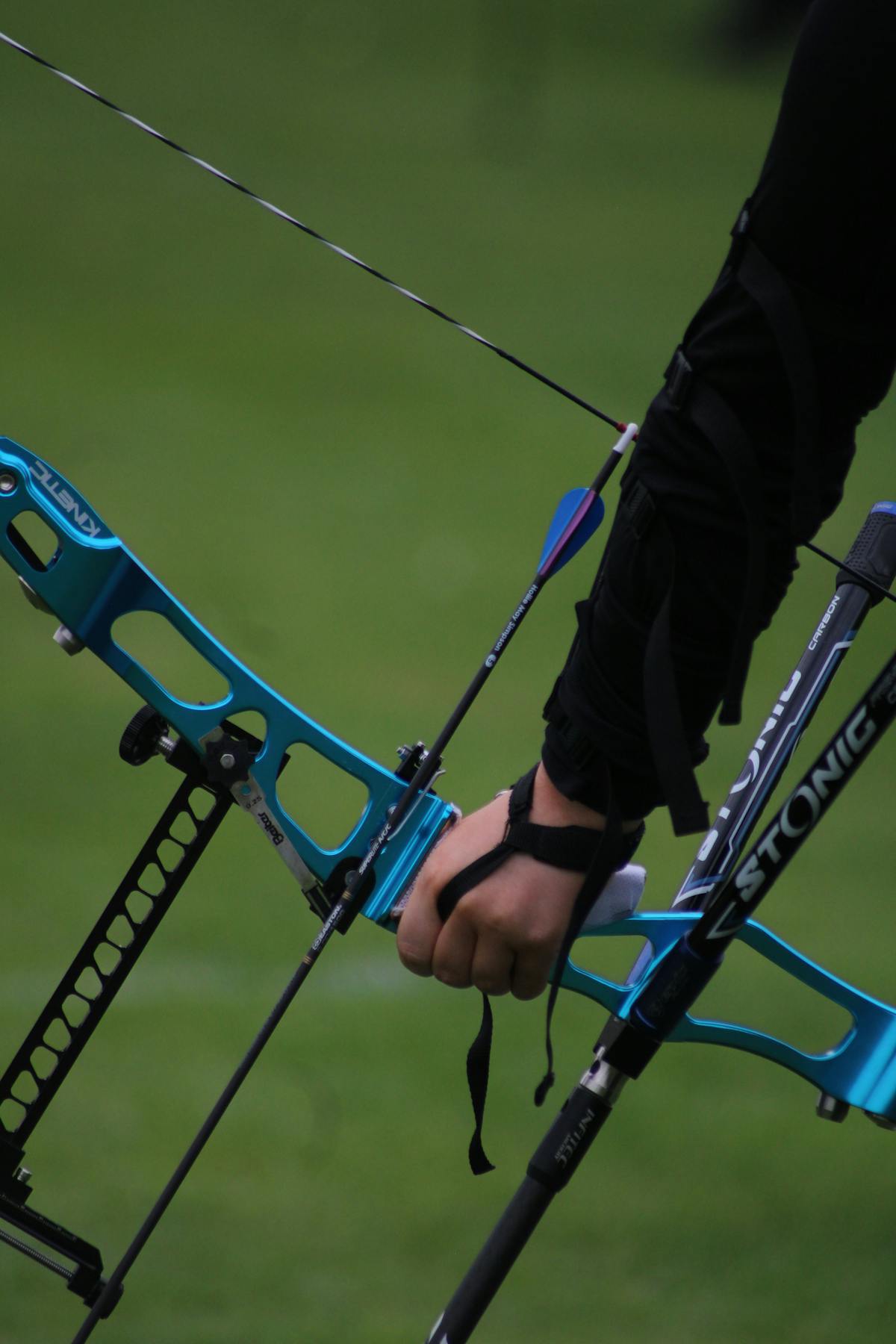
Fletchings are the guidance system of your arrow. For hunting, you need enough surface area to stabilize a broadhead, which generates significantly more drag and steering force than a field point.
Vanes (plastic fletchings) are the most common choice for compound bow hunters. They’re waterproof, durable, and come in a huge range of profiles. Popular options include:
- AAE Max Stealth — Low-profile, fast, forgiving. Great for mechanical broadheads.
- Bohning Blazer — The industry standard at 2 inches. Aggressive helical, excellent broadhead stabilization.
- NAP Quikfletch — Pre-made wraps that take the guesswork out of fletching. Clean and consistent.
Feathers work beautifully for recurve and traditional shooters because they compress when passing the shelf, but compound bow hunters rarely need them. If you shoot a whisker biscuit rest, feathers can actually wear down faster than vanes.
For fixed-blade broadhead shooters, consider running 4-fletch configurations or high-helical 3-fletch setups. The added spin stabilizes the broadhead faster after release, tightening groups beyond 30 yards where fixed blades tend to plane.
Broadhead Compatibility: Fixed vs. Mechanical
Your arrow choice and broadhead choice are linked. Running a 100-grain mechanical broadhead versus a 200-grain single-bevel fixed blade dramatically changes your total arrow weight, FOC, and required spine.
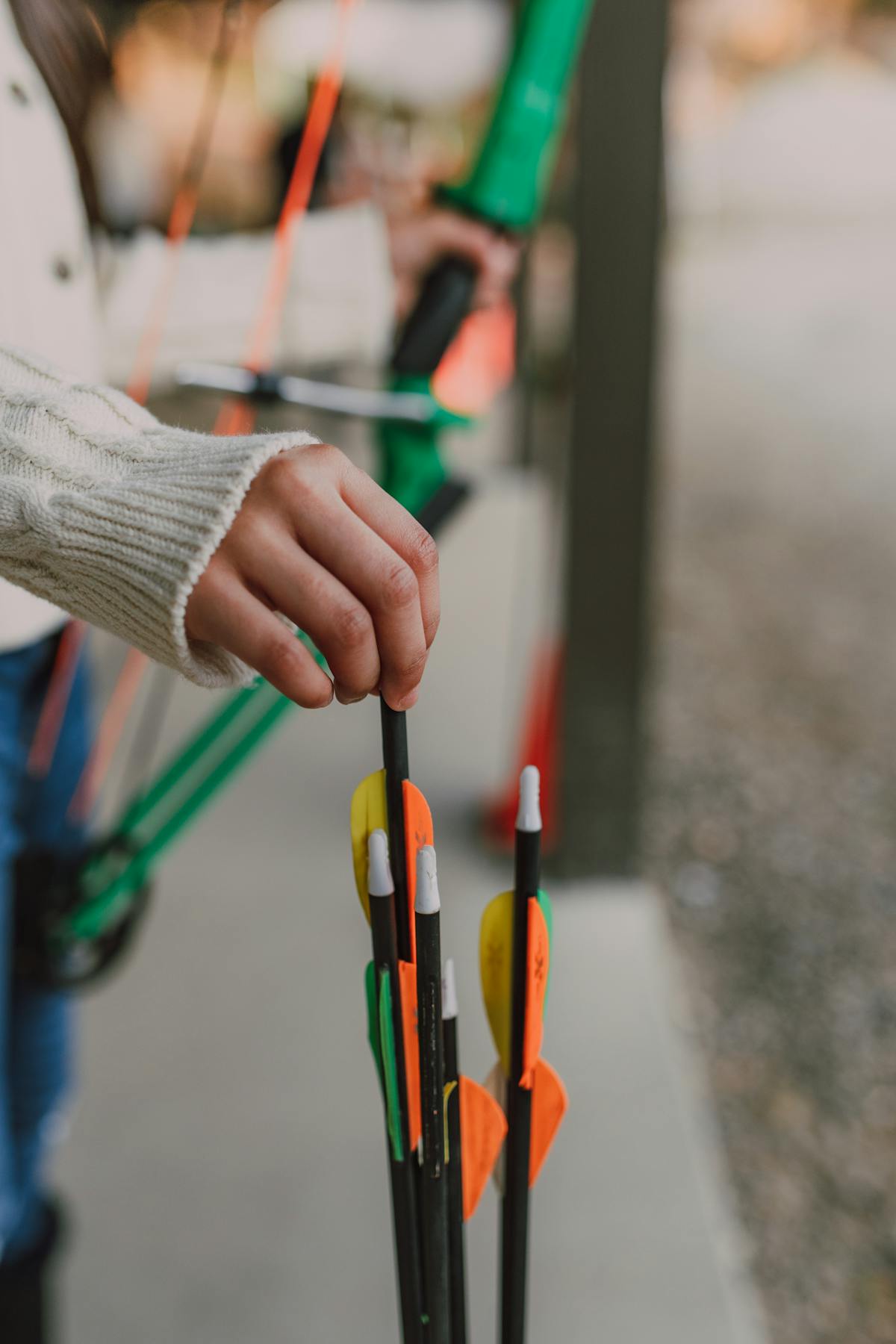
Mechanical (expandable) broadheads fly like field points because the blades stay tucked during flight. They’re forgiving of slight tuning imperfections and work well with lighter arrow setups. The trade-off? Blade deployment eats kinetic energy on impact, and some cheaper mechanicals fail to open on steep-angle shots or heavy bone.
Fixed-blade broadheads require better tuning and higher FOC to fly accurately, but they penetrate without relying on any moving parts. For elk, bear, and big-bodied game, fixed blades — especially single-bevel designs — have a proven track record of pass-through performance that mechanicals struggle to match.
If you’re hunting whitetail from a treestand at 20-30 yards, a quality mechanical on a well-tuned 420-grain arrow will do the job cleanly. If you’re spot-and-stalk hunting elk in the mountains where shots might be quartering or through heavy bone, build a heavier arrow with a fixed blade and make sure your compound bow tuning is dialed.
Arrow Length: How to Cut for Your Setup
Arrow length is straightforward but gets messed up constantly. Your arrow needs to extend at least 1 inch past the front of the riser at full draw. Many bowhunters run 1-2 inches past the rest for a margin of safety — especially in cold weather when thick gloves can subtly change hand position and draw length.
Here’s the process:
- Draw your bow with an uncut arrow marked at the front of the riser.
- Let down carefully and measure from the nock groove to your mark.
- Add 1-1.5 inches for safety.
- Cut all arrows in the batch to the exact same length using an arrow saw (not a pipe cutter — you’ll crack carbon).
Cutting arrows shorter makes them effectively stiffer. Leaving them longer makes them weaker. This is another reason to nail your sight-in process after building new arrows — even a half-inch difference can shift impact points.
Nocks, Inserts, and Components That Matter
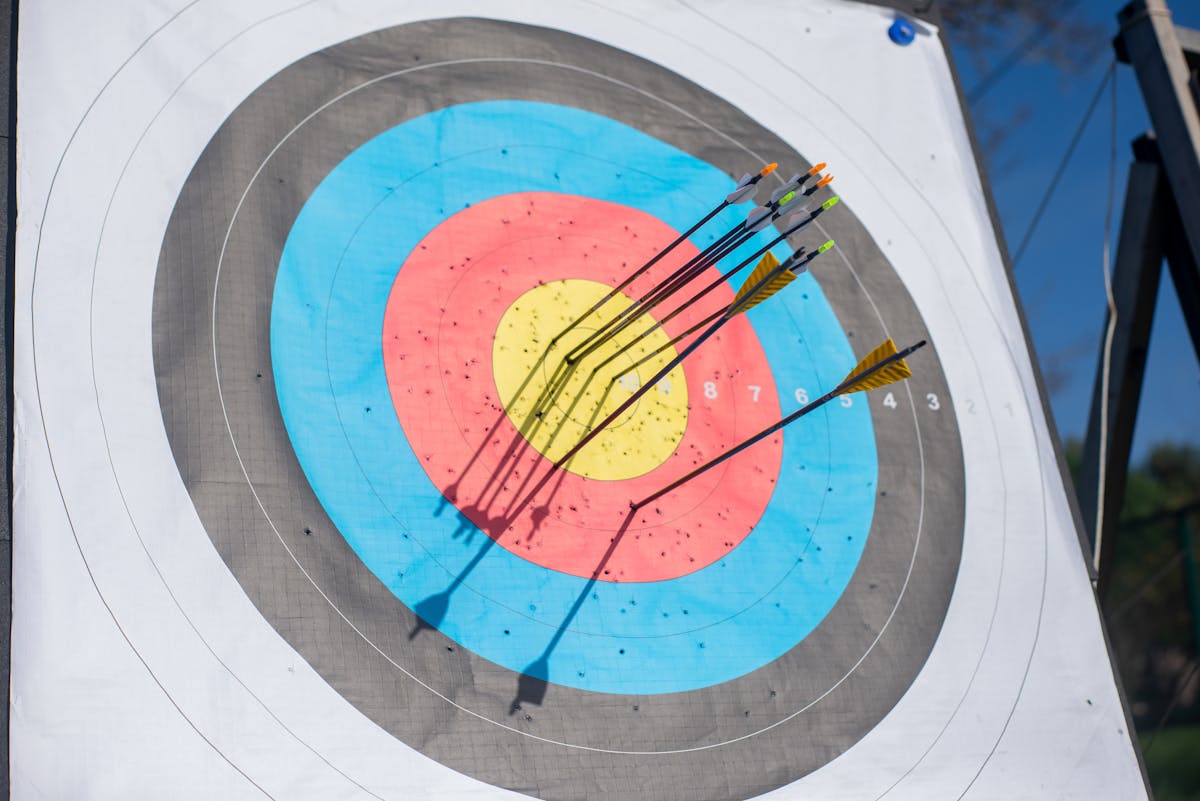
Small components add up. Every grain of weight at the front or back of the arrow changes performance, and component quality affects repeatability.
Nocks: Pin nocks, press-fit nocks, and bushing nocks each have their place. For hunting, use bright-colored lighted nocks if your state allows them — they make tracking arrows after the shot dramatically easier. Nock-Out and Lumenok are reliable options. Make sure your nock fit is snug but not too tight on the string; the arrow should hang from the string at a slight angle and release with a light tap.
Inserts: Standard aluminum inserts weigh around 12-25 grains. Stepping up to brass or stainless steel inserts (50-100+ grains) is the easiest way to boost FOC without changing arrows. Companies like Iron Will, Day Six, and QAD make precision inserts that align perfectly with the arrow shaft for broadhead concentricity.
Outserts and half-outs: These newer designs wrap around the outside of a micro-diameter shaft, adding weight forward while protecting the shaft end from damage. If you’re shooting skinny shafts like the Easton Axis or FMJ, outserts are worth a serious look.
Building Your Hunting Arrow: A Practical Walkthrough
Knowing the theory is one thing. Actually building a consistent set of hunting arrows is where it all comes together. Here’s a step-by-step approach that will produce a matched, accurate dozen:
- Select your shaft — Use the manufacturer’s spine chart based on your draw weight, draw length, and intended point weight. When in doubt, go one spine stiffer — it’s easier to weaken spine (by adding point weight) than to stiffen it.
- Spin test bare shafts — Roll each shaft on a flat surface or use a spin tester. Reject any that wobble. Straightness matters.
- Square the ends — Use an arrow squaring tool to make sure both ends are perfectly flat. This ensures broadhead concentricity and nock alignment.
- Install inserts — Clean the inside of the shaft with rubbing alcohol, apply a thin ring of hot-melt or epoxy, and press the insert in straight. Let cure fully before proceeding.
- Fletch — Use a jig for consistency. 3-fletch with 2-3 degree right helical is the most common hunting configuration. Let adhesive cure 24 hours before shooting.
- Weigh each arrow — Your finished arrows (without broadhead) should all weigh within 1-2 grains of each other. Outliers get set aside for practice.
- Tune with broadheads — Paper-tune, then walk-back tune to verify broadhead and field-point impact converge at multiple distances.
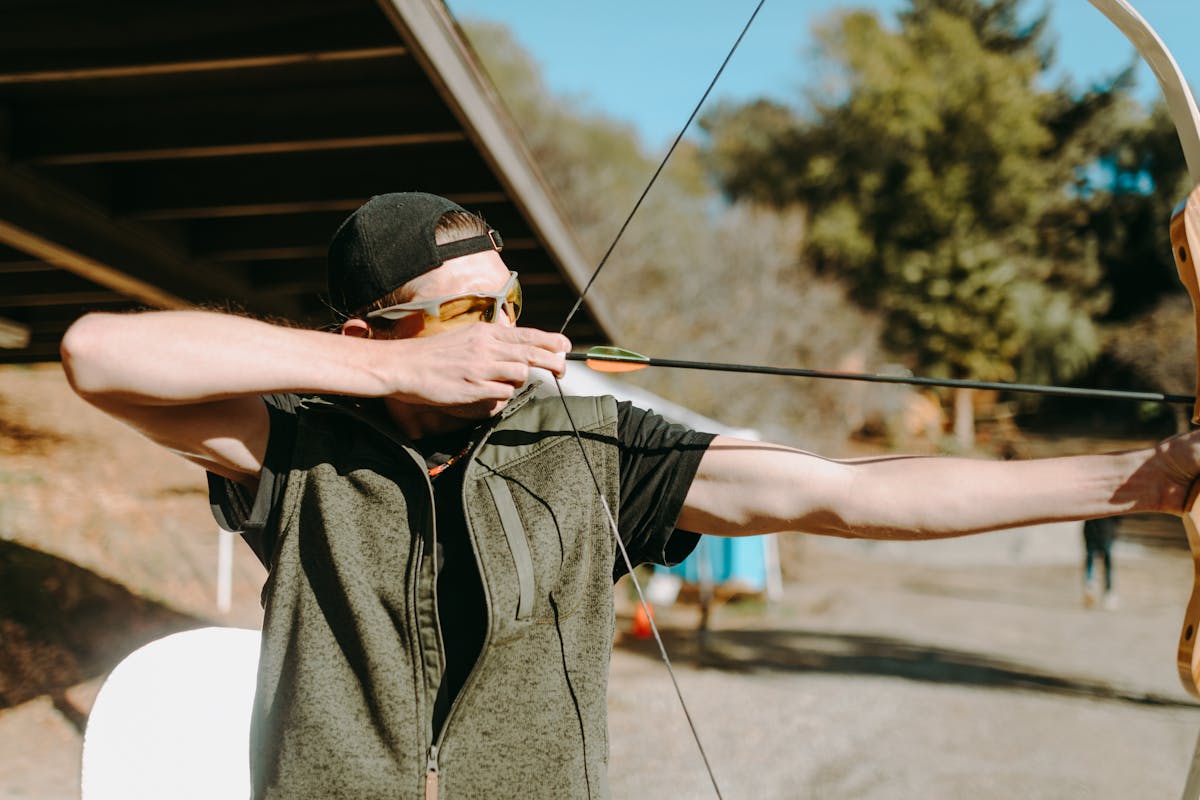
Watch the full arrow-building process in this detailed walkthrough:
Arrows Worth Trying This Season
If you’re ready to upgrade or build your first serious hunting arrow setup, these shafts have earned their reputation through years of field use and competition testing.
Gold Tip Hunter XT — Probably the best all-around hunting arrow on the market. Consistent spine, competitive pricing, and available in a wide range of sizes. The XT holds ±.003 straightness, which is more than accurate enough for any hunting scenario. If you’re not sure what to buy, start here.
Easton 6.5 Bowhunter — A micro-diameter shaft that delivers reduced wind drift and deeper penetration at a working-class price point. The 6.5mm profile means smaller entry holes and less drag through the animal. Hugely popular among whitetail and mule deer hunters in the Midwest.
Victory VAP TKO Elite — For hunters who want competition-grade straightness (±.001) in a hunting shaft. The TKO Elite is a premium option with match-grade consistency and is built for shooters who demand the tightest possible groups at distance.
🎯 Ready to Build Your Hunting Arrow Setup?
Don’t guess on arrow selection. Grab a dozen Gold Tip Hunter XT shafts from your local pro shop or online retailer, match them to your draw weight using the arrow spine chart, and build them right the first time. Your accuracy — and your harvest rate — will thank you.
Common Arrow Selection Mistakes to Avoid
Even experienced bowhunters make these errors. Avoid them and you’ll be ahead of 90% of the guys at deer camp.
- Buying arrows based on price alone. Cheap arrows have inconsistent spine and weight, which means inconsistent groups. Spend the money on quality shafts — they last multiple seasons.
- Ignoring broadhead weight in spine calculations. A 100-grain broadhead and a 150-grain broadhead change your effective spine. Always calculate with your actual hunting head installed.
- Never bare-shaft tuning. If your bare shaft flies differently from your fletched arrow, your spine is off or your bow needs tuning. Don’t just add more fletchings to mask the problem.
- Shooting damaged arrows. Flex every carbon arrow before each shot. If it clicks, cracks, or feels soft in any spot — break it and throw it away. A splintering carbon arrow can send shrapnel through your bow hand.
- Practicing with field points only. Your broadheads must hit the same point of impact as your field points at hunting distances. Verify this at 20, 30, and 40 yards minimum before opening day.
🏹 Upgrade Your Arrow Components
Want better FOC and tighter groups? Swap your standard aluminum inserts for precision brass inserts from Iron Will Outfitters or Day Six Gear. Adding 50-75 grains up front transforms broadhead flight — especially with fixed blades. It’s the cheapest accuracy upgrade you can make.
How Many Arrows Should You Take Hunting?
Pack more than you think you need. A quiver with 5-6 arrows is standard for most treestand and ground blind hunters. Spot-and-stalk hunters in the backcountry typically carry 6-8 arrows to account for lost or damaged shafts over multi-day hunts.
Always carry at least two arrows tipped with broadheads and ready to shoot. Animals don’t always go down on the first arrow, and follow-up shots happen. Your backup arrows should be identical to your primary — same total weight, same broadhead, same fletching. Consistency matters under pressure.
Keep a few extra bare shafts and broadheads in your truck or base camp. If you damage arrows during pre-hunt practice, you can rebuild on-site rather than hunting with a compromised setup.
📦 Stock Up Before Season
Arrow shafts and popular broadheads sell out fast in late summer. Order your Easton 6.5 Bowhunter or Victory VAP TKO shafts by June, build them in July, and spend August tuning. Walking into archery season with a fresh, matched dozen gives you confidence that no last-minute shopping trip can replicate.
Dial It In and Trust Your Equipment
Arrow selection for compound bow hunting isn’t complicated once you understand the variables. Match your spine to your draw weight and length. Build your arrows to a consistent total weight with proper FOC. Choose fletchings that stabilize your broadhead of choice. Then practice — a lot — with your actual hunting setup at realistic distances.
The best arrow is the one you’ve tested, tuned, and trusted. Do the work before the season, and when that buck steps out at 28 yards, the only thing you’ll be thinking about is your anchor point — not whether your arrow can handle the job.
For more on getting your compound bow dialed before hunting season, check out the World Archery Federation for equipment standards and the USA Archery resources on proper arrow care. And if you’re still sorting out your bow tune, run through our compound bow tuning guide before heading to the range with your new arrows.
