
Archery Blog
Single Pin vs Multi Pin Sight: 7 Factors to Decide
Jun
Walk into any archery shop and you’ll find two camps arguing about the same piece of gear: single pin vs multi pin sight. The single-pin crowd swears their uncluttered sight picture is the secret to consistent groups past 60 yards. The multi-pin crowd points out that a startled buck doesn’t wait for you to dial yardage. Both are right, which is exactly why this debate refuses to die. The real answer depends on where you hunt, how fast your shots happen, and how comfortable you are doing math in your head while a deer stares you down.
This guide breaks down the seven decision factors that actually matter, the trade-offs the marketing copy skips, and the hybrid setup most serious bowhunters end up running once they’ve owned both.
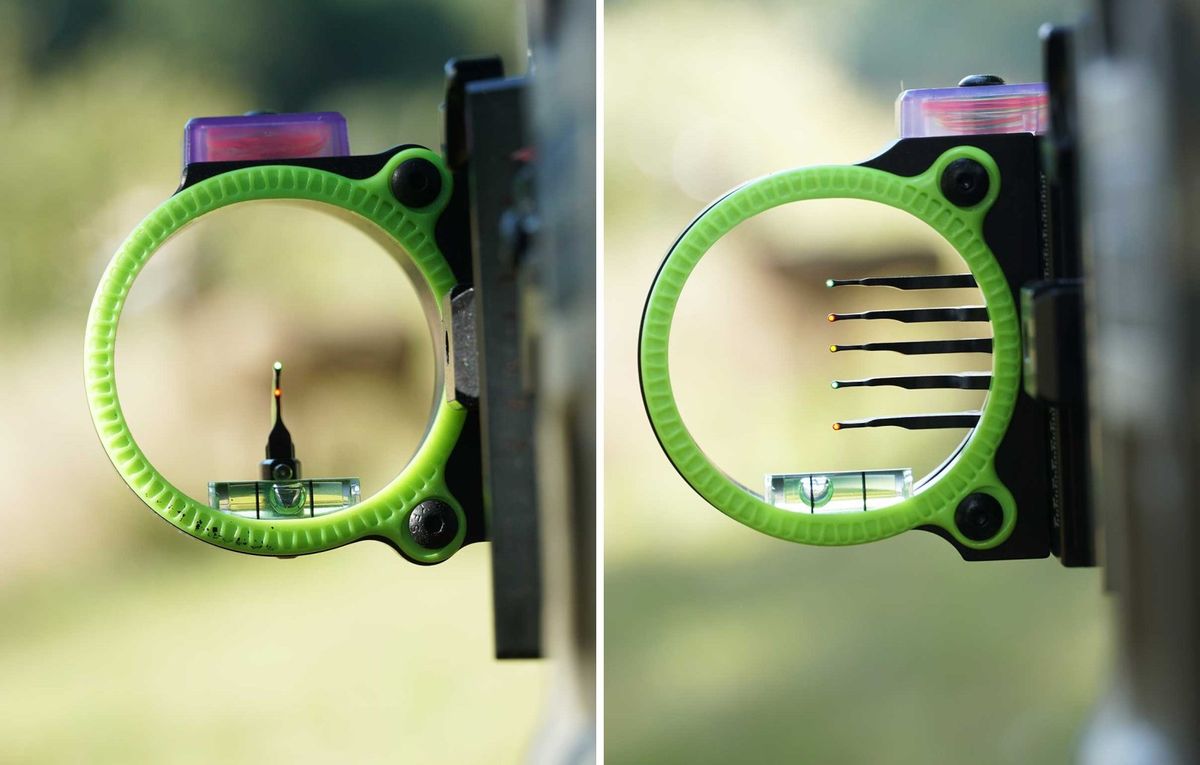
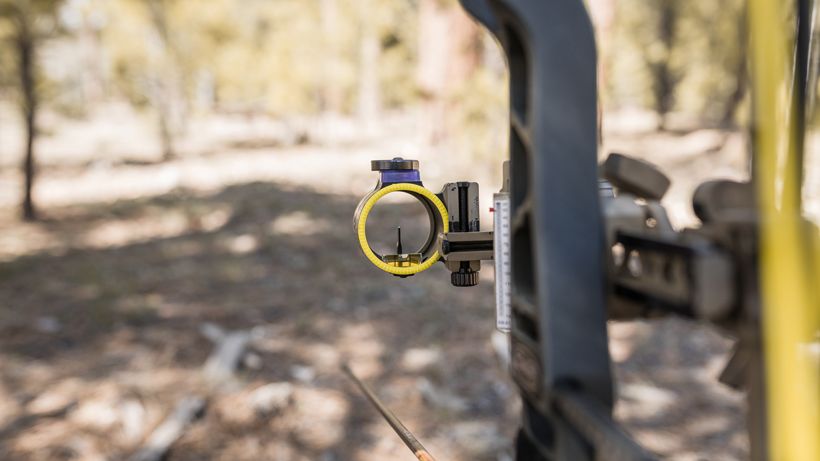
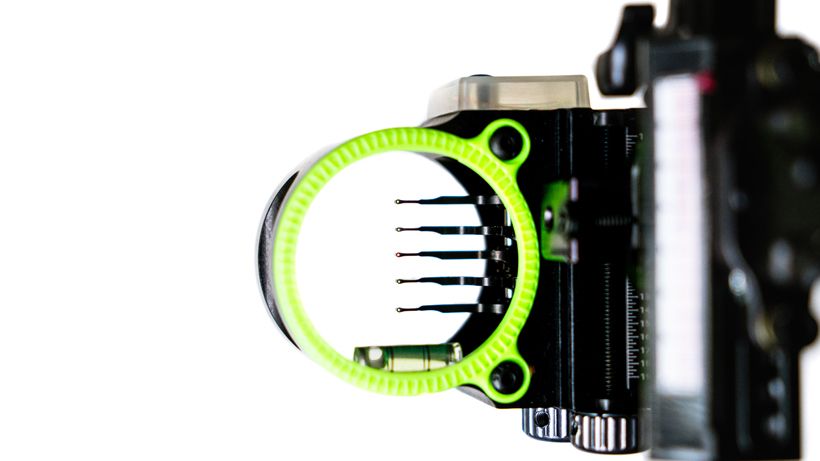
A single pin sight (left) shows one clean aiming point. A multi pin sight (right) stacks five pins for preset yardages.
What Actually Separates a Single Pin Sight From a Multi Pin Sight
A single pin bow sight uses one fiber-optic pin mounted on a vertical track. You dial that pin up or down with a knob, slider, or yardage tape to match the distance of your target. Aim, shoot, done. A multi pin bow sight uses three to seven fixed pins, each pre-set to a specific yardage — typically 20, 30, 40, 50, and 60 yards on a 5-pin setup. You don’t adjust anything; you just pick the pin that matches the range and hold on the spot.
That’s the mechanical difference. The functional difference shows up the moment something living steps into your shooting lane.
Single Pin Bow Sight: Where It Wins and Where It Hurts
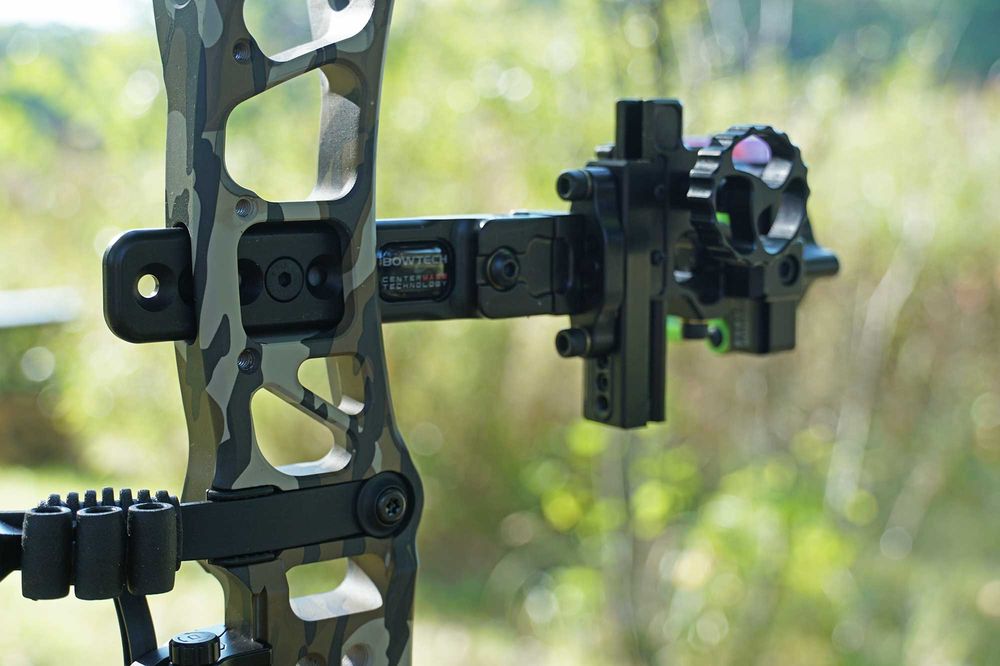
Single-pin sights have a clean sight picture. One pin, no clutter, no risk of using the wrong reference. At long range — past 50 yards — that uncluttered view matters more than most hunters realize, because pin gap (the visual space between fixed pins) shrinks at distance and crowds your target. With a single dialed pin, your aiming point is dead center every time.
The trade-off is movement. To shoot a different distance, you have to physically adjust the slider. In the woods that means lowering your bow, dialing the yardage, drawing again — extra motion a whitetail will absolutely catch. Some shooters memorize holdovers (aim a fist high at 35 if your pin is set at 20), but holdovers eat into the precision the sight gave you in the first place.
The case for single pin gets strongest when your shots are predictable. Western elk hunters who range an animal at 47 yards before drawing love a single pin. Target archers shooting at known distances live on them. 3D archers who don’t mind taking a beat between targets use them constantly. A treestand bowhunter on an unpressured property where the deer trail is fixed at 22 yards? Also fine.
Multi Pin Bow Sight: The Workhorse of Bowhunting
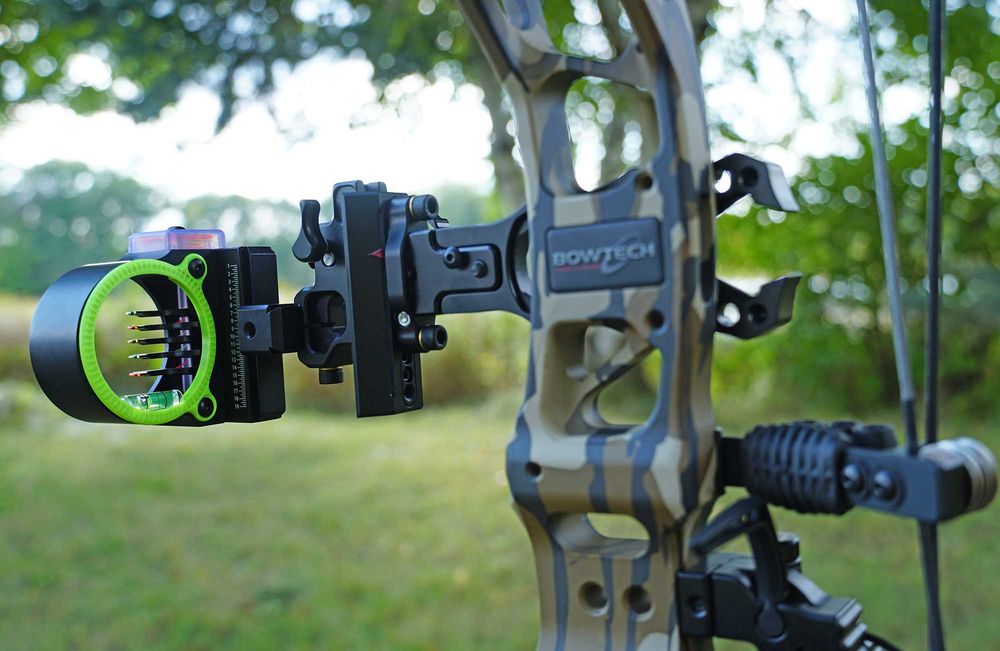
A multi-pin sight has no moving parts in the moment of truth. You see the deer at 38 yards, you split the difference between your 30 and 40 pins, you shoot. No knob to turn, no slider to dial, no chance to misjudge your dial position in the dark. That’s the entire pitch, and it’s a strong one.
The truth is, most whitetail bowhunters in the eastern U.S. who switch from multi to single eventually switch back. Shots happen fast in thick cover. A deer that’s broadside at 25 yards can be quartering away at 32 before you finish ranging, and you don’t get a second draw. Multi-pin sights forgive that pace.
The downsides are real, though. Five pins crowd the housing. At long distance, the pins themselves can cover the vitals you’re trying to hit. Pin gapping — aiming between pins for in-between yardages — requires snap calculation under adrenaline, and adrenaline isn’t kind to math. The classic miss in bowhunting isn’t a flinch; it’s a hunter staring at a buck and realizing two seconds too late that they aimed with the 30 pin on a 22-yard shot.
Accuracy Past 40 Yards: Where the Math Changes
Past about 40 yards, the precision argument tilts toward single pin — and it has nothing to do with skill. It’s physics. A typical hunting arrow drops roughly 6 to 8 inches between 30 and 40 yards depending on speed. If your pins are set at 30 and 40, the gap between them on the sight ring represents 6 to 8 inches of drop. That’s a huge target window with no fine adjustment.
With a single pin dialed to 36 yards, your aiming point lines up exactly with where the arrow will hit. That’s why competitive 3D shooters and Western archers chasing mule deer and elk at extended ranges run sliders almost universally. At 60 yards, a multi-pin shooter is doing trigonometry to bracket between the 50 and 60 pins. The single-pin shooter just turned a knob.
For shots under 30 yards — which is most of the average whitetail season — the precision difference is negligible. Both sights will put an arrow through the same softball-sized circle. Don’t let online debates convince you a 22-yard shot needs a $500 slider sight.
Hunting Style: Treestand, Spot-and-Stalk, and 3D Each Want Something Different
For treestand whitetail hunting in the East and Midwest, multi-pin is the default for good reason. Shots are usually inside 30 yards, deer move fast, and you can’t risk a dial movement when a buck is at 18 steps. A 3-pin setup at 20/30/40 covers nearly every realistic shot.
For spot-and-stalk and Western archery, single pin or slider is the answer. You’re glassing animals, ranging them before the stalk, and shooting at known distances. A slider sight set to 47 yards gives a precise aiming point that no multi-pin setup can match at that range.
For 3D archery, the format dictates the sight. Tournament 3D — where you guess yardage on unknown distance targets — favors single pin because you set the dial to your best guess and hold dead-on. Practice 3D and league 3D often allow rangefinders, which makes single pin even stronger. Indoor target archery is single-pin territory across the board.
The Sliding Multi-Pin Sight: The Hybrid That Won the Debate
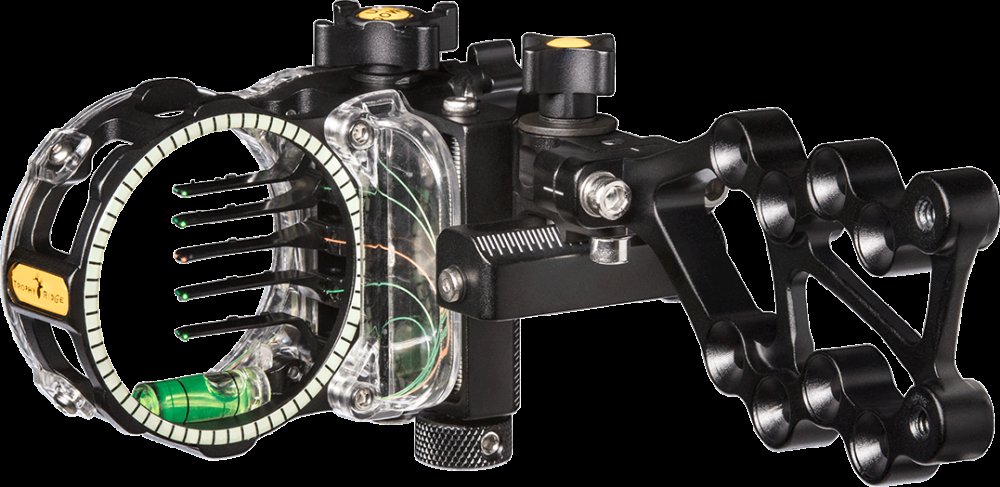
The smart compromise — and the setup most serious bowhunters land on after a few seasons — is a sliding multi-pin sight. You get a small cluster of fixed pins (usually three) covering close-range, plus a slider that lets you dial out to 80 yards or more for known shots. Black Gold’s Pro Hunter, Trophy Ridge’s React Pro, and Spot Hogg’s Fast Eddie all run this format.
The pitch is simple. You leave the fixed pins set for 20, 30, and 40 — the distances you’ll never have time to dial. For anything past that, you have the option to slide. It’s not the cheapest sight on the rack, but it removes the single-vs-multi argument entirely.
Watch This Before You Decide
This short comparison covers the on-bow feel of both sight types side by side, including how the sight picture changes when you draw on a moving target — worth four minutes before you spend $300.
7 Factors to Pick the Right Sight for You
Forget the brand wars. Run yourself through these seven questions and the answer becomes obvious:
- What’s your typical shot distance? Under 30 yards: multi-pin. 30–50 yards: either. 50+: single pin or slider.
- Treestand or ground? Treestand favors fixed pins (you can’t crouch to dial). Ground hunting tolerates either.
- Open country or thick cover? Open country = predictable yardages = single pin. Thick cover = surprise shots = multi-pin.
- How often do you range before drawing? Always rangefinder first: single pin works. Often improvise: multi-pin.
- How fast are your shots developing? Quick-shot scenarios kill the single-pin advantage immediately.
- Do you compete in 3D or target? Yes: single pin or slider.
- What’s your budget? A $90 fixed 5-pin will outshoot a $300 slider in untrained hands. Match the sight to your skill level.
Honest take: if you hunt whitetails from a stand 80% of the time, buy a quality 3- or 5-pin. If you hunt mule deer, antelope, or elk in open country, buy a single pin or slider. If you do both — and have $400 to spend — buy a sliding multi-pin and stop overthinking it.
Sighting In: Setup Differences That Trip Hunters Up
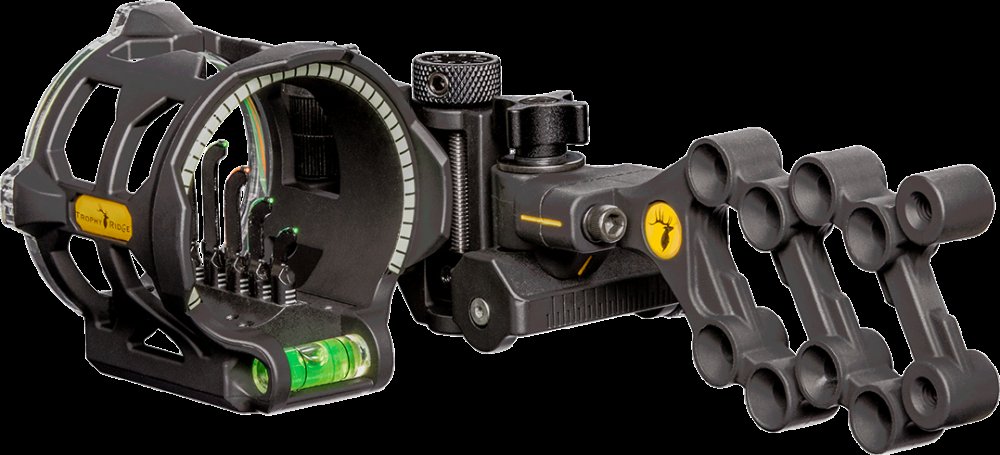
A multi-pin sight gets sighted in one pin at a time, usually starting at 20 yards. Each pin gets its own windage and elevation tweak. Plan on an hour or two for a fresh 5-pin, and re-check the top pin every 50 shots — fiber optic stretches, things shift. Our step-by-step guide to sighting in a compound bow walks through the full process if you’ve never set one up from scratch.
A single pin sight gets sighted in at one or two reference distances (commonly 20 and 60), and then you generate a yardage tape that maps the dial position for every yard between them. Online tape generators from HHA, Spot Hogg, and Black Gold simplify this — input your bow’s speed and the two reference marks, and the tape prints out ready to apply.
One thing both sights demand: a properly installed peep that lines up with your sight housing at full draw. If your peep alignment is off by even a few degrees, no sight in the world will save your accuracy. A quick peep sight installation check belongs in any new sight setup, single or multi.
Aiming method also matters. Sight pin vs gap shooting vs instinctive each pull a different sight type — see our breakdown of archery aiming methods compared if you’re not sure which style you actually shoot.
Common Mistakes With Each Sight Type
For multi-pin shooters, the biggest mistake is picking the wrong pin under pressure. Drill yourself on pin selection — call out the pin out loud before every practice shot until it’s reflex. Second biggest mistake: not re-checking pins after a long off-season. Fiber optic stretches, screws back out, and a 50-yard pin can drift two inches at distance over a winter in storage.
For single-pin shooters, the killer mistake is forgetting to reset the dial. You range a buck at 45, dial to 45, the buck moves to 22, and you forget the pin is still set for 45. The arrow sails clean over the deer’s back. Pros build a habit: after every shot or every let-down, the dial goes back to the closest expected distance. Some single-pin shooters tape a 25-yard reference dot on the housing as a visual reminder.
Real-World Performance: What the Field Actually Shows
Outdoor Life ran an informal poll of pro bowhunters in 2024 and the split was roughly 60/40 multi-pin to single-pin — but that included Western and Eastern hunters mixed. When the numbers were broken down by hunting region, the split flipped: Eastern whitetail hunters ran multi-pin or sliding multi-pin at about 75%, while Western elk and mule deer hunters ran slider single pin at about 70%. That tracks with how shots actually develop in those regions.
3D tournament archers are a near-unanimous single-pin camp. The IBO and ASA shoot known and unknown distance, and the precision of a dialed pin matters when score rings are scored by quarter-inch.
The Bottom Line
The honest answer to single pin vs multi pin sight isn’t a winner — it’s a question about your hunting style. If you spend more time perched 18 feet up over a corn pile than glassing ridgelines, a quality 3-pin or 5-pin sight will outshoot you long before you outshoot it. If you hunt big country at known distances, the slider wins. And if you can swing the cost, a sliding multi-pin solves both problems at once and lets you stop second-guessing your setup every time you watch a hunting video.
Pick the sight that matches the next ten shots you’re realistically going to take. Then go shoot it enough that you don’t think about the sight at all — that’s when you start hitting consistently.
Sources
- Outdoor Life — Single Pin vs Multi Pin Bow Sights for Deer Hunting — field test comparison from a pro bowhunter, with real product examples.
- GoHunt — Single Pin vs. Multi-Pin Bow Sights — Western hunting perspective with stack-up of pros and cons.
- Bear Archery — Single Pin vs Multi Pin: Which Is Better? — manufacturer breakdown with style-based recommendations.
- HHA Sports — Archery Sights Category — specs and feature reference for slider single-pin sights.
Browse archery bows, arrows, and accessories at the Archery Supplier shop →
