Archery Blog
Archery Scoring: Complete System Explained
Feb
Understanding how to score in target archery helps you track progress, participate in competitions, and set meaningful practice goals. Whether you shoot recreationally or plan to compete, knowing proper scoring procedures ensures accurate assessment of your shooting and fair comparison with other archers.
Basic Target Ring Scoring System
Standard archery targets feature concentric rings printed in alternating colors, with point values increasing toward the center. The scoring zones follow international standards used worldwide:
- Inner X ring: 10 points plus tiebreaker value
- 10 ring (yellow center): 10 points
- 9 ring (yellow): 9 points
- 8 ring (red): 8 points
- 7 ring (red): 7 points
- 6 ring (blue): 6 points
- 5 ring (blue): 5 points
- 4 ring (black): 4 points
- 3 ring (black): 3 points
- 2 ring (white): 2 points
- 1 ring (white): 1 point
- Miss: 0 points
How to Read Arrow Placement
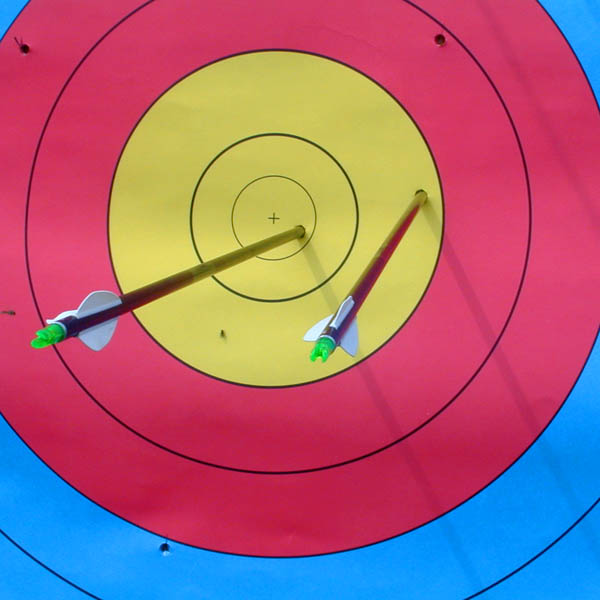
An arrow scores the value of the highest-scoring ring it touches. The critical rule: if an arrow shaft contacts the line between two scoring zones, it receives the higher point value. These are called line cutters and represent one of archery scorings most important concepts.
The arrow shaft itself determines the score, not the hole it creates in the target face. Even if the visible hole appears entirely within a lower ring, if the actual shaft touches the higher ring line, it scores the higher value. This distinction matters frequently in close scoring situations.
In competition, judges may use magnifying devices to determine precisely where arrow shafts contact scoring lines. At practice, give yourself the benefit of the doubt on borderline calls—the goal is improvement, not self-punishment.
Understanding the X Ring
The X ring is the innermost circle at the very center of the target, contained within the 10 ring. Arrows striking the X ring score 10 points, identical to the surrounding 10 ring. However, X counts serve as tiebreakers in competition.
When two archers finish a round with identical total scores, the one with more X ring hits wins. An archer scoring 270 points with twelve Xs defeats an archer with 270 points and eleven Xs. This creates meaningful differentiation even among high-level shooters who rarely miss the center.
During practice, many archers track Xs separately from regular 10s to monitor precision improvement even after overall scores stabilize at high levels.
Scoring Rounds and Ends
What is an End?
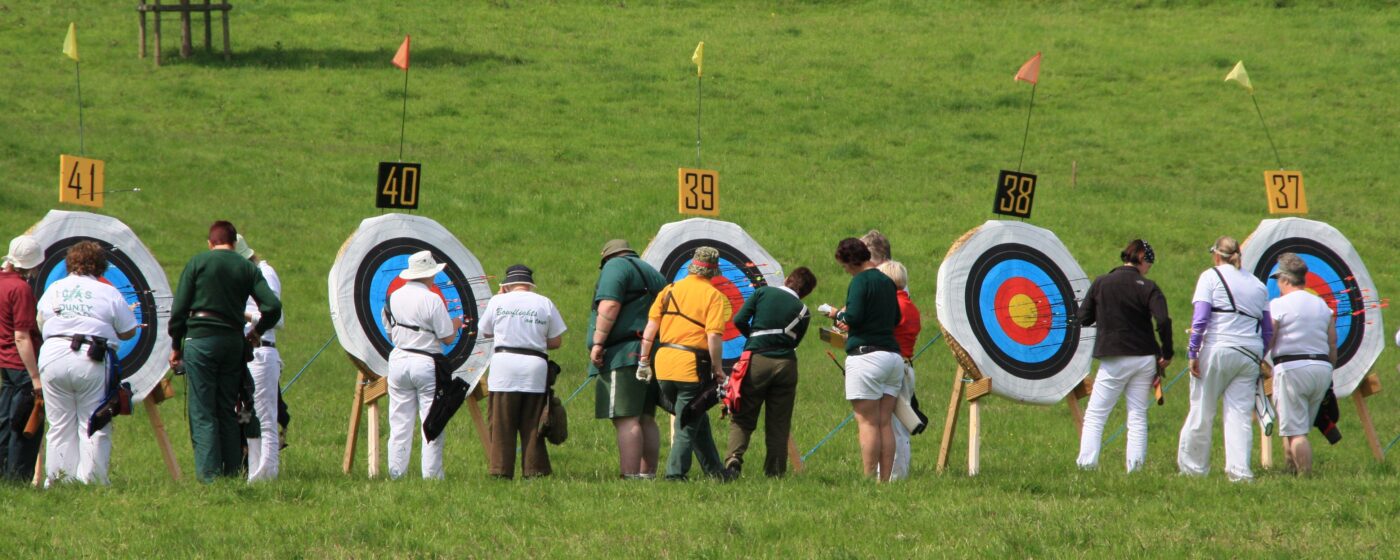
Archers shoot in groups of arrows called ends. After completing an end, all archers walk to their targets together, score their arrows, record results, and retrieve arrows before returning to shoot the next end. Common end sizes include:
- 3 arrows per end: Standard for outdoor target competition
- 6 arrows per end: Common in indoor competition and practice
Common Competition Round Formats
720 Round (Olympic Ranking Round): 72 arrows shot at 70 meters for recurve archers (50 meters for compound). Maximum possible score is 720 points. This format determines seeding for Olympic-style elimination matches.
300 Round (Indoor): 60 arrows at 18 meters, typically shot at a vertical three-spot target. Maximum score is 300 points, with 60 possible Xs for tiebreaking.
Vegas Round: 30 arrows at 20 yards, shot at a triangular three-spot target face. Maximum 300 points. This popular indoor format features one arrow per spot to prevent arrow damage.
900 Round: 30 arrows each at 60, 50, and 40 yards for a total of 90 arrows. Maximum possible score is 900 points. Tests consistency across varying distances.
Proper Scoring Procedure
Recording Scores
Write arrow scores in descending order within each end, from highest to lowest value. An end with arrows scoring 10, 8, and 9 would be recorded as 10, 9, 8—not the order in which arrows were shot. This standardization makes scorecards easier to read and verify.
Mark X ring hits distinctly from regular 10s, typically noting X explicitly. An end of X-10-9 records as X, 10, 9, not simply 10, 10, 9. Tracking Xs separately matters for tiebreaking purposes.
Calling and Verifying Arrows
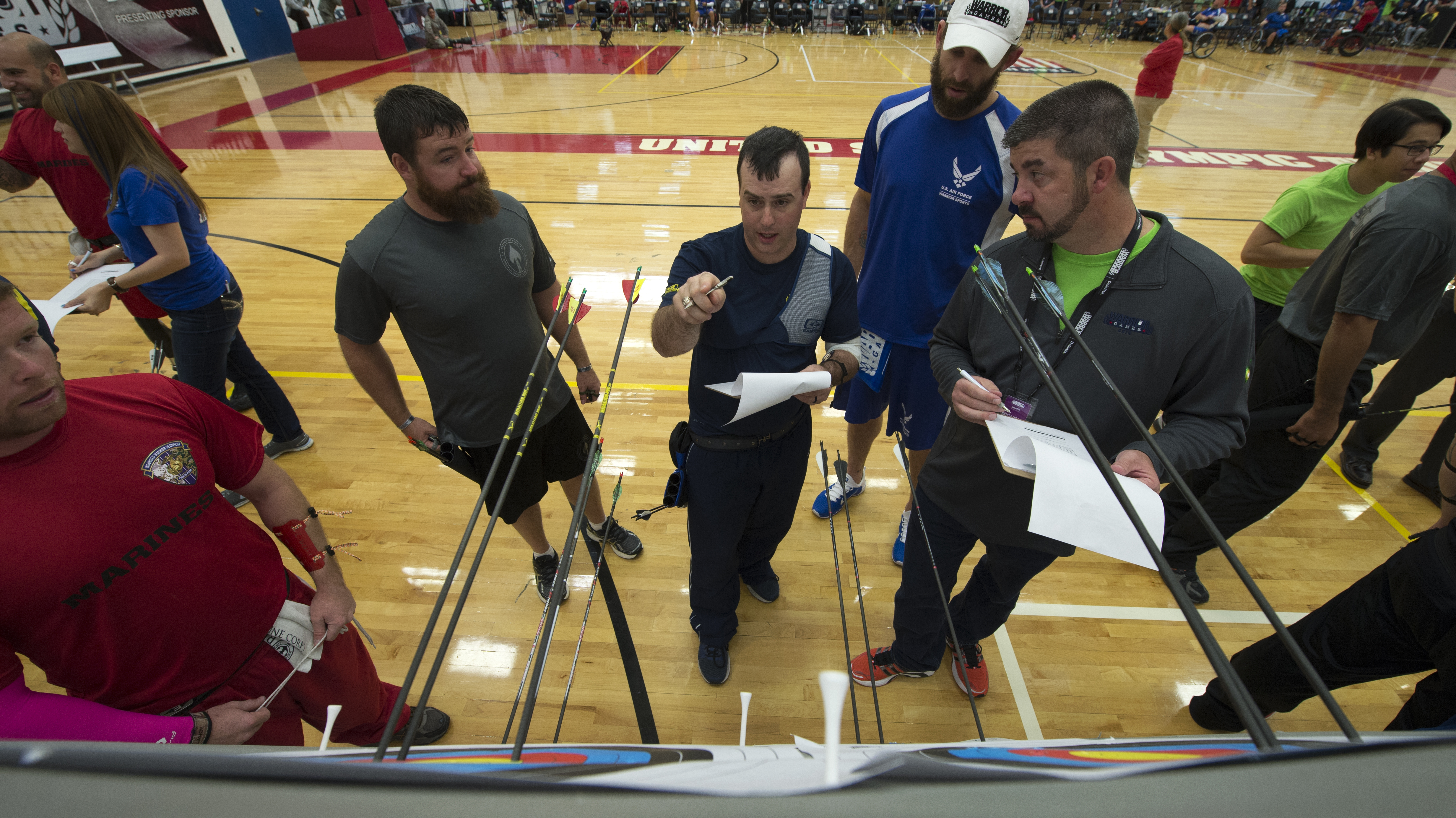
In formal competition, one archer calls scores aloud while their partner or an assigned scorer records. Call arrows from highest to lowest value. For arrows close to scoring lines, wait until both archers agree on the value before recording. Request judges for disputed arrows that cannot be resolved.
Arrow Removal Protocol
Never remove arrows until all scores are recorded and both archers have verified the scorecard. Pulling arrows prematurely can shift other arrows or damage evidence needed to resolve scoring disputes. Extract arrows carefully to avoid tearing the target face or disturbing neighboring arrows.
Handling Special Situations
Bounce-Outs and Pass-Throughs
Arrows that hit the target but bounce out or pass completely through still score based on the hole left in the target face. Report bounce-outs immediately to range officials in competition—they will inspect the target before additional arrows are shot at that face.
If no hole exists and no official witnessed the impact, the arrow typically scores as a miss. This underscores the importance of alerting judges immediately when equipment malfunctions occur.
Tracking Your Improvement
Beyond raw scores, several metrics help monitor development:
- Average arrow score: Total points divided by arrows shot. Allows comparison across different round formats.
- Group size: Physical spread of arrows on target. Tighter groups indicate improving consistency.
- X percentage: Proportion of shots hitting the X ring. Tracks precision at the highest level.
Ready to practice scoring? Our Paper Target 50-Pack provides plenty of scoring faces for extended sessions.
Ready to practice? Check out our paper targets in the shop.
