
Archery Blog
Carbon Arrows by Price Range: What Your Money Actually Buys
Jul
Walk into any pro shop and the carbon arrow wall tells a confusing story. Two arrows can look identical — same diameter, same fletching, same glossy carbon weave — yet one costs $45 a dozen and the other costs $180. The shafts are not the same, but the difference is invisible until you understand what you are paying for. This guide walks the price ladder from the cheapest usable carbon shafts to the tournament-grade stuff, and pins down exactly where each extra dollar goes — and, just as importantly, where it stops buying you anything you will ever feel.
The three numbers price is really measuring
Before we talk dollars, understand that the price of a carbon arrow is mostly a proxy for manufacturing precision expressed in three specs. Once you can read them, the whole wall of arrows reorganizes itself into logical tiers.
Straightness tolerance
This is the headline number, printed as a figure like ±.006″ or ±.001″. It describes how far the shaft can bow away from a perfectly straight centerline along its length. A budget arrow at ±.006″ can wander six thousandths of an inch; a premium shaft holds ±.001″, six times tighter. Tighter straightness means the arrow leaves the same way every time and spins truer in flight, which shows up as smaller groups the farther you shoot.
Weight tolerance
Measured in grains, this tells you how much the individual arrows in a dozen can vary from each other. Cheap sets might run ±3.0 grains; the best shafts are matched to ±0.5 grains. When every arrow in your quiver weighs the same, they all fly to the same point of impact instead of stringing vertically at distance.
Spine consistency
Spine is the shaft’s stiffness, and every carbon arrow flexes as it launches — the archer’s paradox in action. Premium lines don’t just hit a target spine value; they control how uniform that stiffness is around the shaft’s circumference, then mark the stiff side so you can index all your arrows the same way. That per-shaft consistency is the quiet feature you are buying at the top of the price range, and it is the hardest one to see on a spec sheet.
The budget tier: roughly $40 to $70 a dozen
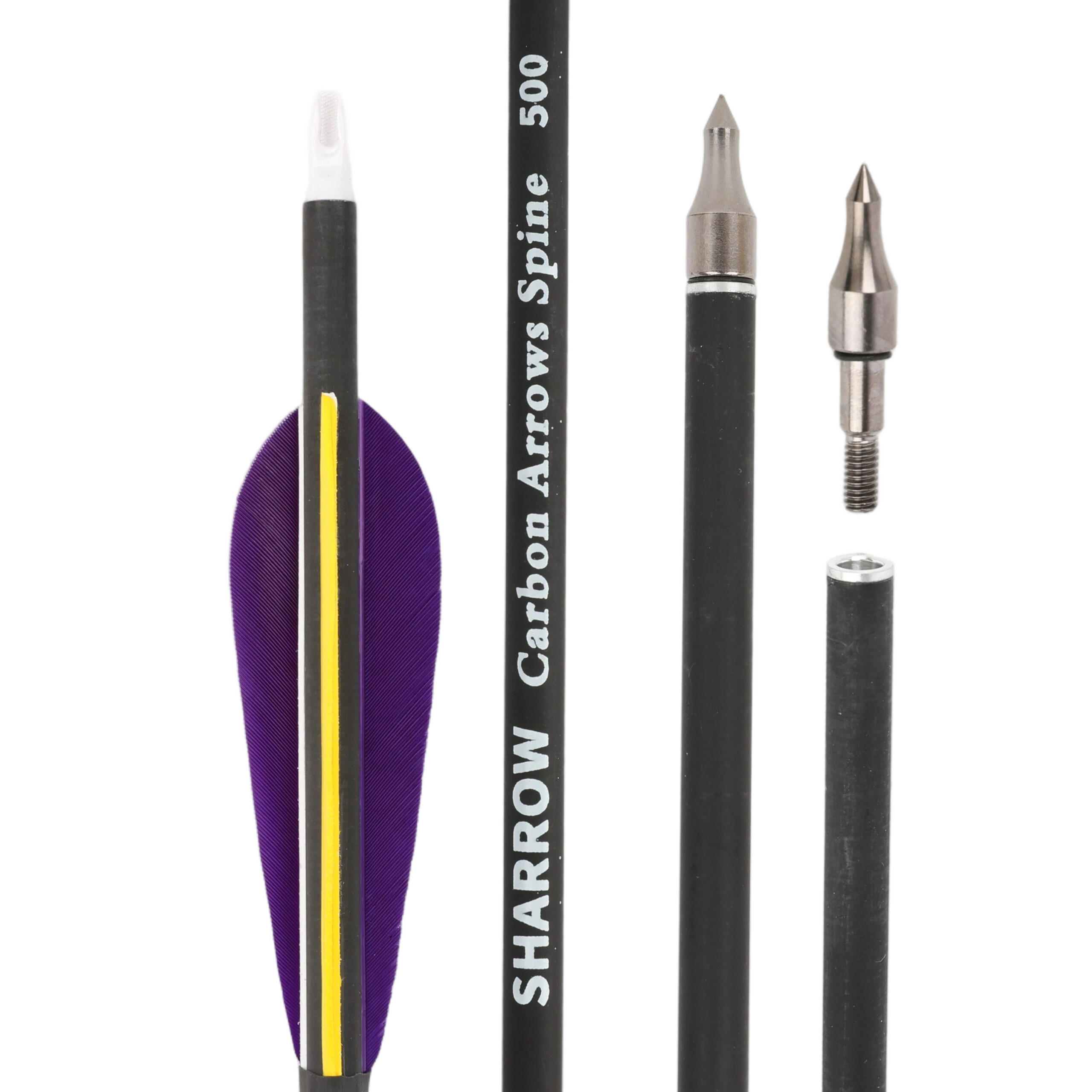
Entry-level carbon shafts — think Pinals, low-end Carbon Express, and house-brand target arrows — land around $8 to $12 per arrow. Straightness typically sits in the ±.006″ to ±.009″ range, and weight tolerance can run as loose as ±3.0 grains. On paper that sounds sloppy, and for a competitive shooter it is. For everyone else, it matters far less than the internet implies.
Here is the honest truth about budget carbon: inside 30 yards, on a target bale or on a whitetail at bowhunting range, a beginner cannot out-shoot a ±.006″ arrow. The wobble that spec allows is smaller than the error your own form introduces on every shot. Budget shafts are also the smart choice while you are still learning to walk arrows out of a target without bending them, because you will lose and break them, and losing a $4 arrow stings a lot less than losing a $15 one.
The one place budget arrows genuinely cost you is uniformity across the dozen. Loose weight matching means your “flyers” aren’t always your fault — a couple of heavy shafts will print low no matter how clean your release is. If you weigh each arrow on an inexpensive grain scale and group them into matched sets, you can claw back most of that performance for free.
Shop Pinals Carbon Hunting Arrows on Amazon →
The mid-range: roughly $70 to $130 a dozen
This is where most serious archers should live, and it is the tier that delivers the steepest jump in value for the money. At $12 to $20 per arrow you pick up shafts like the Victory VForce, Easton’s mid lines, and the Carbon Express hunting series. Straightness tightens to around ±.003″, weight tolerance falls toward ±1.0 to ±2.0 grains, and the shafts start shipping with usable spine indexing.
The ±.003″ straightness figure is the sweet spot worth memorizing. General guidance across the industry points to ±.003″ or better as the mark of genuinely precise manufacturing, and it is the point where the arrow stops being the limiting factor in your accuracy for all but the longest shots. Past this tier you are paying to shrink a tolerance that is already smaller than your groups.
Mid-range shafts also get you consistent grains-per-inch (GPI), which is where arrow weight and momentum come from. Most balanced hunting and target builds want something in the 8 to 10 GPI window — heavy enough to carry energy and forgive a little wind, light enough to shoot flat. A 350-spine VForce at roughly 8.7 GPI is a textbook example of a do-everything shaft that pairs well with a mid-weight compound setup.
Shop Victory VForce Carbon Arrows on Amazon →
The premium tier: $130 and up a dozen
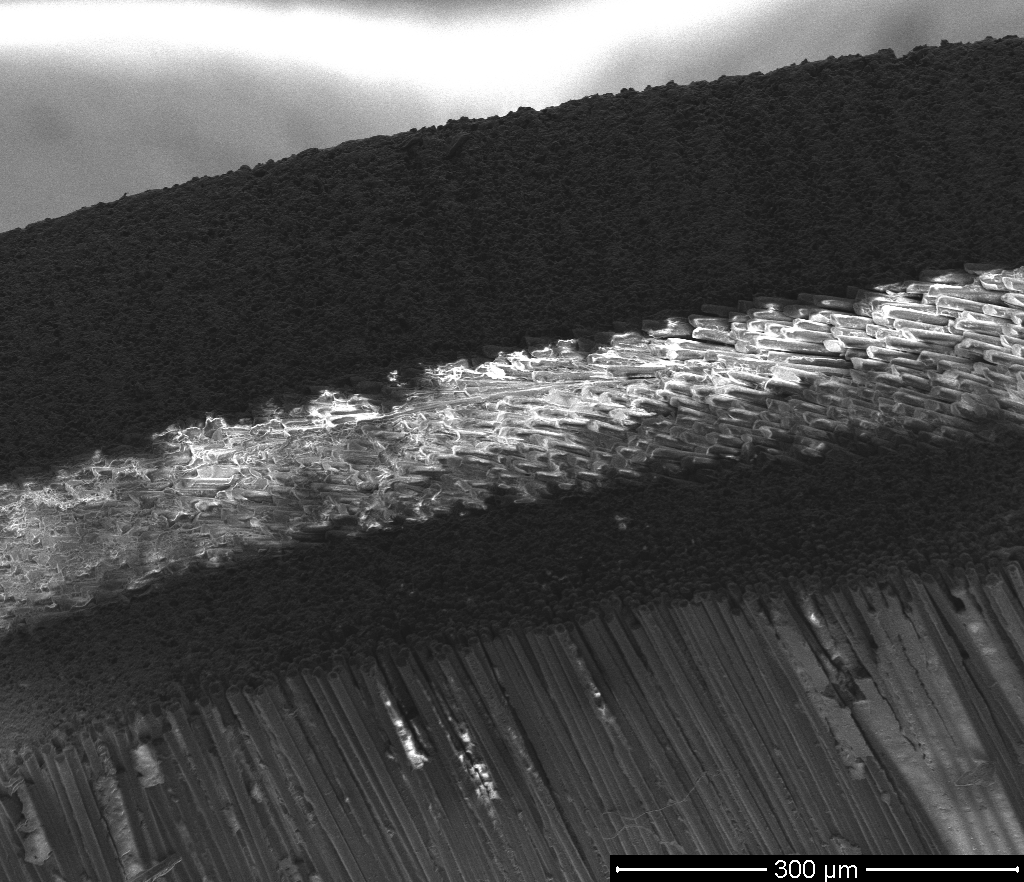
At the top of the wall sit shafts like the Gold Tip Hunter Pro and the Carbon Express Maxima RED. The Hunter Pro holds ±.001″ straightness and an astonishing ±0.5-grain weight tolerance; the Maxima is laser-checked for straightness to within one ten-thousandth of an inch and uses spine-control technology that stiffens the two ends of the shaft to steady the broadhead and the nock end in flight. These are real engineering achievements, and the specs are not marketing fiction.
The question is not whether premium arrows are better — they measurably are — but whether you are the reason your groups are the size they are. A tournament archer shooting 60 to 90 meters, or a bowhunter stretching ethical range on a western hunt, will see the payoff: at distance, a ±.001″ shaft with half-grain matching keeps arrows stacking when a looser arrow would start to spread. For that shooter, the arrow is now precise enough to reveal flaws in the bow and the shooter rather than add its own.
The premium tier is not about making a good archer better — it is about removing the arrow as an excuse. If your groups shrink when you switch, you were being held back. If they don’t, you just found the ceiling of your own form.
The trap at this level is buying premium arrows to compensate for a tuning problem. No amount of straightness fixes a bad rest, an untuned compound bow, or a torqued grip. Spend the $130 dozen only after your setup is dialed, or you are paying supercar money to drive on flat tires.
Matching the tier to what you actually do
Price range should follow purpose, not ego. A few clean matchups cover almost everyone:
- New archer, learning form: budget tier. Break them, lose them, learn on them, and put the savings toward lessons or a better release aid.
- Backyard and 3D shooter, weekend bowhunter: mid-range. This is the highest-value slot on the wall and where most people should stop.
- Competitive target archer or long-range hunter: premium — but only after the bow is fully tuned and your form is repeatable.
- Traditional and instinctive shooters: mid-range wood-look or bare carbon, matched by weight; extreme straightness matters less at trad ranges than nock and point consistency.
Notice that no category says “buy the most expensive arrow you can afford.” Arrows are consumables. You will fletch them, cut them, bury broadheads in bone, and eventually snap them in a target butt. Building your whole quiver around shafts you are afraid to lose is a quiet way to shoot less, and shooting less is the only thing that reliably makes anyone worse.
Where the extra dollars stop paying you back
If you plot accuracy gained against dollars spent, the curve is brutally clear. The jump from budget to mid-range buys you real, visible improvement — tighter groups, fewer unexplained flyers, arrows that all land together. The jump from mid-range to premium buys you a much smaller improvement that only becomes visible at long distance or in the hands of an already-excellent shooter. Everywhere in between, the money is buying peace of mind more than points.
So spend where the curve is steep. Get to that ±.003″ mid-range shaft, match your arrows by weight, index them by spine, and then put your remaining budget into arrows you will actually shoot instead of a single dozen too precious to launch. A well-tuned mid-range shaft in the hands of someone who practices will out-shoot a premium shaft owned by someone protecting it — every single time.
Shop Gold Tip Hunter Carbon Arrows on Amazon →
The bottom line on buying by price
Carbon arrow pricing is not a scam and it is not a straight line to better shooting. Every tier exists for a reason: budget shafts to learn and lose, mid-range shafts to shoot seriously without flinching at the cost, and premium shafts to squeeze the last few percent when you have earned the right to notice the difference. Read the three specs, be honest about your own form, and buy the cheapest arrow that stops being your limiting factor. That arrow is almost never the most expensive one on the wall — and knowing that is worth more than any dozen you could buy.
Sources
- Outdoor Life — The Best Hunting Arrows, Tested and Reviewed
- Wikipedia — Archer’s Paradox
- Wikipedia — Arrow (construction and spine)
Browse archery bows, arrows, and accessories at the Archery Supplier shop →
