
Archery Blog
Bowfishing for Beginners: 8 Gear Picks & Setup Guide 2026
Jun
Bowfishing for beginners means stepping onto a swampy bayou or a Midwestern river at midnight with a recurve bow, an arrow tied to braided line, and a fish you can actually shoot legally. It is the cheapest way to keep your draw arm strong in the off-season, it puts food on the table when invasive carp are stacking up in shallow water, and it teaches you more about aiming than a year of paper-tuning ever will.
This guide walks through the bow, the reel, the arrow, and the rig you actually need to land your first fish without burning $400 on gear you will replace next month.
What Bowfishing Actually Is
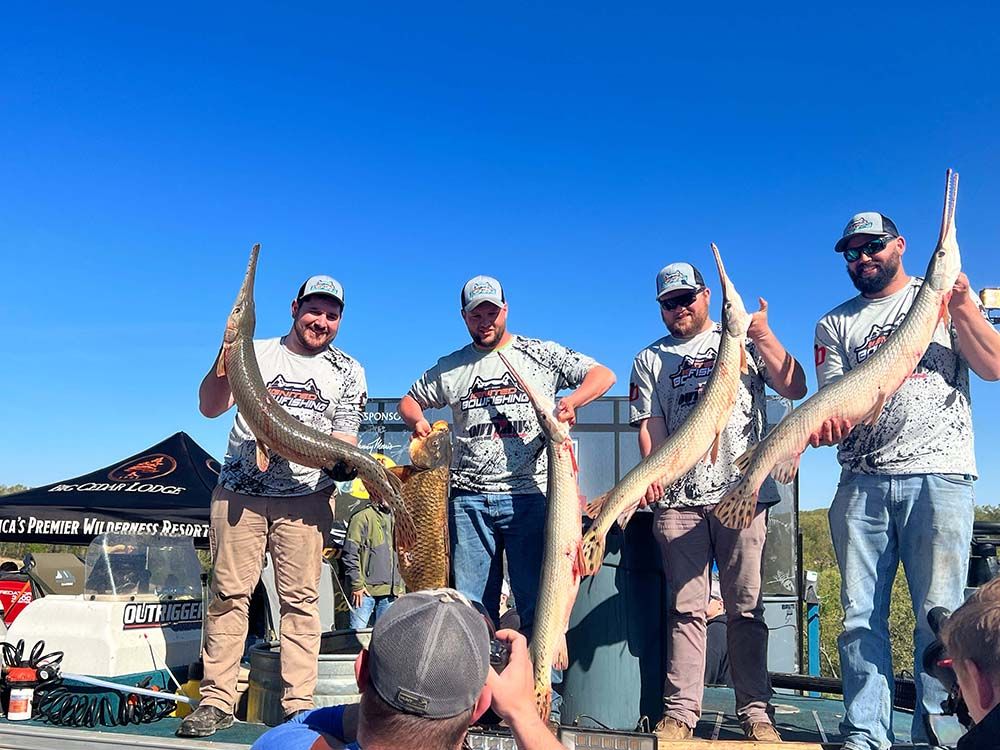
Bowfishing is a hybrid sport — archery applied to rough fish in shallow water. You shoot a heavy fiberglass or carbon arrow attached to braided line, the barb opens inside the fish, and you reel the catch back to the boat or bank. Target species are mostly invasive or overpopulated: common carp, grass carp, silver and bighead Asian carp, longnose and alligator gar, buffalo, freshwater drum, and tilapia in southern states.
It is legal in nearly every U.S. state for these “rough fish,” but the species list, season windows, and lighting rules change by state. Game fish — bass, walleye, trout, catfish in most waters — are almost always off-limits to a bow. Before you buy anything, pull up your state DNR rough-fish page and read it. You can lose a license over the wrong fish in the cooler.
The appeal is simple. A 40-pound carp is a five-second adrenaline hit, the gear costs less than a hunting season’s worth of broadheads, and you shoot 20 to 80 fish a night instead of waiting 12 hours in a treestand.
Choosing Your First Bowfishing Bow
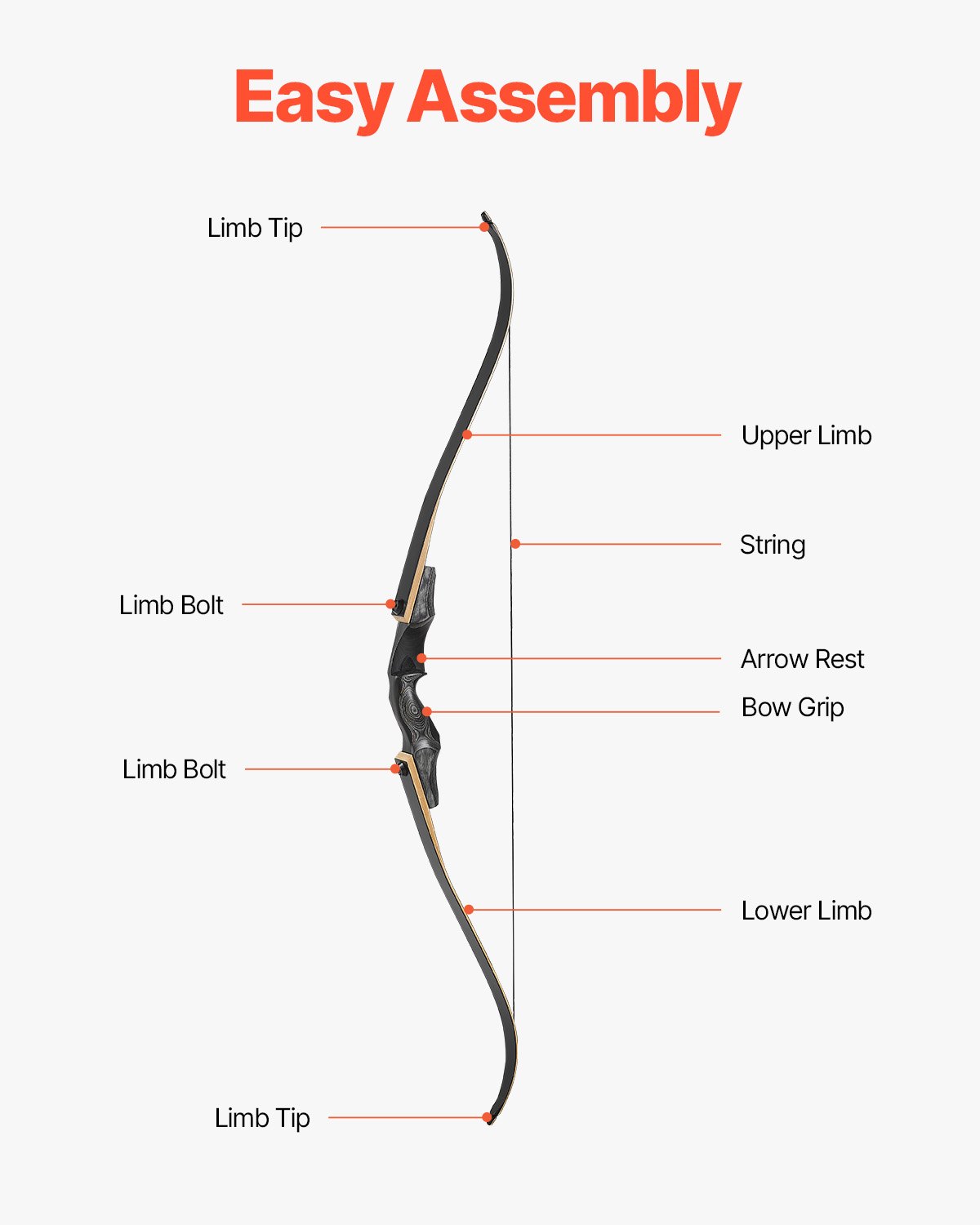
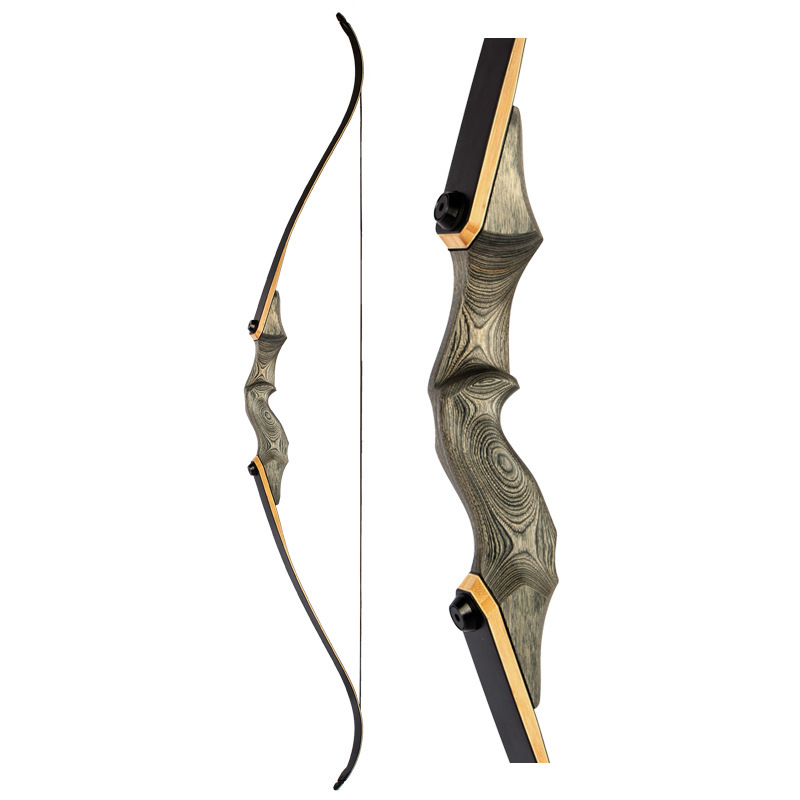
A bowfishing bow has three jobs: hold up to constant water exposure, draw fast for snap shots, and shoot a heavy arrow with brutal short-range force. You do not need a 70-pound compound to break the surface of a pond — a 30 to 45-pound recurve will punch a carp at 5 yards all night long.
Most beginners buy a dedicated recurve setup like the Cajun Fish Stick or the AMS Hooligan because they ship pre-rigged with a reel seat, line, arrow, and rest. A standard recurve also works if you buy a tape-on reel mount. Compounds work too, but the let-off that helps a hunter holds nothing for bowfishing — you shoot the second your pin (or instinct) finds the fish.
Draw weight should sit in the 35 to 50-pound window. Heavier hits the bottom of the pond and snaps arrows. Lighter struggles to push the heavy arrow plus the line drag of a slide. A 50-pound recurve is the sweet spot for new shooters who want one bow to cover everything from carp to small gar.
The Reel: Drum, Spincast, or Retriever
The reel is what separates bowfishing from regular archery, and you have three real choices. Each one trades cost for retrieval speed and tangle resistance.
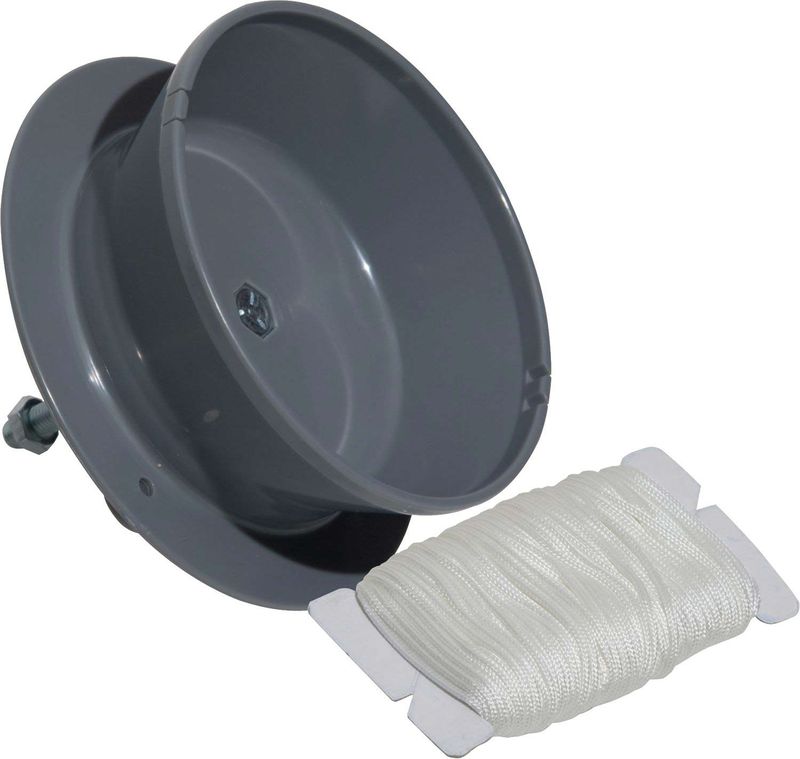
The hand-wrap drum reel is the entry option. It mounts to the bow with a stabilizer bushing, holds 25 yards of 200-pound braided Dacron, and you literally wrap the line back on by hand after each shot. It costs $15 to $30, never tangles in a bad way, and is what 90% of first-time bowfishers actually use. The downside: it is slow on a hot bite.
The spincast reel — AMS Retriever Pro, Cajun Winch Pro — is a bottle that catches line in a slot as you crank a handle. It retrieves about 17 inches per crank, has no spinning spool to backlash, and runs about $100 to $130. This is the right reel if you can swing the cost on day one.
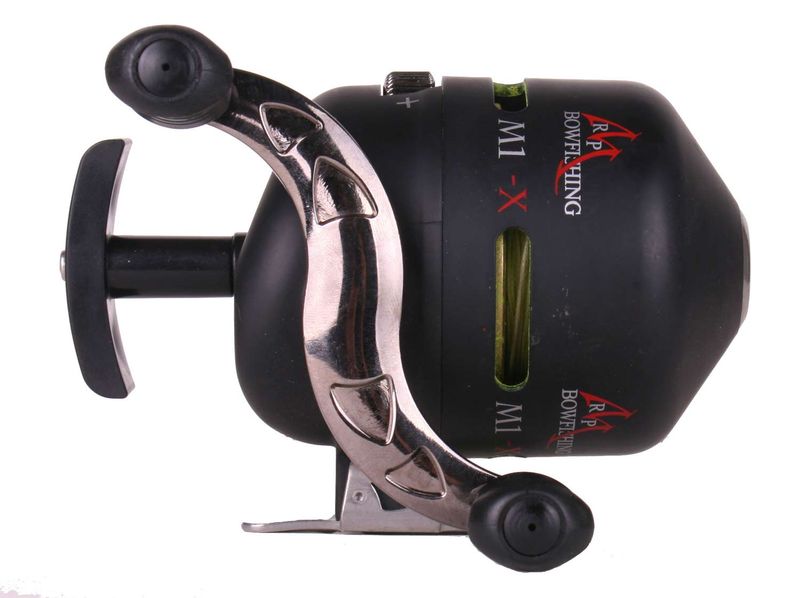
The trigger reel — RPM M1-X and similar — is a modified spincast with a trigger button that releases the line on the shot. Faster retrieval and a cleaner cast, but the trigger adds one more thing to think about under pressure. Skip it until your second season.
Bowfishing Arrows and Fish Points
You will lose arrows. Plan on it. Carp drag arrows under logs, gar wedge them in mud, and beginners snap them on rocks. Start with three to five arrows and rotate as you break them.
Bowfishing arrows are heavy fiberglass or solid carbon — about 1,300 to 1,600 grains compared to a 350-grain hunting arrow. The mass matters: water decelerates a light arrow within 12 inches of penetration, while a heavy shaft drives through scales and into the bottom mud. Fiberglass is the cheapest and most forgiving. Carbon-fiberglass hybrids cost more but ride truer through the water.
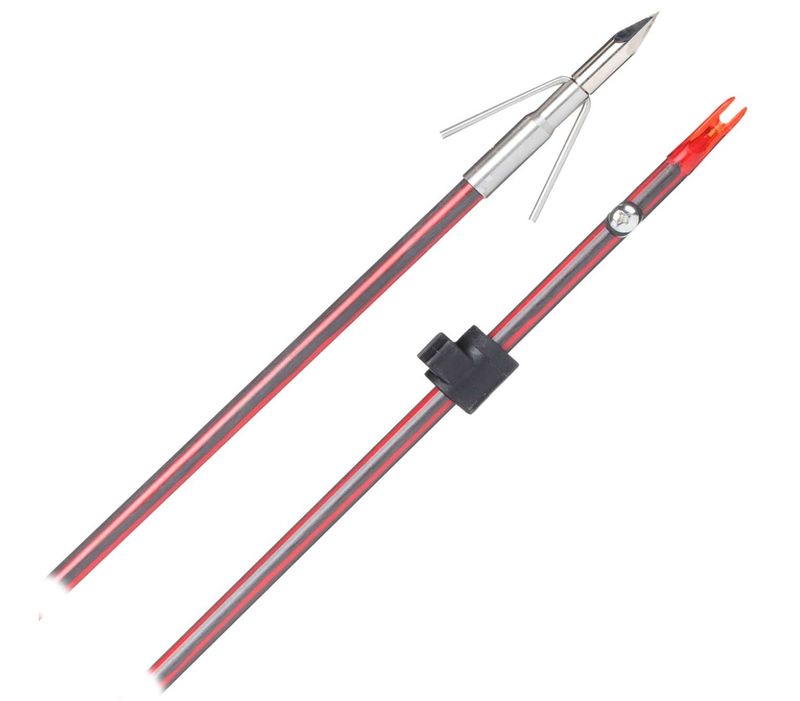
Every shaft needs a safety slide — a rubber stopper that holds your line at the front of the arrow until you draw, then slides to the back of the bow. Without it, line wraps around the shaft mid-shot and the bow string can snap back into your forearm. This is the single most dangerous moment in bowfishing, and the slide costs $8.
For the point, the two beginner-friendly designs are the Cajun Piranha (screw-off barbs for fish removal) and the TruGlo Spring Fisher (spring-loaded barbs that snap open after penetration).
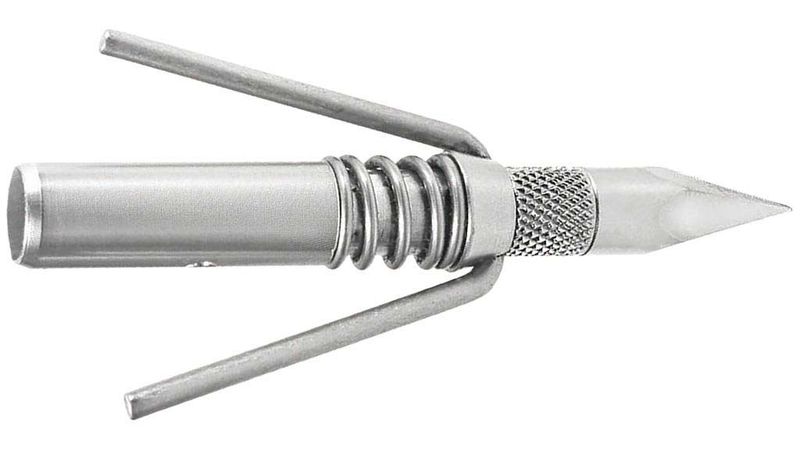
Skip the cheap fixed-barb gar points until you know what you are shooting. They will not pull free of a 30-pound common carp without a fight.
Aim Below the Fish: Why Refraction Wrecks New Shooters
Light bends when it crosses from water to air. The fish you see is not where the fish actually is — it appears higher in the water column than its real depth. If you aim at what your eye says, you shoot over every time.
The fix is the 10-4 rule that tournament shooters use: aim 10 inches low at 10 feet of distance, 4 inches low at 4 feet. The deeper the fish, the more you compensate downward. Carp suspended at the surface need only an inch or two of holdover. A grass carp ghosting along at three feet of depth needs six to eight inches of correction.
The best way to learn this is at home. Drop a coin in a fishbowl and try to touch it through the water with a pencil. You will miss high three or four times in a row before your brain rewires. Bowfishing trains this faster than any other archery discipline, which is part of why it makes hunters better summer-into-fall.
Day vs Night Bowfishing
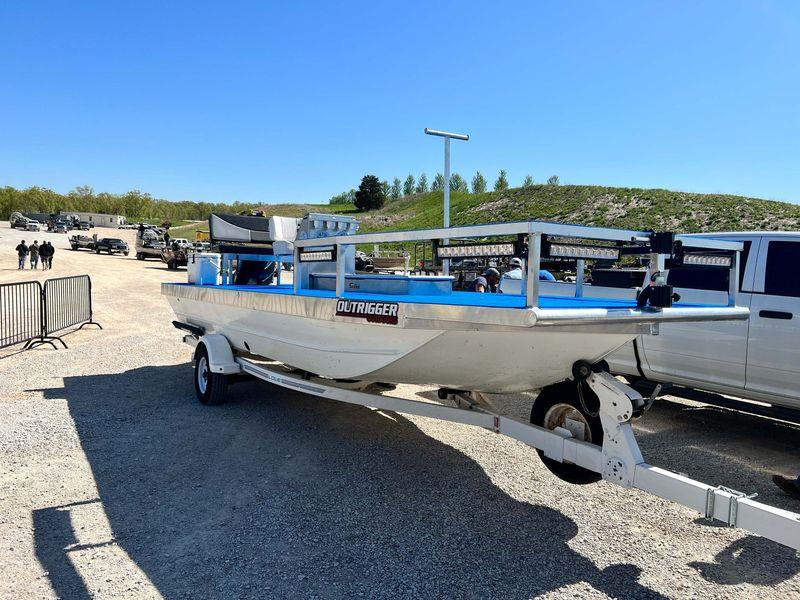
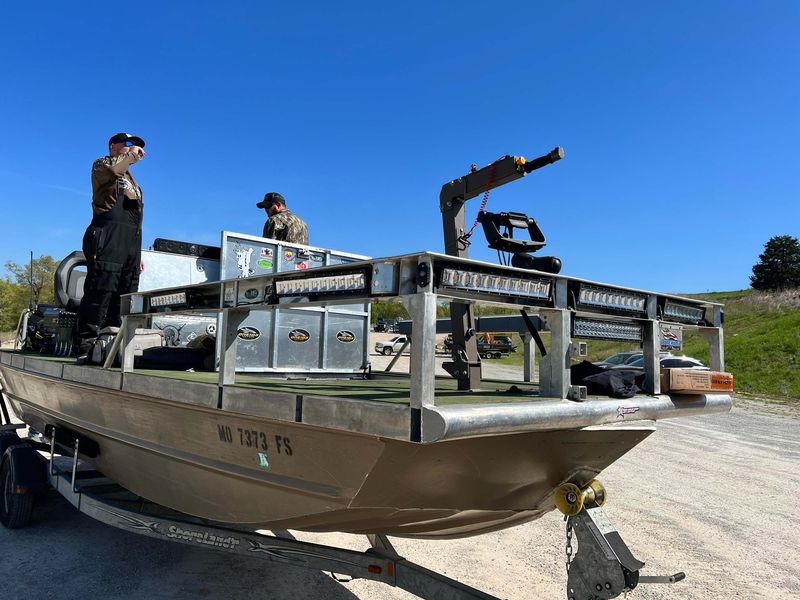
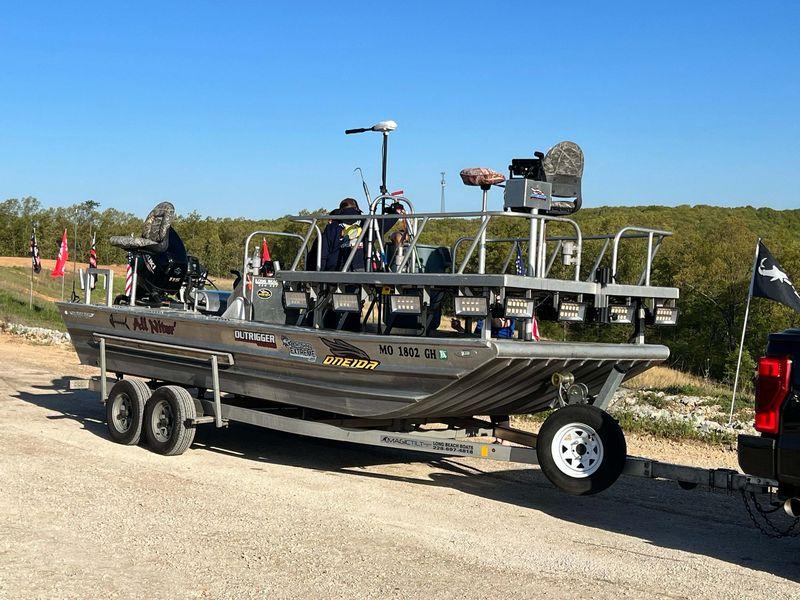
Most serious bowfishing happens at night. Fish lose their caution after dark, lights bring them to the surface, and you can post up over feeding fish for hours instead of stalking them. The downside is the setup — a real night boat needs LED bars, a generator or large 12V battery system, and an elevated shooting deck to break the surface glare.
Daytime bowfishing is the entry path. You wade flats and creek mouths in chest waders during the carp spawn (late spring through early summer in most of the U.S.), and the only gear you need beyond the bow is polarized sunglasses. The spawn concentrates carp in water so shallow their dorsal fins break the surface. A good polarized lens — amber or copper for stained water, gray for clear — cuts surface glare and lets you spot fish 20 feet out.
If you eventually upgrade to a night rig, start with a single 50-watt LED bar pointed straight down into the water and a small portable generator. You do not need the $8,000 tournament setup to shoot fish at midnight.
Where to Go and What Is Legal
Every state has a rough-fish list, and that list is your menu. Common carp are legal almost everywhere. Asian carp (silver, bighead, grass, black) are open targets across the Mississippi and Ohio River drainages because they are flat-out destroying native ecosystems. Longnose gar is open in most of the south. Alligator gar — the trophy of bowfishing — requires a permit in Texas, Mississippi, Louisiana, and a few others.
For waters, start with three places: state-owned reservoirs, river backwaters, and farm pond outlets in spring. The U.S. Fish & Wildlife Service maintains an active invasive carp removal program across the Midwest, and many of those waters welcome bowfishers because every fish out of the river is a win for the agency.
The legal fine print matters: most states require a fishing license (not a hunting license) for bowfishing, and several require a specific bowfishing endorsement on top. Read your state regs before the first cast.
A Complete Beginner Setup Under $300
Here is the rig that gets you fishing this weekend without a tournament boat. A 45 to 50-pound recurve bow with a reel seat ($100-160 used, $180 new), a hand-wrap drum reel pre-spooled with 200-pound braided Dacron ($25), three fiberglass bowfishing arrows with safety slides and Cajun Piranha points ($60), a pair of polarized sunglasses ($30), and a 5-gallon bucket for your catch ($5). Total: about $300 if you shop carefully.
If you already own a recurve, a tape-on reel kit costs about $40 and converts it for the season. Pair that with the same arrows and you are in for under $130. This is the setup most veteran bowfishers actually shoot — not the $1,500 compound rig that gets advertised in the magazines.
Watch the embedded video below before you head out. It walks the basics of stance, line management, and what a clean first shot looks like.
Bowfishing is the most direct path back into archery after the hunting season closes. If you already know how to pick a starter recurve and you are comfortable with the basics of bowhunting, the only thing left is finding the water. Show up at a public reservoir in May, scan the shallows for moving wakes, and the next forty minutes will teach you more about instinctive shooting than a full summer of arrow-rest tuning at the target range.
Sources
- Outdoor Life — Best Bowfishing Gear for Beginners — Editorial gear roundup covering reels, arrows, and starter kits.
- AMS Bowfishing — Manufacturer reference for Retriever Pro and Hooligan systems, including spec sheets and instructional content.
- Bowfishing — Wikipedia — Background on target species, history, and refraction physics.
- U.S. Fish & Wildlife Service — Invasive Carp Program — Federal program on invasive carp removal and bowfishing’s role in management.
- Bowfishing Association of America — Tournament calendar, state regulation summaries, and gear vendor directory.
Browse archery bows, arrows, and accessories at the Archery Supplier shop →
Shop on eBay
Archery Equipment on eBay →
We may earn a commission when you shop through our eBay links.
