Archery Blog
Archery Fitness Exercises | 9 Workouts to Strengthen Your Draw and Prevent Injury
Mar
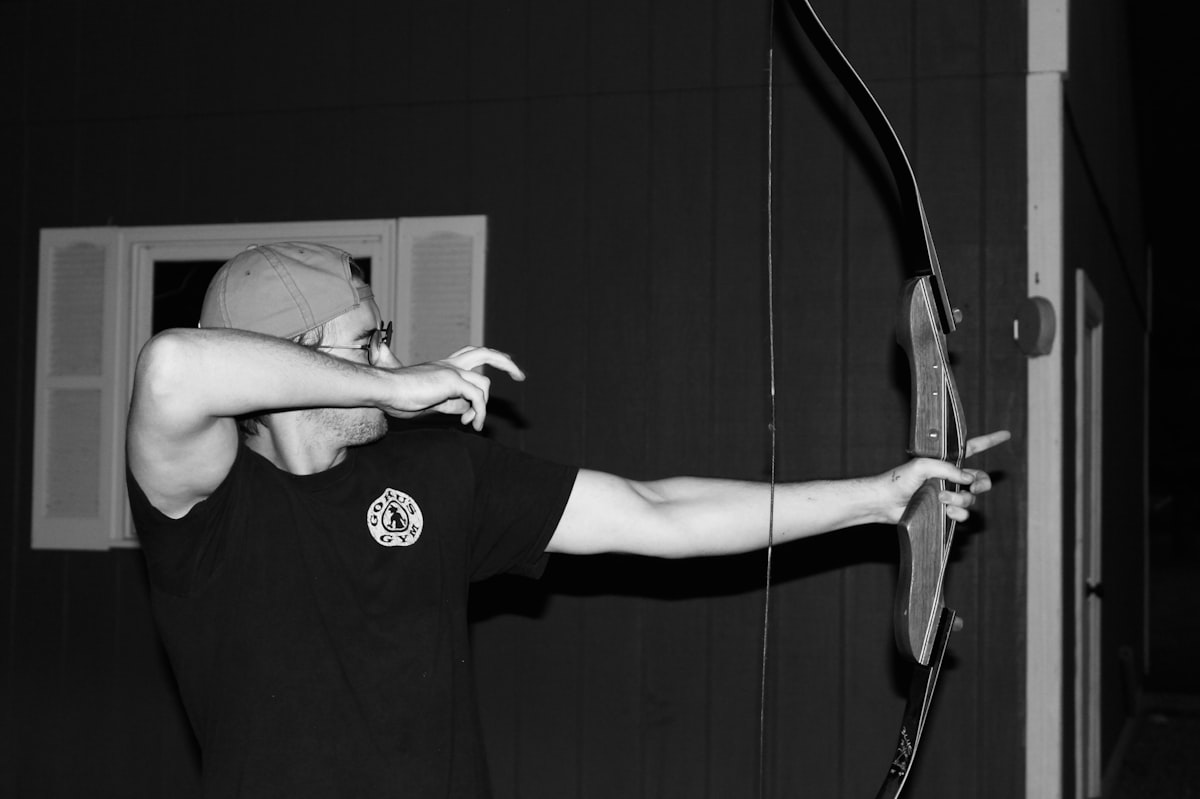
Archery demands more from your body than most people realize. Drawing a bow at 40, 50, or 60 pounds engages muscles from your fingertips to your core. Holding steady at full draw while your heart pounds and your arms tremble separates recreational shooters from consistent archers. The difference between a tight group and scattered arrows often comes down to physical conditioning off the range.
Whether you shoot a compound bow for bowhunting or a recurve for target competition, a structured fitness routine builds the strength, endurance, and stability that translates directly to better scores and cleaner kills. These nine exercises target the exact muscle groups archers use most — and you can do nearly all of them at home with minimal equipment.
Why Archery Fitness Matters More Than You Think
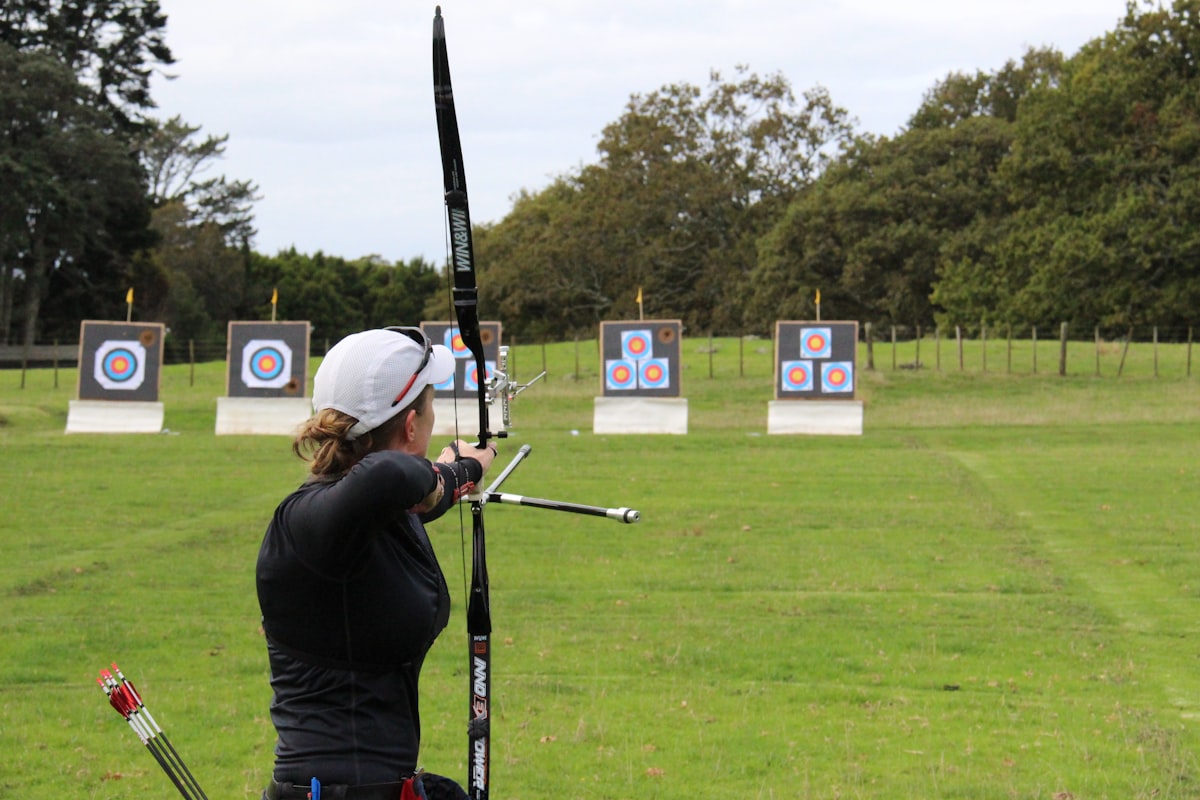
Drawing a bow recruits all four rotator cuff muscles, the posterior deltoid, latissimus dorsi, rhomboids, trapezius, and biceps — simultaneously. According to the USA Archery coaching team, specific physical training (SPT) develops the strength and endurance archers need beyond just shooting more arrows.
Fatigue is the enemy of accuracy. When your muscles tire during a tournament round or a long day in a treestand, your form breaks down. Your bow arm drops. Your anchor point drifts. Your release gets sloppy. A stronger body resists fatigue longer, keeping your shot process consistent from the first arrow to the last.
Injury prevention is the other major benefit. Shoulder injuries — particularly rotator cuff strains and impingement — are the most common archery-related problems. Strengthening the muscles that stabilize the shoulder joint reduces your risk significantly.
Upper Body Exercises for a Stronger Draw
1. Dumbbell Bent-Over Rows
The bent-over row is arguably the single best exercise for archers. It targets the rhomboids, lats, and rear deltoids — the same muscles that pull your bowstring to anchor. Stand with feet shoulder-width apart, hinge at the hips, and pull a dumbbell toward your hip. Keep your elbow close to your body and squeeze your shoulder blade toward your spine at the top.
Start with a weight you can row for 12-15 reps with good form. Three sets, twice a week. As you get stronger, increase weight gradually rather than adding more reps.
2. Resistance Band Pull-Aparts
Hold a resistance band at chest height with both hands, arms extended in front of you. Pull the band apart by squeezing your shoulder blades together until the band touches your chest. Return slowly. This exercise directly mimics the back tension archers use during the draw cycle.
Do 3 sets of 15-20 reps. Use a lighter band than you think you need — this is about muscular endurance, not max strength. These are excellent as a warm-up before shooting too.
3. Push-Ups
The push-up strengthens your chest, anterior deltoids, and triceps — the muscles that stabilize your bow arm. A strong bow arm holds steadier, especially during long shooting sessions. Standard push-ups work fine. If you can knock out 20 easily, try archer push-ups (one hand closer to center, one wider) for a more archery-specific challenge.
Three sets to near-failure, two to three times per week. If standard push-ups are too difficult, start from your knees and build up.
Core Stability for Holding Steady
4. Planks and Side Planks
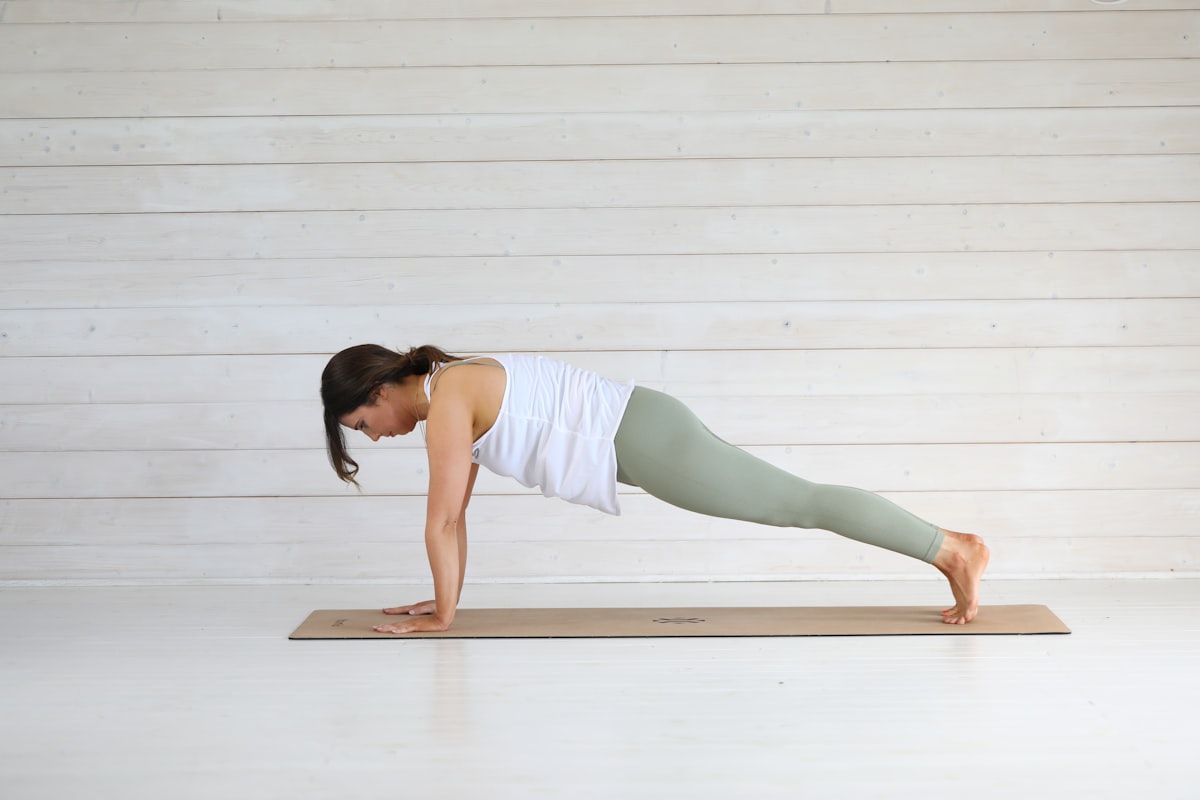
Your core connects everything. It transfers power from your legs through your torso to your shoulders. A weak core means your whole body sways at full draw, making consistent aiming nearly impossible. Planks build the isometric core strength archers need — the kind that holds you rigid rather than moving through a range of motion.
Hold a front plank for 30-60 seconds, then immediately roll to a side plank on each side for 20-30 seconds. That is one round. Do three rounds with 60 seconds rest between them. Progress by adding time or elevating your feet.
5. Dead Bugs
Lie on your back with your arms extended toward the ceiling and your knees bent at 90 degrees. Slowly extend your right arm overhead while straightening your left leg toward the floor. Return and switch sides. This trains anti-rotation core stability — crucial for maintaining alignment throughout your shot sequence.
Do 3 sets of 10 reps per side. Move slowly and deliberately. If your lower back arches off the floor, you have gone too far.
🏹 Gear Up for Practice
8mm Aluminum Alloy Practice Arrows — $28.99
🏋️ Archery Training Equipment
EVA Foam Archery Target Backing — $49.40
Paper Archery Target 50-Pack — $5.78
Shoulder Health and Injury Prevention
6. External Rotation with Resistance Band
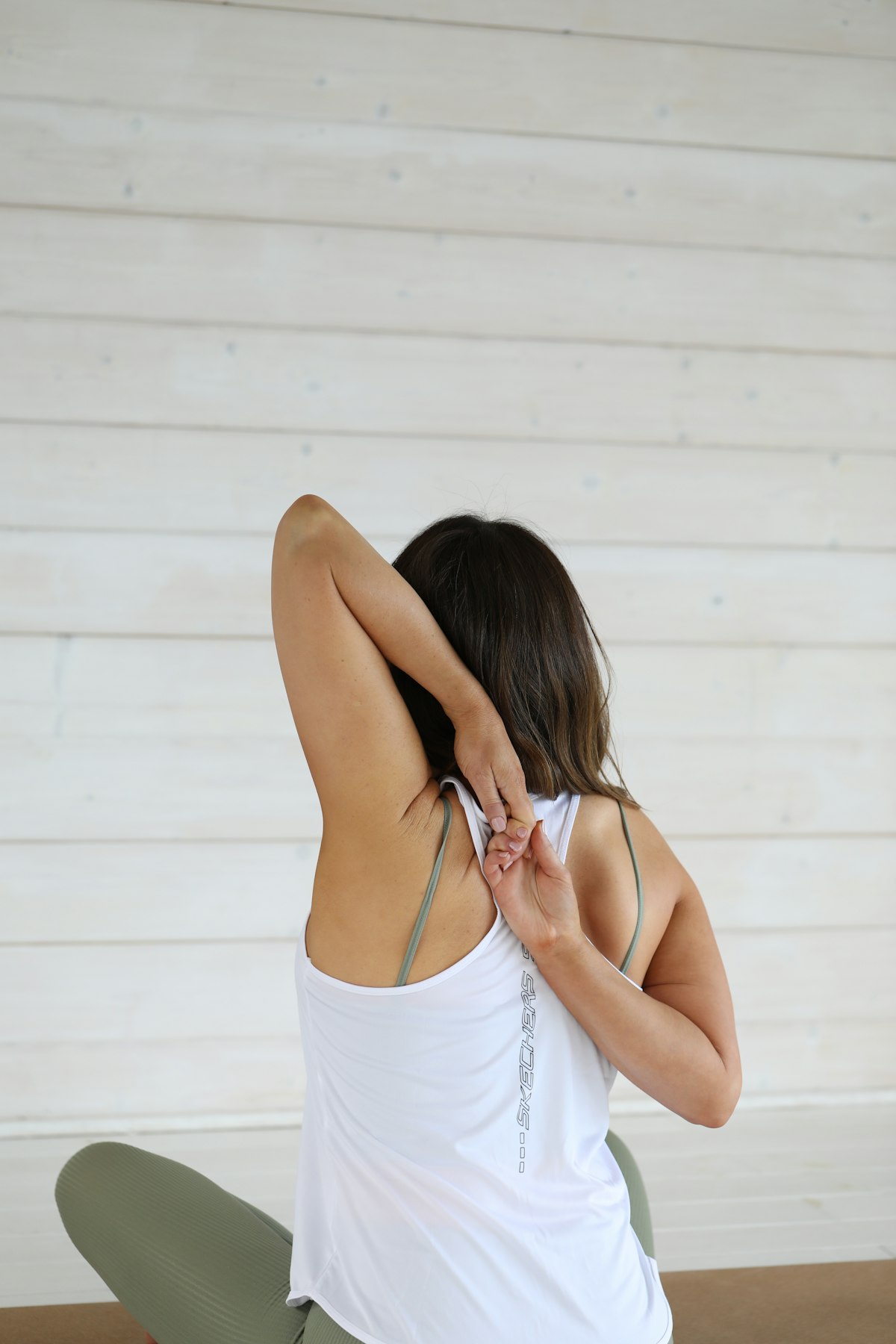
This exercise directly strengthens the infraspinatus and teres minor — two of the four rotator cuff muscles that take the most abuse during archery. Pin your elbow against your side, bend it to 90 degrees, and hold a resistance band anchored at waist height. Rotate your forearm outward, keeping your elbow glued to your ribs.
Do 3 sets of 15 reps on each arm. Use a light band. Rotator cuff muscles are small — they respond better to high reps and moderate resistance than heavy loads. According to research cited by High Caliber Health, archery-specific exercises targeting the rotator cuff and scapula help stabilize the shoulder and meet the demands of shooting a bow.
7. Wall Slides (Wall Angels)
Stand with your back against a wall, arms up in a “goal post” position with your elbows and wrists touching the wall. Slowly slide your arms up overhead, maintaining contact with the wall the entire time. This improves scapular mobility and strengthens the lower trapezius — muscles that often become weak and overstretched in archers.
Do 2-3 sets of 10 reps. If you cannot keep your wrists against the wall, that is a sign you need this exercise more than most.
Lower Body and Endurance
8. Single-Leg Squats (Pistol Squats or Assisted)
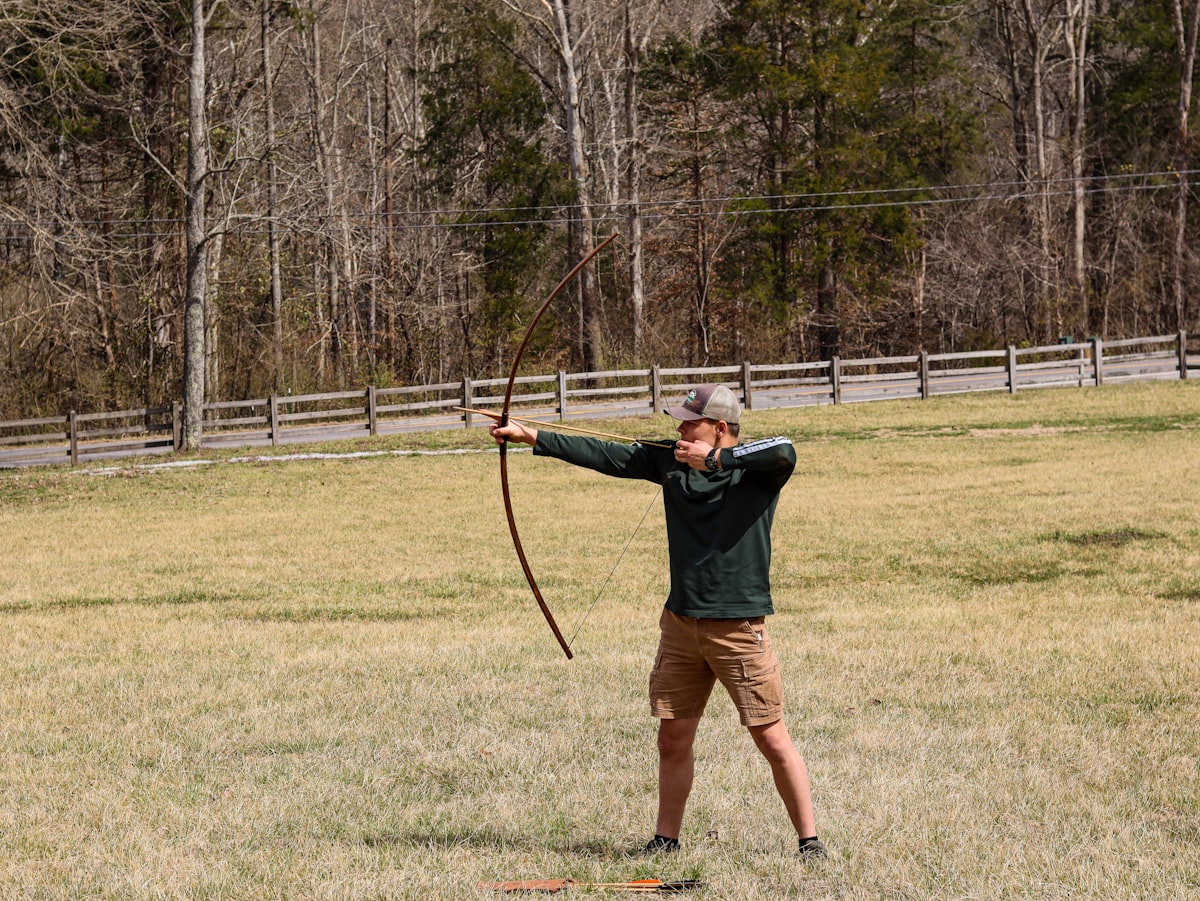
Archery is a standing sport. Your legs are the foundation of your entire shot platform. Single-leg work builds balance and stability that translates directly to holding steady on uneven ground, in a treestand, or during long tournament rounds. If full pistol squats are too challenging, use a chair or doorframe for support.
Do 3 sets of 8-10 per leg. Add a pause at the bottom for extra stability training.
9. Farmer’s Walks
Grab a pair of heavy dumbbells or kettlebells and walk. That is it. Farmer’s walks build grip strength, shoulder stability, core stiffness, and overall muscular endurance — all at once. For bowhunters who pack gear over rough terrain, this exercise is practically sport-specific training.
Do 3 sets of 40-50 yard walks. Go heavy enough that the last 10 yards feel genuinely difficult.
Putting It All Together: A Weekly Program
You do not need to spend hours in the gym. Two to three 30-minute sessions per week, combined with your regular shooting practice, will produce noticeable results within four to six weeks. Here is a simple split:
Day 1 — Upper Body Focus: Dumbbell rows (3×12), push-ups (3× to near failure), band pull-aparts (3×15), external rotations (3×15)
Day 2 — Core and Lower Body: Planks/side planks (3 rounds), dead bugs (3×10/side), single-leg squats (3×8), farmer’s walks (3×40 yards)
Day 3 — Light Recovery and Mobility: Wall slides (3×10), band pull-aparts (2×20, light), stretching (shoulders, chest, hip flexors)
🎯 Upgrade Your Bow Setup
Warm up before every session — especially before shooting. Five minutes of arm circles, band pull-aparts, and wall slides primes the shoulder joint and reduces injury risk. USA Archery recommends SPT (specific physical training) with stretch bands or light bows as part of your warm-up routine before competitive shooting.
🎯 Upgrade Your Practice Setup
Carbon Fiber Bow Stabilizer — $16.99
Common Mistakes to Avoid
Training too heavy, too soon. Archery muscles — especially the rotator cuff and scapular stabilizers — are small and fatigue-prone. Heavy lifting with poor form causes the exact injuries you are trying to prevent. Start light and progress slowly.
Ignoring the bow arm side. Most archers only think about strengthening their draw side. Your bow arm shoulder absorbs significant force on every shot. Strengthen both sides equally to avoid imbalances.
Skipping the warm-up. Drawing a cold bow with cold muscles is the fastest path to a shoulder impingement. Five minutes of movement prep before shooting costs you nothing and protects months of progress.
Overtraining before competition. Taper your strength work in the week leading up to a tournament. Sore muscles hurt accuracy. Training exists to serve your shooting, not the other way around.
Your Bow Does Not Care How Strong You Think You Are
The bow is honest. It reveals every weakness, every imbalance, every shortcut. If your back muscles fatigue after 30 arrows, no amount of mental focus will keep your groups tight by arrow 60. If your rotator cuff is weak, eventually it will let you know — usually at the worst possible time.
The good news is that archery-specific fitness does not require a gym membership, expensive equipment, or two hours a day. A resistance band, a pair of dumbbells, and 30 minutes three times a week will make you measurably better. Stronger, more stable, and — most importantly — shooting longer without breaking down.
Start with two or three exercises from this list. Build consistency before adding complexity. Your scores will improve, your draw will feel lighter, and your shoulders will thank you.
