
Archery Blog
Brady Ellison: America’s Greatest Archer
Jul
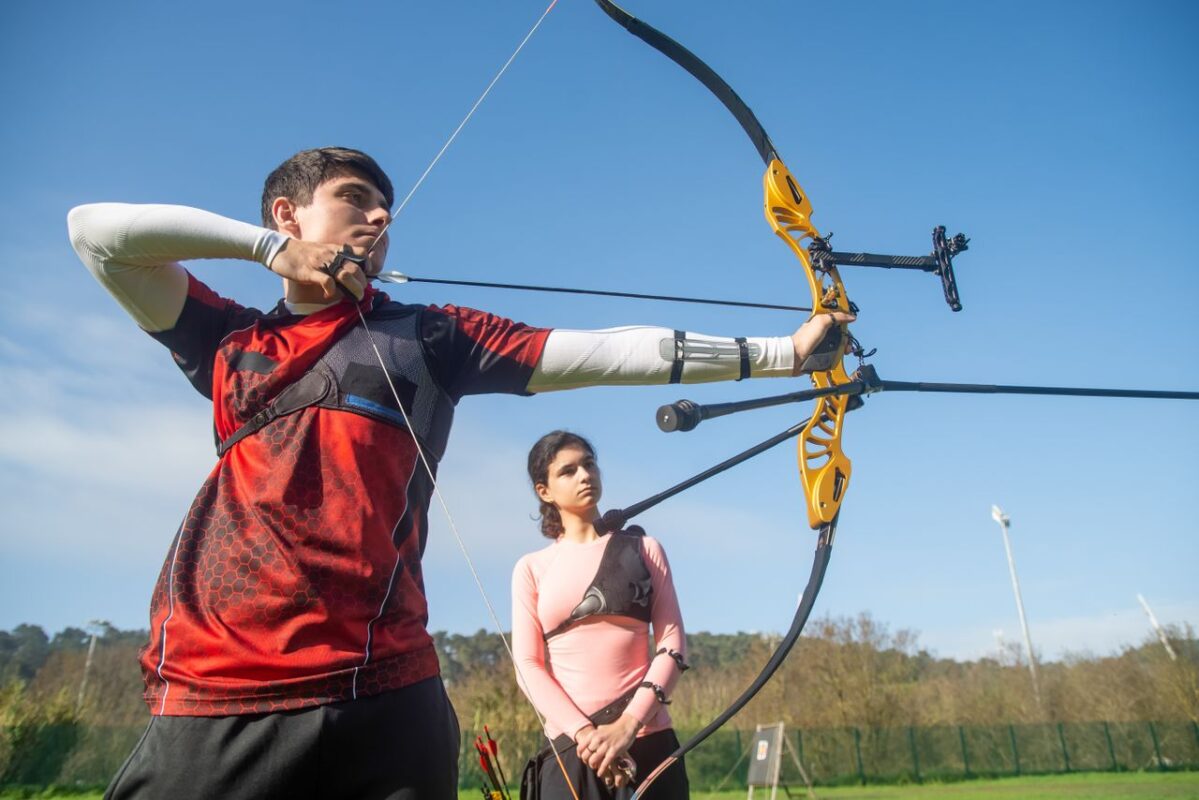
At 70 meters, in the final set of a World Championship match, with ten thousand eyes locked on the target, Brady Ellison draws back his Hoyt Xceed, holds his breath for a fraction of a second, and releases. The arrow flies true. This is not luck. This is the product of over two decades of discipline, obsession, and an unrelenting drive that has made Brady Ellison the greatest American archer of the modern era.
If you want to understand what separates elite recurve archery from the rest, study Brady Ellison archery. His career is a masterclass in athletic longevity, mental toughness, and technical refinement. From the hunting grounds of rural Arizona to the Olympic stage, Ellison has rewritten what American archers are capable of achieving.
Early Life: From Bowhunting to Olympic Dreams
Brady Ellison was born on October 27, 1988, in Glendale, Arizona. He grew up in a family rooted in outdoor tradition — hunting, fishing, and living close to the land. A bow was in his hands almost from the time he could walk. His earliest archery experiences were not on a formal range but out in the Arizona desert, shooting compound bows alongside his family during hunting season.
This practical, instinct-driven foundation gave Ellison something that many technically trained archers lack: a natural connection between his body and the bow. He was not thinking about form charts and training manuals. He was simply shooting — thousands of arrows, driven by the genuine love of the act itself.
The switch to Olympic-style recurve came in his mid-teens, when he discovered competitive archery through USA Archery. His transition was rapid and unmistakable. Coaches saw immediately that his kinesthetic awareness — his feel for the bow in space — was extraordinary. By his late teens, he was competing at the senior international level, attracting attention from the top programs in the country.
Brady Ellison’s Olympic Journey: Four Games, One Legend
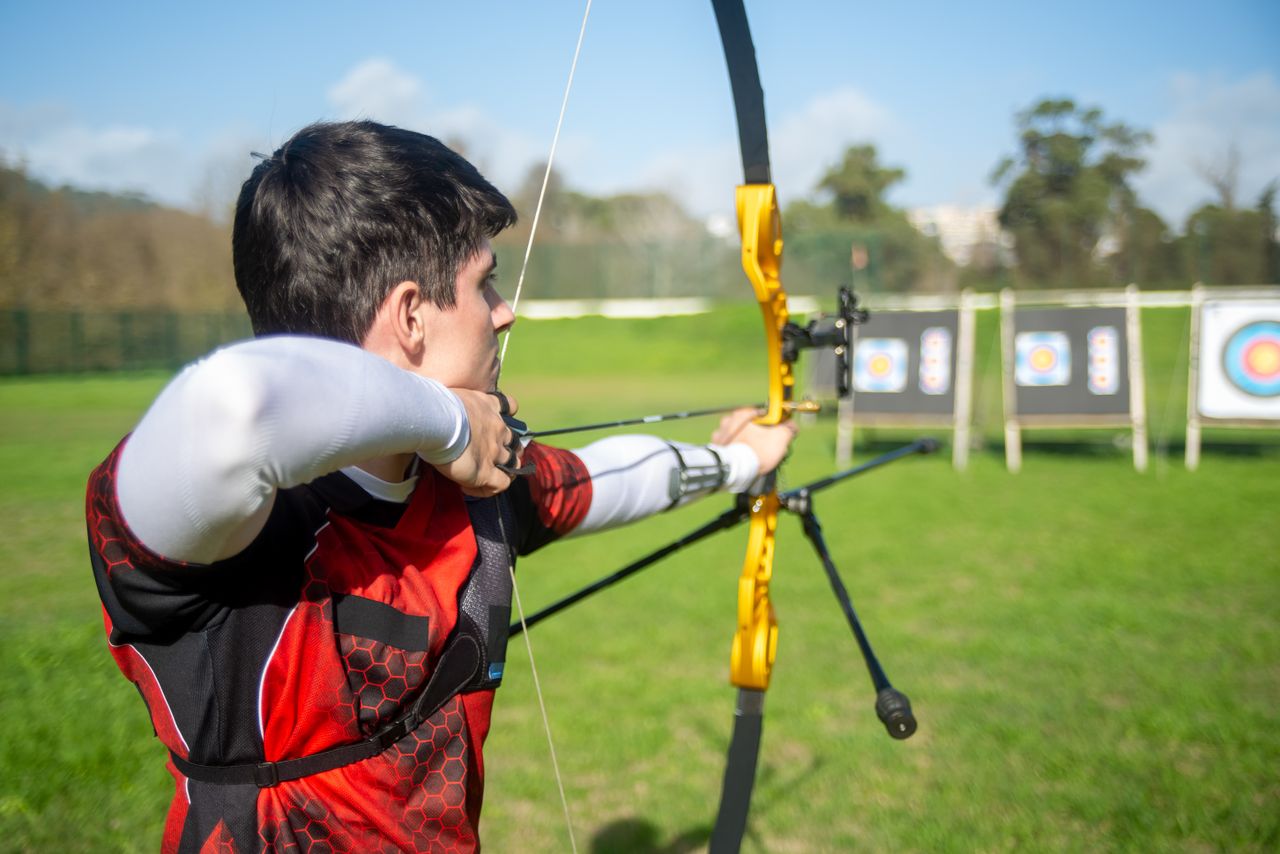
Brady Ellison is one of the rare archers in history to have competed in four consecutive Olympic Games. He made his Olympic debut in Beijing in 2008, competing as a 19-year-old who had barely aged out of the junior division. His performance signaled a changing of the guard in American men’s recurve.
At London 2012, Ellison confirmed he was not a one-shot wonder. He was a consistent, dangerous competitor at the highest level. At Rio 2016, he continued to build his international reputation, pushing into the later rounds and proving his resilience under Olympic pressure. Then came Tokyo 2020 — the culmination of over a decade of Olympic experience.
At the Tokyo Olympics, Brady Ellison delivered what many consider his finest Olympic performance. He won an individual silver medal in the men’s recurve event, falling just short of gold in a razor-thin final. He and the USA Men’s Recurve Team also captured team silver — a remarkable double podium finish that cemented his legacy as the defining figure of American Olympic archery in his generation.
Olympic Results at a Glance
- Beijing 2008 — Olympic debut, individual competition
- London 2012 — Continued building international credentials
- Rio 2016 — Consistent performer, advanced rounds
- Tokyo 2020 — Individual silver medal + Team silver medal (with USA Men’s Recurve)
World Dominance: World Championships and World Cup Victories
The Olympics are only part of the Brady Ellison archery story. On the World Archery circuit, where the competition is continuous and the pressure is relentless year-round, Ellison’s record is staggering.
He has won the World Archery Championship in the men’s recurve individual event four times — in 2011, 2014, 2019, and 2022. This places him among an extraordinarily small group of male recurve archers who have dominated the world title across different eras of the sport. Each of those victories came in a different phase of his career, demonstrating that Ellison has not simply maintained a peak but repeatedly rebuilt and elevated his game.
At the World Cup level, Ellison has accumulated more individual stage victories than any other male recurve archer in history. His win count exceeds 50 World Cup stage titles — a number that represents years of sustained excellence across different continents, different conditions, and different competitive fields. He has also won multiple World Cup Final titles, the end-of-season championship that crowns the year’s dominant performer.
The consistency of Ellison’s results across a 15-plus-year span at the elite level is what truly sets Brady Ellison archery apart. Many archers have burst onto the scene with a dominant season, only to fade as opponents adjusted and the mental grind of elite competition took its toll. Ellison has endured. He has adapted. He has kept winning.
The Mental Game: What Makes Brady Ellison Truly Elite
Talk to coaches who have worked with Brady Ellison, or watch the match footage from his biggest victories, and one theme emerges above all others: his mental toughness is exceptional even by the standards of Olympic sport.
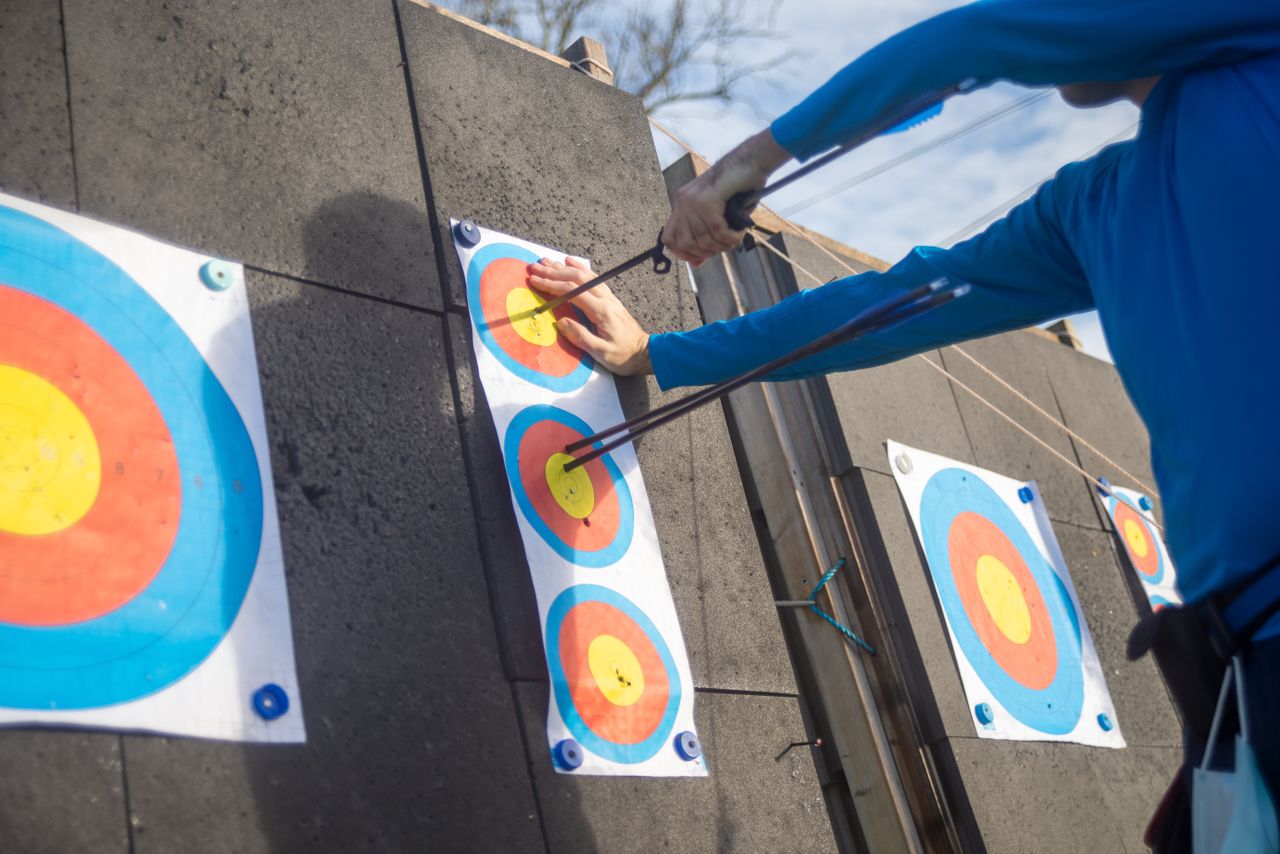
Olympic recurve archery is a head game as much as it is a physical skill. At 70 meters, the difference between a 10 and an 8 is millimeters — and under full match pressure, in front of a crowd, knowing that your opponent just shot a perfect 10, those millimeters are determined almost entirely by the archer’s mental state. Heart rate, breathing pattern, focus quality, ability to reset after a poor arrow — these factors define who wins and who loses at the championship level.
Ellison has spoken publicly about the importance of process focus — shooting the next arrow, not thinking about the score. He describes building a pre-shot routine that he can execute in any emotional state, under any pressure, with the same mechanical quality. This routine becomes an anchor in the chaos of competition. When the crowd is loud, when the match is on the line, when everything is telling the nervous system to rush, the routine holds.
His ability to perform in elimination rounds — the head-to-head match format used at the Olympics and World Championships — is particularly notable. Unlike qualification, where an archer competes against the distance and the target, elimination archery is psychological warfare against a specific opponent. Ellison’s win rate in these high-stakes matches is among the best in the history of the discipline.
Lessons Every Archer Can Take from Ellison’s Mental Approach
- Develop a locked-in pre-shot routine — The routine should be the same whether it is practice or a world final. Repetition under low-pressure conditions trains the automatic execution that holds up under high-pressure ones.
- Shoot one arrow at a time — Ellison does not think about the score or the match outcome between arrows. He thinks only about executing the next shot correctly.
- Embrace training pressure — The mental demands of competition can only be trained by creating pressure in practice. Simulate competition conditions, keep score, set stakes.
- Reset fast after mistakes — A bad arrow cannot be undone. The discipline is to release it mentally, re-center, and approach the next arrow with the same clean focus.
Brady Ellison’s Equipment: Hoyt Xceed and Easton X10
Brady Ellison is one of the most visible ambassadors for Hoyt Archery, and his equipment setup reflects the cutting edge of Olympic recurve technology. Understanding Brady Ellison archery means understanding the tools he trusts at the highest level.
Riser: Hoyt Xceed
Ellison shoots the Hoyt Xceed riser, one of the most respected recurve risers in competitive archery. The Xceed is an ILF (International Limb Fitting) system riser machined from high-grade aluminum alloy, designed for the kind of stability and vibration dampening that elite archers require at 70 meters. Its geometry is optimized for the lateral and torsional rigidity that translates to consistent arrow flight under the full draw weight of an Olympic setup.
The riser’s balance and weight distribution are also critical. Olympic recurve archers use a system of stabilizers — a long rod, two V-bars, and side rods — to manage the bow’s movement at the moment of release. The Xceed’s design facilitates this stabilizer system effectively, giving the shooter a stable platform at full draw and a consistent follow-through.
Arrows: Easton X10
For arrows, Ellison relies on Easton X10s — the gold standard of Olympic recurve arrow shafts. The X10 is an aluminum/carbon composite shaft with a diameter profile that tapers from a wider center to narrower tips, reducing air resistance in flight and improving scoring potential at long distances. At 70 meters, the X10’s ballistic properties give elite archers a measurable edge in tight competition.
The X10 has been the dominant arrow at Olympic archery for decades, and Ellison’s continued use of it reflects its unmatched combination of consistency, precision, and scoring potential in the Olympic discipline.
Training Philosophy: Volume, Precision, and Pressure
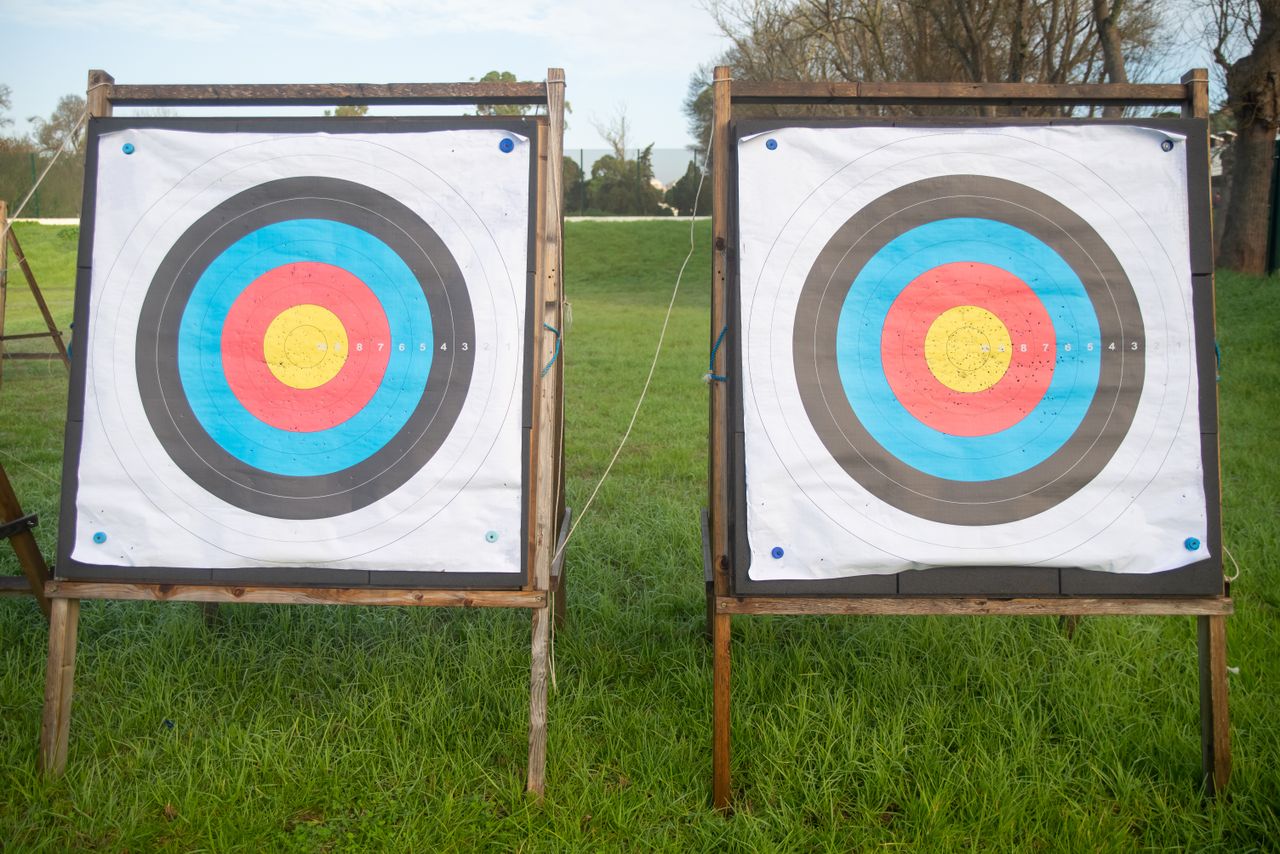
Brady Ellison’s training regimen is built on three pillars that any serious archer can apply at their own level: volume, precision, and pressure simulation.
Volume is the foundation. Elite Olympic archers shoot hundreds of arrows per day. The physical conditioning this demands — particularly in the shoulder girdle, back, and core — is substantial. Ellison’s early background in bowhunting gave him raw physical preparation, but the transition to competitive recurve required building the specific muscular endurance to sustain quality form across long training sessions and multiple competition days.
Precision is the quality filter on volume. Shooting hundreds of arrows a day only produces improvement if those arrows are quality repetitions. Ellison is known for his attention to the details of form — the subtle elements of grip pressure, draw elbow position, back tension engagement, and string-hand release timing that determine whether a technically proficient shot becomes a 10 or a 9. He works with coaches to maintain an objective view of his own technique, using video analysis and feedback to catch drift before it becomes habit.
Pressure simulation is what converts training scores into competition performance. Ellison creates match-like conditions in practice — setting up head-to-head scenarios, shooting under time pressure, keeping strict score, and using visualization to rehearse the emotional states of major competition. This is what allows him to perform so consistently in elimination rounds, where the psychological environment is radically different from a relaxed practice session.
What Brady Ellison’s Career Means for American Archery
Before Brady Ellison’s emergence on the world scene, the narrative in men’s Olympic recurve archery was straightforward: Korea dominated, and everyone else competed for the margins. South Korean archers had developed a system — technical, psychological, and institutional — that produced world-class competitors with extraordinary regularity. The rest of the world, including the United States, occupied a secondary tier.
Brady Ellison broke that narrative. He did not just compete with the Korean system; he beat it repeatedly, at World Championships and on World Cup stages around the globe. His success proved that an American archer — trained in a different culture, with a different developmental path — could reach the absolute pinnacle of the sport.
That proof matters beyond Ellison himself. It has elevated expectations for American recurve archery, inspired a generation of younger archers, and demonstrated that the discipline can be mastered through different pathways. The grassroots hunter-to-Olympian trajectory that Ellison represents is uniquely American, and it has produced the most successful male recurve archer in USA Archery history.
Gear Inspired by Brady Ellison: Build Your Recurve Setup
You may not be shooting at 70 meters for an Olympic medal, but the principles behind Ellison’s equipment choices apply to every serious recurve archer. Quality gear that is properly tuned and well-maintained gives you the consistency to improve. Here are some of the key accessories that support a strong recurve practice:
Bowstring quality matters. The bowstring is the direct interface between your energy and the arrow. A well-matched, properly broken-in string like a Recurve Bowstring – 16-Strand Dacron Replacement String gives you a consistent release and predictable arrow flight. Ellison’s professional string setup is optimized to the gram — at your level, starting with a quality replacement string and maintaining it correctly is the most direct equipment upgrade most recreational archers can make.
Arrow consistency is non-negotiable. Ellison shoots Easton X10s because every shaft in the set matches to exacting tolerances. For practice and training, 8mm Aluminum Arrows – 6 Pack Competition Grade give you the consistency to actually diagnose your form rather than chasing arrow-to-arrow variation. If your arrows are inconsistent, you cannot tell whether the grouping problem is you or the gear.
Stabilization is what separates consistent shooters. The long rod and V-bar system Ellison shoots is a refined version of what every recurve archer benefits from. A Carbon Fiber Bow Stabilizer reduces torque at the moment of release, dampens vibration, and helps the bow settle into a consistent position after each shot — all of which translates directly to tighter groups.
Protect your equipment between sessions. Ellison’s riser and limbs travel to World Cups and World Championships in protective cases. For your recurve bow, a Recurve Bow Carry Bag – Portable Split Bow Case keeps your limbs, riser, and accessories organized and protected whether you are heading to a local field or a regional tournament.
The Ellison Standard: What You Can Learn from a Four-Time World Champion
Brady Ellison archery is worth studying not just as a record of accomplishments but as a model of how elite performance is built and sustained over time. The details of his career reveal consistent themes: the value of a strong physical foundation, the discipline of technical precision, the mental training that allows performance under pressure, and the long-term commitment to improvement that keeps a champion competitive across multiple Olympic cycles.
Whether you are an Olympic hopeful or a weekend archer trying to break through a scoring plateau, the Ellison approach offers a framework: build your routine, trust your process, shoot one arrow at a time, and invest in the quality of every repetition. The gap between your current level and Brady Ellison’s is enormous — but the principles that drive his excellence are the same ones that will drive yours.
At 70 meters, in the final of a World Championship, Brady Ellison draws back, holds, and releases. The arrow flies. The crowd erupts. That moment is the product of a lifetime’s work — and it starts with the same basics that you practice on your range today.
