
Archery Blog
How a Compound Bow’s Draw Cycle Changes Across Price Tiers
Jul
Every few weeks, a new archer asks which compound bow to buy and names a budget. The answers they get almost always look the same: a list of models sorted by price point with a column of specs attached. What those lists rarely address is the more important question — does your current stage as a shooter actually match the tier you’re buying into? Price range tells you what’s possible. Your experience behind a bow tells you what you’ll actually use.
What Actually Changes When You Spend More on a Compound Bow
Before breaking down price tiers, it helps to understand what actually improves between a $350 bow and a $1,300 bow — because it isn’t simply brand prestige or cosmetic finish. At the mechanical level, three things change as you climb the price ladder: cam quality, riser tolerances, and limb materials. These three variables combine to determine one thing above all else: how the draw cycle feels to shoot.
Cams — the oval or circular wheels at the tip of each limb — control everything about the draw cycle. At entry price points, single-cam designs dominate. They’re predictable, easy to tune, and forgiving of minor form inconsistencies. As you move up in price, binary and hybrid cam systems appear. These designs produce tighter nock travel (the path your arrow follows through the draw), more consistent let-off, and a harder back wall — meaning the bow stops firmly when you reach full draw instead of drifting forward under continued pressure.
Riser tolerances matter because vibration in a compound bow traces back to parts that don’t fit together with precision. CNC-machined aluminum risers in higher-end bows hold tighter machining specs, and the result isn’t just less hand shock — it’s a bow that stays in tune once it’s been tuned. Limb materials follow the same pattern. Entry bows use laminated fiberglass limbs that work reliably but store and release energy less efficiently than the refined composites found higher up the price ladder. Parallel limb geometry, which positions limbs nearly horizontal at rest to reduce vibration, also becomes more consistent as you move into the mid-range.
The Entry Tier ($200–$500): A Forgiving Draw Cycle Built for Learning
The entry tier has improved dramatically over the past decade. A $350–$450 package bow today is a legitimate tool, not a toy. Brands like Bear Archery, Diamond by Bowtech, and PSE all offer wide adjustability in draw length and weight, functional cam systems, and in most cases a complete ready-to-fire package that includes a pin sight, arrow rest, quiver, and wrist sling. You can be shooting the same day the bow arrives.
The limitation at this price point isn’t quality in the “will it break” sense. It’s in the draw cycle feel. Entry-level single-cam bows typically have a softer back wall and a more gradual draw curve. For beginners, that’s actually advantageous. A forgiving draw cycle doesn’t punish minor anchor inconsistencies or slight grip variations — it absorbs them. The bow lets you focus on form fundamentals without the cam geometry amplifying small errors into visible scatter on the target face.
Where entry bows run into trouble is adjustability ceiling and long-term fit. Many entry-level packages top out at 70 lbs draw weight with module systems that adjust draw length only in one-inch or larger increments. Once you’ve logged enough range time to know your precise anchor and draw length, those limits become frustrating. For a shooter who progresses quickly — teenagers, competitive-minded beginners, athletes crossing over from other sports — that ceiling can arrive within 12 to 18 months.
The entry tier is right for: new archers in their first year of consistent shooting, youth archers still growing into their draw length, casual recreational shooters with no competitive ambitions, and anyone genuinely uncertain whether archery will become a long-term pursuit.
Shop Entry-Level Compound Bow Packages on Amazon →
The Mid-Range ($500–$850): When the Back Wall Starts to Matter
The mid-range is where serious recreational archers consistently land, and it’s usually the right instinct. This tier delivers a genuine step up from entry-level — but the most meaningful improvement isn’t in advertised speed ratings or axle-to-axle specs. It’s in how the draw cycle feels at full draw, specifically the back wall and valley.
At $500–$850, manufacturers begin engineering specifically for a defined valley (the pause at full draw where let-off holds the bow at a fraction of peak weight) and a firm, repeatable back wall. The difference between a mushy, drifting stop and a solid back wall is significant for consistency. When the back wall locks in the same position on every shot, your anchor point becomes more reliable. That directly improves arrow groupings at distance, particularly past 30 yards where small shot-to-shot variations start compounding visibly.
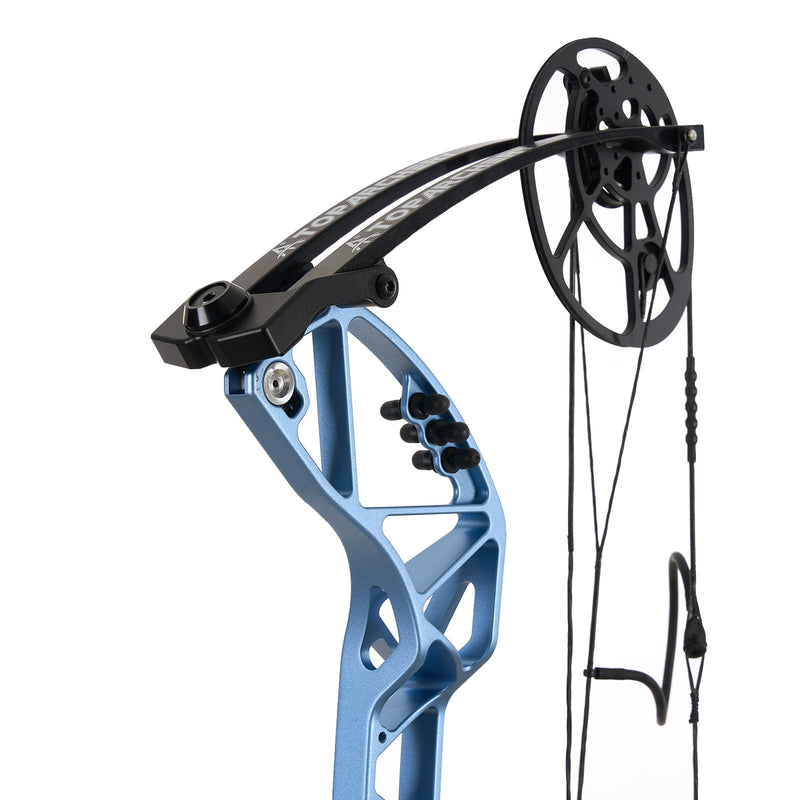
Binary cam systems appear more regularly at this price point. These designs link both cams mechanically so they rotate in sync, maintaining nock travel consistency even when the bow falls slightly out of tune between sessions. For hunters drawing in field conditions — where the bow may take a knock, get cold, or otherwise shift between range sessions — this is a practical operational benefit rather than a purely cosmetic spec upgrade.
Draw length modularity also opens up considerably at this tier. Better mid-range bows use modular systems where rotating or swapping a small cam module adjusts draw length in half-inch increments rather than full inches. Once you’ve refined your form and know exactly where you want to anchor, this precision matters. You’re no longer choosing between a setting that’s slightly short and one that overextends your draw arm.
The mid-range is right for: archers past the 12-month mark who shoot consistently, hunters drawing a bow regularly through a full season, casual competitive archers in 3D or local target leagues, and archers who’ve genuinely outgrown an entry bow and are ready to invest in something they’ll keep for several years.
Shop Mid-Range Compound Bows on Amazon →
The Performance Tier ($850–$1,500+): A Draw Cycle Engineered to the Tenth
At the performance tier, the specification gap between a $900 bow and a $1,400 bow often looks narrow on paper. You’re not buying a dramatically different bow by the numbers. What you’re buying is a draw cycle engineered to a higher standard of consistency, and a forgiveness profile that rewards repeatable form rather than smoothing over inconsistent form.
Brands like Hoyt, Mathews, and Elite Archery dominate this space, each with proprietary cam geometry and riser designs engineered specifically to minimize torque — the rotational force your grip applies to the riser through the shot sequence. At this price point, riser geometry is shaped around hand pressure distribution in ways that bows built to lower cost targets simply aren’t designed for. The benefit shows up at 50 to 60 yards, where small shot-to-shot inconsistencies that were invisible at 20 yards compound into wide group spreads.
There’s an important counterpoint worth stating directly: if your form isn’t consistently solid, you won’t notice the difference between a performance bow and a good mid-range. Worse, a more precise draw cycle exposes form problems that a forgiving mid-range design was absorbing. Performance bows react sharply to inconsistent grip pressure, lateral torque, and creeping at full draw. For experienced archers, that feedback sharpens focus. For archers who haven’t yet built repeatable mechanics, it’s a confusing source of frustration that looks like a bow problem but is actually a form problem.
The performance tier is right for: competitive archers shooting organized 3D or indoor target events, experienced hunters who demand consistency across varying field conditions and weather, and archers who can already demonstrate consistent groupings at 40-plus yards and want to push that precision further.
Shop Performance Compound Bows on Amazon →
Package Deals vs. Bare Bow: How to Buy at Each Tier
Entry and mid-range bows frequently come as ready-to-fire packages with a sight, rest, stabilizer, quiver, and wrist sling. At the $300–$600 range, the bundled accessories are adequate for a beginning archer and the convenience is genuine — everything needed to start shooting is in the box. For beginners, trying to spec out individual components before developing shooting preferences adds complexity without benefit.

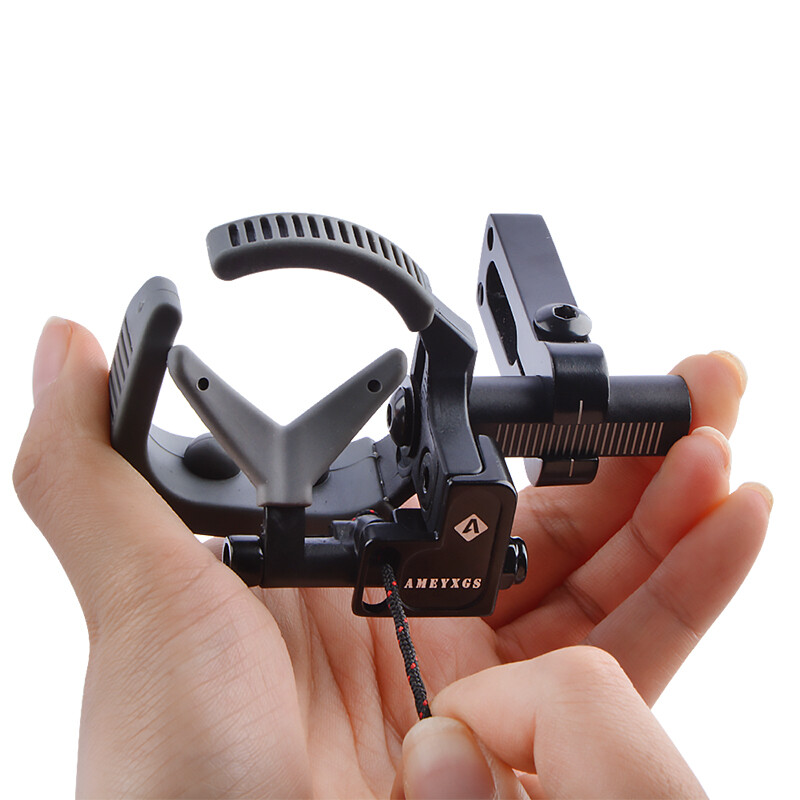
At the mid-range and certainly at the performance tier, many archers prefer to purchase the bare bow and source accessories separately. The sight bundled into a mid-range package is typically a basic multi-pin that a serious archer will outgrow within a season. Buying bare lets you redirect that money toward accessories that actually match your shooting style — a quality drop-away arrow rest, a precision adjustable single-pin sight, or a longer front stabilizer for target shooting. Well-chosen accessories frequently outlast two or three bow upgrades.
A practical middle path for mid-range buyers: take the package to control total cost, then plan to upgrade one or two accessories in the first year as you identify what’s actually limiting your shooting. Most archers find the arrow rest and sight are the first items they want to replace. Stabilizers, wrist slings, and quivers from packages often remain useful for considerably longer.
The Decision That Matters More Than the Price Tag
Choosing a compound bow by price range ultimately comes down to one honest question: where are you right now as an archer, not where you intend to be in three years? A beginning archer who buys a performance-tier bow isn’t buying growth — they’re buying confusion. The draw cycle will perform in ways they can’t yet detect, and when form problems surface, the bow’s precision will amplify those problems rather than absorb them.

The practical approach is straightforward: buy to your current stage, expect to step up once as you develop, and don’t try to solve future problems with today’s purchase. Entry-tier archers who develop quickly will outgrow their first bow — that’s not a mistake, it’s the normal progression arc for the sport. The mid-range is where most serious recreational archers settle long-term. The performance tier is a deliberate investment that should only happen when your skill level can actually use what you’re paying for.
The compound bow that will genuinely improve your shooting is the one matched to where your arrow is currently landing — not where you hope it will land once the bow does the work for you.
Sources
- Archery 360 — USA Archery’s public archery education resource
- USA Archery — official national governing body for the sport
- World Archery Federation — international equipment standards and competition rules
