
Archery Blog
Peep Sight Installation: 7 Steps to Perfect Alignment
May
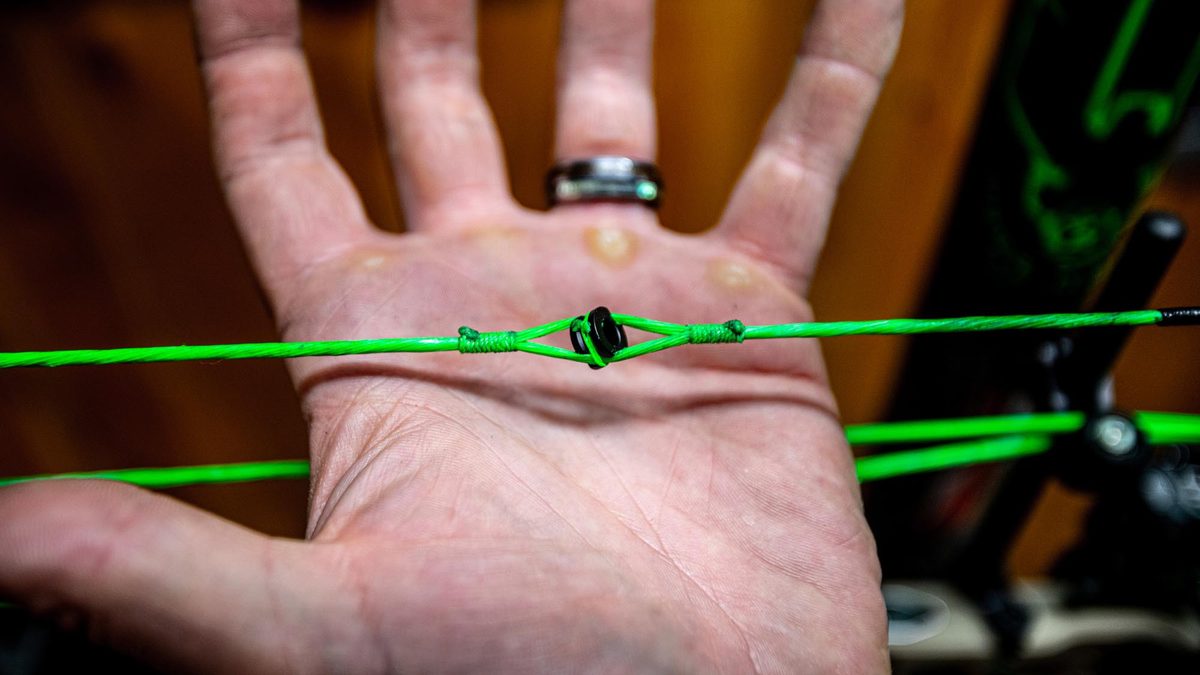
A peep sight installation that drifts even two millimeters at full draw can throw your arrows 4–6 inches off at 30 yards. That’s the brutal math behind every compound bow setup: the peep is the rear sight, your housing is the front sight, and if those two reference points don’t line up consistently, no amount of paper tuning saves you. This guide walks through peep sight installation the way an experienced bow tech does it — with the right materials, the right serving technique, and the rotation fixes that separate a one-pin hunter from someone re-tying their string twice a month.
Why Peep Sight Installation Is the One Setup Step You Cannot Fake
Every other accessory on a compound bow has some forgiveness built in. A bow sight gets micro-adjusted at the housing. A drop-away rest gets shimmed at the launcher. A stabilizer gets weighted in 1-ounce increments. The peep sight has none of that. It either lines up with your housing at full draw, or it doesn’t — and a misaligned peep is the single most common reason hunters tell their pro shop “the bow won’t shoot.”
The peep also has a job most people undersell: it forces a repeatable anchor. Without one, you can creep your head forward an eighth of an inch and never know it. With one, your eye snaps into the same spot every shot because the housing simply isn’t visible from any other position. That’s free consistency, but only when peep sight installation is dialed in from the start.
Peep Sight Installation: Tools and Materials You Actually Need
You don’t need a pro shop to install a peep, but you do need the right gear. Skipping any of these is how strings get cut, peeps blow out under draw, or both:
- A peep sight — pick aperture diameter based on your shooting (more on sizing below).
- Bow press — required to safely separate the string strands. A portable press like the Bowmaster Portable works for at-home installs.
- Serving material — 0.014 braided serving such as BCY Halo or Powergrip. Cheap polyester serving slips.
- Needle-nose pliers — to tension serving wraps without burning your fingers.
- Lighter or super glue — to seal the knot ends.
- A friend or a mirror — peep height is set at full draw, and you can’t see it yourself.
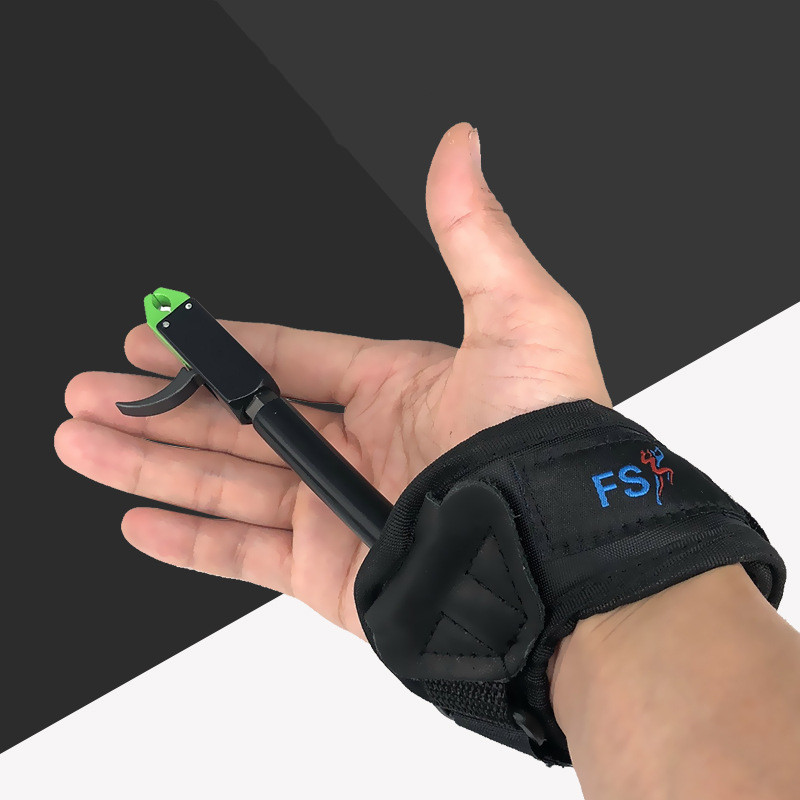
One note: if you’re shopping replacement gear at the same time as your peep, a fresh wrist release aid pairs naturally with a peep sight installation, because release-aid anchor habits dictate where the peep ends up sitting on the string.
Choosing the Right Peep Sight Size for Your Setup
Aperture diameter is the first decision and the one most beginners get backwards. Smaller peeps tighten your sight picture and force a cleaner anchor — but they also gather less light and become useless in low-light conditions. Bigger peeps are forgiving in dim hunting light but let your eye wander inside the aperture, which costs you accuracy at distance.
The rule of thumb most pro shop techs follow:
- 1/16″ to 3/32″ — target archers shooting indoor 18m, where light is bright and aperture-to-housing concentricity is everything.
- 1/8″ — the all-around compound bow peep sight size for hunters who shoot in good light and want sniper-level alignment.
- 3/16″ — the bowhunting standard. Forgives anchor wobble and works in legal hunting light an hour before sunrise.
- 1/4″ — for dim-light hunters, older eyes, or anyone using a clarifier/verifier lens system.
If you wear glasses or have eyes north of 45, size up by one step. The trade you’re making is a slightly looser sight picture for being able to actually see your pin at first light. That’s a trade worth making — a peep you can’t see through at legal shooting light is just a paperweight tied to your string.
Tubed vs Tubeless: Why Most Compound Shooters Stopped Using Surgical Tubing
For two decades, the standard fix for peep rotation was surgical tubing — a rubber tube connecting the peep to the cable system, snapping the peep into alignment as the bow drew. It worked. It also broke. Hunters lost peep alignment mid-stalk because rubber dry-rotted in heat, snapped in cold, or hooked on brush. Worse, when surgical tubing fails, it can rebound into the shooter’s face.
Modern peep sight installation almost universally goes tubeless. A properly tied-in self-aligning peep on a quality string will hold rotation within 1–2 degrees indefinitely. The trade-off is upfront work: you may need to twist the string once or twice during the first hundred shots to dial rotation in. After that, it stays.
The exception is older strings or budget bowstring sets where strand creep is unpredictable. If you’re shooting a string more than two years old, tubed peeps remain a defensible choice — but the better answer is usually a new string.
7-Step Peep Sight Installation Walkthrough
This is the sequence Lancaster Archery’s P.J. Reilly and Hamskea’s bow techs teach in their tie-in videos. It works on every modern compound, from Mathews to Hoyt to PSE.
Step 1: Press the bow. Use a bow press to relieve string tension. Don’t try to wedge the strands apart at rest — you’ll cut a strand and replace the entire string.
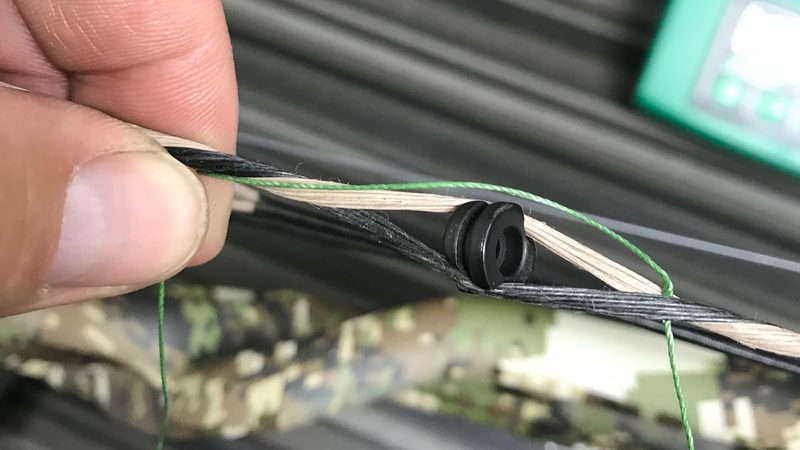
Step 2: Split the strands evenly. Most strings have a clear visual center — the served section between the cams. Count strands. If your string is 22-strand, you split 11 on each side. Uneven splits cause peep tilt at full draw.
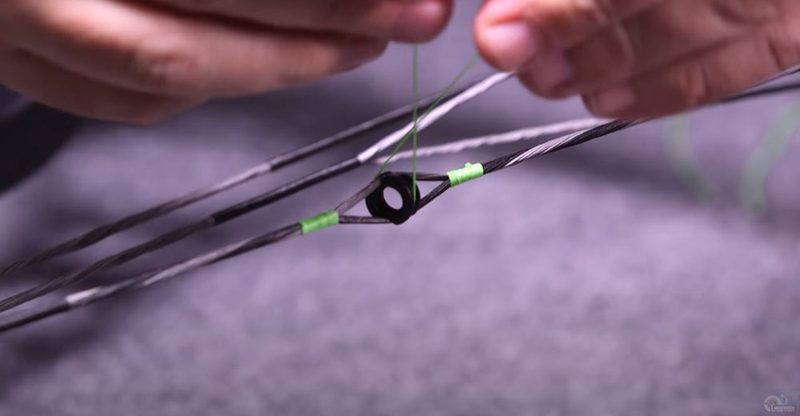
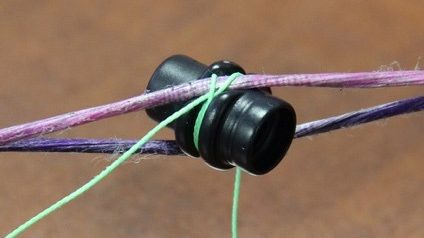
Step 3: Slide the peep in. The peep’s grooves face out — that’s where the serving will anchor. Don’t force it; if it won’t seat, your strands aren’t separated cleanly.
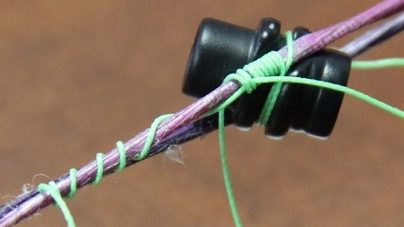
Step 4: Release the press and check rotation. Draw the bow slowly with your eyes closed. Anchor. Open your eyes. The peep should be facing your eye — not tilted left, right, up, or down. If it’s off by more than 30 degrees, twist the string one full turn (always at the cam end, not by hand-twisting the loop) and re-test.
Step 5: Mark final height. With the bow at full draw and a proper anchor, have a buddy mark the string at the bottom edge of the peep with a Sharpie. That mark is your tie-in reference.
Step 6: Serve the peep in place. Cut 18 inches of 0.014 serving. Start wraps about 1 inch from the peep on the cam-side of the string, wrap tight using needle-nose pliers, work toward the peep, fold the tag end down, lock it in with three more wraps, finish with a half-hitch knot, and seal the knot with super glue or a quick lighter touch.
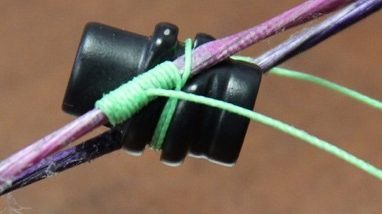
Step 7: Repeat on the other side. Mirror the wrap on the opposite side of the peep. A peep served on only one side will walk under repeated draws.
Peep Sight Alignment at Full Draw
Alignment is what separates a working peep from a frustrating one. After tying, draw the bow with eyes closed five times in a row, anchor, open your eyes, and check rotation each time. If the peep faces you on all five draws, your peep sight installation is dialed in. If it’s off on even one draw, the string itself is creeping — bring it back to the press and add a twist.
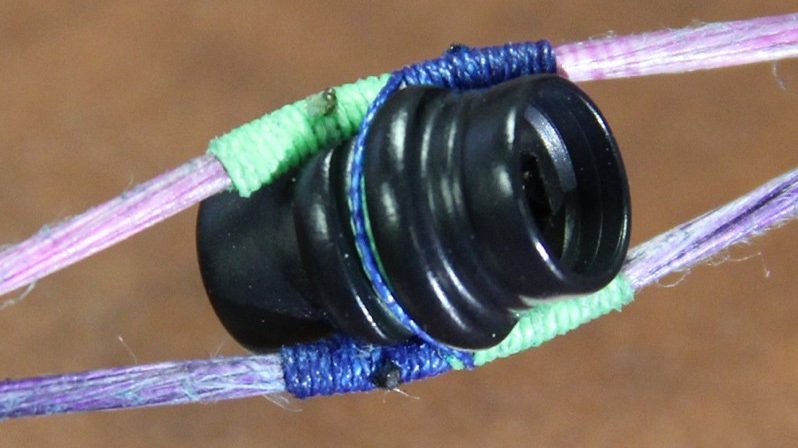
The peep also needs to align vertically with your sight housing. With a single-pin slider or multi-pin housing, the housing’s circular ring should sit concentric inside the peep aperture at your shooting anchor. If the housing floats high in the peep, your peep is too low on the string. Slide it up the string a quarter inch and retest. If the housing sits low, slide the peep down. Settling our bow sight setup before final peep alignment makes this step go faster — your housing position should be locked in before peep height is finalized.
Fixing Peep Sight Rotation and Twist
Rotation issues are the single most common post-install complaint. Here’s how to read what your peep is telling you:
If the peep is rotated 15–45 degrees off-center, add a twist to the string (at the cam, never mid-string) and re-draw. Each twist rotates the peep roughly 7–10 degrees depending on string brand and strand count. Halo serves slightly differently than Powergrip, so test, don’t guess.
If the peep is rotated more than 90 degrees, you tied it in upside down — open the wraps and reinsert the peep with grooves correctly oriented. This is the most common rookie mistake during peep sight installation.
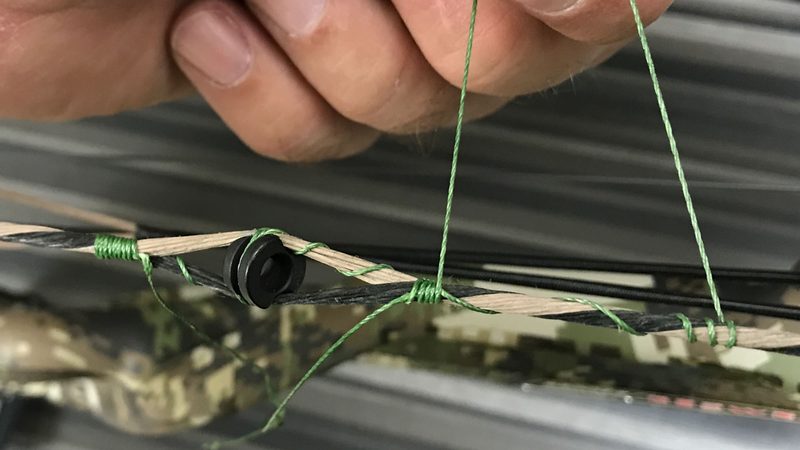
If the peep was perfectly aligned at install but drifted after 100 shots, the string is settling — that’s normal. Twist once more, re-test, and shoot another 50 arrows. After 200–300 shots, a quality string stops creeping and rotation locks for the season.
The watch-for: any peep that twists more than 5 degrees in a single shooting session signals a string issue, not a peep issue. That’s a sign of strand failure, bad serving, or a string that’s overdue for replacement — see our when to replace a bow string breakdown for the full diagnostic.
Common Peep Sight Installation Mistakes That Wreck Groups
Most peep installation failures trace back to one of five mistakes. None of them are subtle once you know what to look for.
Mistake one: uneven strand splits. If your 22-strand string gets a 10/12 split instead of 11/11, the peep tilts under tension and you can’t draw to a clean alignment. Count, don’t eyeball.
Mistake two: peep height set without a real anchor. If you mark the string while reaching forward with your head, the peep ends up too low for your actual shooting anchor. Settle into your normal anchor — kisser button, jaw bone, corner of mouth, whatever your routine is — before the mark goes on the string.
Mistake three: cheap serving material. Polyester serving stretches. Stretched wraps loosen. A loose peep walks. Buy 0.014 Halo or Powergrip and move on.
Mistake four: only serving one side. A peep with serving only above (or only below) has nothing stopping it from sliding through the string under draw. Always serve both sides.
Mistake five: rushing the rotation check. If you skip the eyes-closed-anchor-open-eyes drill and just eyeball the peep at rest, you’ll set it for a position you never actually shoot from. Compound bow shooters rotate the string slightly under draw — your peep needs to align at draw, not at rest.
One more consideration: your anchor depends on how you trigger the release. Hinge releases pull your hand around your jaw differently than a thumb trigger or wrist strap, and that shifts where the peep wants to land. Match the install to the release you actually shoot — and if you’re between releases, consider how nocking points and D-loops also factor into your anchor geometry.
Watch the Pro Walkthrough
The Lancaster Archery Supply tutorial below shows the strand-splitting, peep insertion, and tie-in technique on camera. The angle work alone — watching how the techs separate the strands without slipping — saves hours of trial and error.
Final Thoughts on Getting Your Peep Right
A peep is a 25-cent piece of plastic that decides whether your bow shoots tight groups or scattered ones. Get the size right for your shooting light, get the install tight with quality serving on both sides, and check rotation after the first 100 shots. Once it’s dialed, ignore it until your string ages out — that’s the whole job.
One thing worth investing in: an extra peep of a different size in your range bag. Hunting light changes throughout the season, and there will be a week in late October when your 1/8″ peep is too small for legal shooting time. Having a 3/16″ already on hand means a 20-minute swap, not a missed morning. Cross-checking eye dominance and anchor consistency at the same time keeps the alignment changes intentional, not accidental.
Sources
- Lancaster Archery Supply — How to Tie a Peep Sight into a Bow String — Step-by-step tie-in tutorial from P.J. Reilly.
- Hamskea Archery Solutions — How to Tie In Your Peep — Manufacturer guide with 14 close-up reference photos.
- Nock On Archery — How to Tie in a Peep Sight — John Dudley’s serving technique for self-aligning peeps.
- Western Hunter — How to Properly Tie In a Peep Sight — Field-tested install method with rotation troubleshooting.
- NRA American Hunter — How to Install a Peep Sight and Nock Point — Bowhunting-focused install with safety considerations.
Browse archery bows, arrows, and accessories at the Archery Supplier shop →
