
Archery Blog
Hybrid Slider Bow Sights: When a Movable Multi-Pin Beats Both Setups
May
The single pin vs multi-pin bow sight debate has dominated archery forums for a decade, but in 2026 the most interesting answer for many compound shooters is “neither.” Hybrid slider sights — multi-pin housings mounted on a movable bracket with a calibrated tape and yardage detents — have quietly become the dominant choice for serious hunters and competition shooters who refuse to compromise. If you’ve been ping-ponging between a five-pin fixed sight and a single pin slider, you may already own the wrong tool for the job.
This guide explains what hybrid sliders actually do, how they compare to traditional single pin and multi-pin sights across five real-world shooting scenarios, the trade-offs nobody mentions in product reviews, and how to set one up correctly the first time. By the end you will know which configuration fits your bow setup, terrain, and quarry — and which one is just a marketing exercise.
The Three Bow Sight Categories in 2026
Modern compound bow sights fall into three groups, not two. Lumping every sight into single pin or multi-pin misses the most popular category of the last five years.
Fixed Multi-Pin Sights
A traditional multi-pin sight carries three to seven pins, each pre-set for a specific yardage (typically 20, 30, 40, 50, 60 yards). The housing does not move. You pick the pin closest to your range estimate and hold over or under for the gap. Fixed multi-pin sights are fast, simple, and reliable. They are also limited: you cannot cleanly shoot 47 yards without holding between pins, and stacked pins clutter the sight picture at distance.
Movable Single Pin Sights
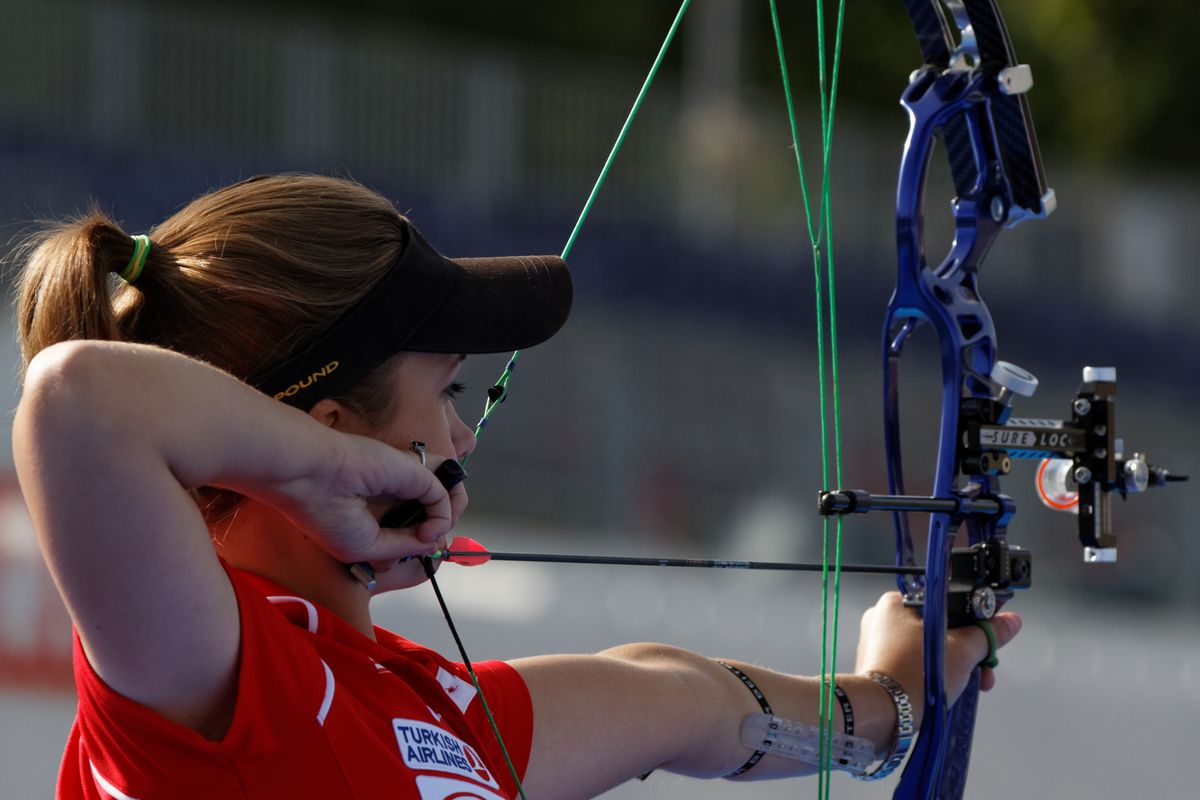
A single pin slider has one pin on a movable bracket. You dial a yardage wheel or slide a pointer along a calibrated tape, and the pin moves up or down to match your target distance. Single pin sights give a clean sight picture and pinpoint accuracy at any yardage between 20 and 80-plus yards. The catch: every shot requires a dial-in, which means you cannot adapt to a moving animal or a follow-up target at a different range without resetting.
Hybrid Multi-Pin Sliders
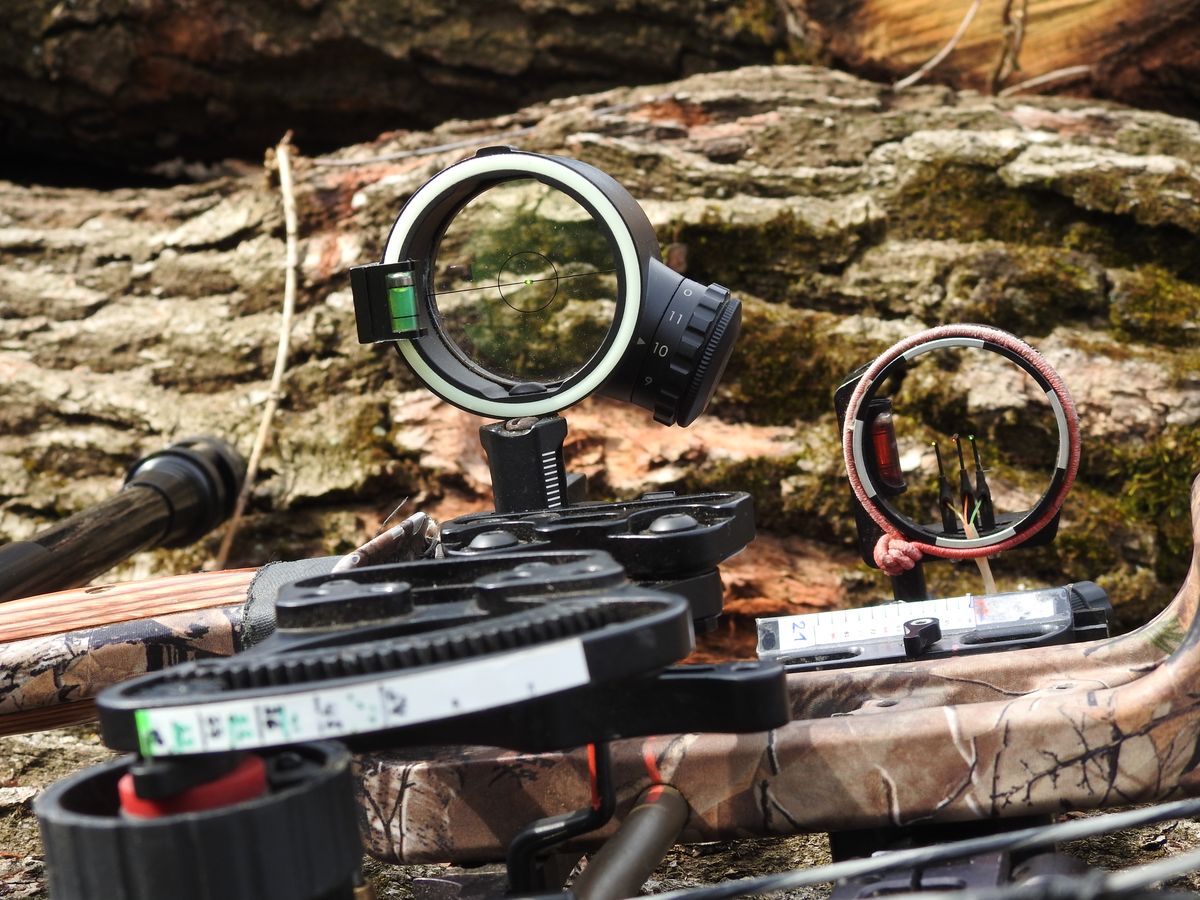
A hybrid combines the two. The housing carries three to five pins (set at close yardages like 20-30-40) and mounts on a slider bracket. You leave the housing alone for any shot inside your maximum fixed-pin range, then dial out for longer shots. The result is a sight that is fast at close distances and infinitely adjustable at longer ones.
Why the Single vs Multi Debate Is Outdated
The classic argument lines up like this: single pin equals clean sight picture and any-yardage accuracy. Multi-pin equals no fumbling, faster shot under pressure. Forum threads have looped this same argument for fifteen years.
Hybrid sliders end the debate by giving you both. For roughly 80% of the shots most archers actually take — under 45 yards, on a stationary target or game animal — a hybrid behaves exactly like a fixed multi-pin. You anchor, settle, and release. The slider just sits on its zero stop. For the other 20% of shots beyond your max pin yardage, you dial the bracket up using a calibrated yardage tape, and suddenly you have a perfectly accurate movable single pin for that one shot.
How Hybrid Sliders Actually Work
The Floating Pin Concept
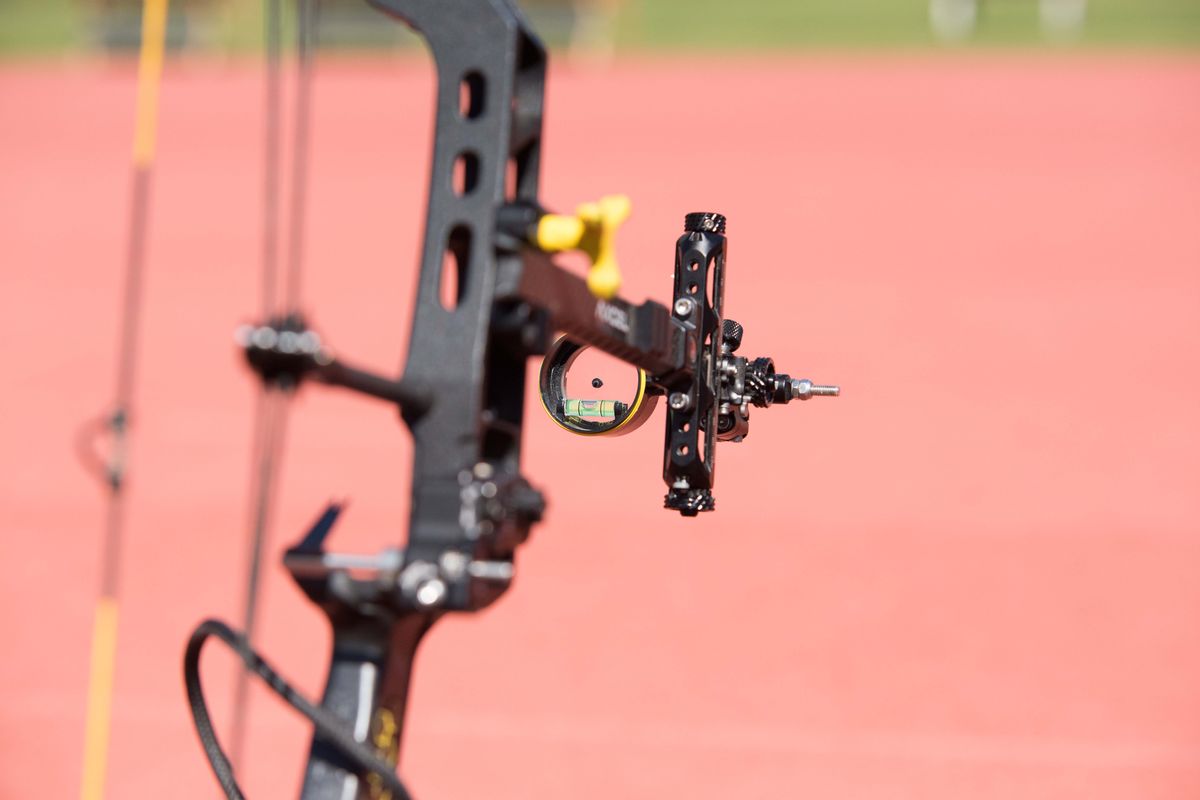
On a hybrid slider, the entire pin housing floats vertically on an adjustment slide. When the slide sits at its bottom stop, your top pin sights in at your closest calibrated yardage (usually 20 yards). Moving the slide upward effectively lowers the trajectory mark across all pins, but in practice you read only one pin — typically the bottom pin — as your floating reference for any dialed yardage.
This is the part that confuses new buyers: most hybrid sliders are designed so that when you dial the slider out, the bottom pin becomes your active pin and the fixed pins above it stop being relevant for that shot. Some shooters mark a single pin (usually the bottom one) with bright wrap or paint to remind themselves which pin to read when sliding.
Detents, Tape Markings, and Yardage Wheels
A detent is a click-stop. Better hybrid sliders have firm detents at common yardages (every 5 yards from 30 to 80) so you can dial by feel without looking at the tape. Cheaper sliders rely entirely on a printed tape and a hairline pointer.
You generate the yardage tape yourself or use a manufacturer-provided generator. After you have sighted in at 20 yards (top pin) and a longer reference (often 60 or 80 yards with the slider dialed out), you input your bow speed, arrow weight, and reference numbers into a free app like Archer’s Advantage or OnTarget2, and it prints a yardage tape calibrated to your exact setup.
Real-World Scenarios: Which Sight Type Wins When
Western Spot-and-Stalk Hunting
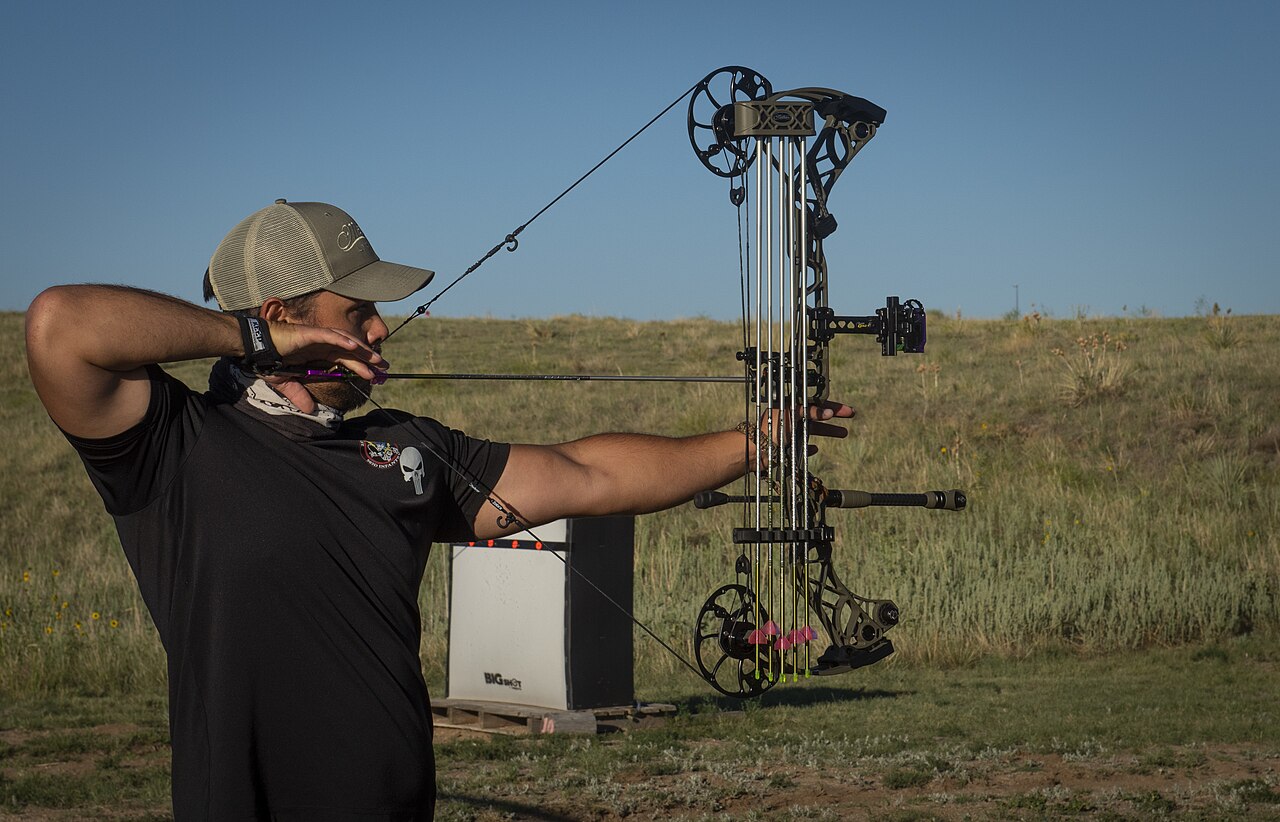
Open country, long shots, time to range and dial. Winner: single pin slider or hybrid slider. A fixed multi-pin gives up too much accuracy past 50 yards, where mule deer and antelope shots routinely happen. If you only carry one bow into Wyoming or New Mexico, you want a sight that dials.
Eastern Treestand Whitetail
Fifteen to thirty-five yard shots, animals appearing fast, no time to dial. Winner: fixed multi-pin or hybrid set to its zero stop. Single pin sliders force you to dial for shots you should be able to take in 1.5 seconds. The hybrid is the perfect compromise — it behaves like a fixed multi-pin for the shots whitetail hunters actually take, but you keep the slider in case you need it.
3D Tournament Shooting
Unknown distances, foam animals at 15 to 50 yards, one shot per target with a time limit. Winner: hybrid slider. You range with binos or your eye, dial quickly to the marked detent, settle, release. Pure multi-pin shooters give up too many points to gap-aiming math. Pure single pin shooters spend too much of their time limit dialing.
Indoor Target Spots
Twenty yards (Vegas) or 18 meters (World Archery). Winner: dedicated indoor scope or single pin slider. Hybrids are overkill — you only need one pin at one distance, ideally with magnification and a level.
Backyard Practice and Foam
Mixed distances out to 60 yards, no time pressure, lots of repeatability. Winner: any of the three, depending on what you also hunt or compete with. Practice with whatever sight you use in the field — do not switch between practice and game day.
The Trade-Offs Nobody Mentions
Hybrid sliders are not perfect, and the gear reviews glossing over the downsides are doing buyers a disservice.
- Weight. A quality hybrid slider weighs 11 to 14 oz versus 6 to 8 oz for a fixed multi-pin. On a treestand bow you carry for hours, the extra weight matters.
- Cost. Entry-level hybrid sliders start at $250. Premium models (Spot-Hogg Fast Eddie XL, Black Gold Ascent Verdict, Axcel Landslyde) run $400 to $600. Fixed multi-pins start under $100.
- Setup complexity. A fixed multi-pin requires sighting in 3 to 5 pins. A hybrid requires sighting in 3 to 5 pins AND generating a yardage tape AND calibrating the slider zero. First-time setup takes two or three range sessions.
- Failure points. More moving parts means more things that can shift in transit. The slider bracket needs periodic torque checks. The yardage tape can peel in extreme humidity.
Setting Up a Hybrid Slider Correctly
First range session: sight in your top pin at 20 yards exactly as you would a fixed multi-pin. Rest your bow, shoot a group, adjust the pin laterally and vertically until your group centers the bullseye. Do not touch the slider yet.
Second session: leave the top pin alone and work down through your fixed pins (30, 40 yards, or whatever your housing carries). Adjust each pin individually to its yardage. The slider stays at zero.
Third session is yardage tape generation. Dial the slider to its maximum extension. Shoot at a long reference distance (60 or 80 yards). Use that result along with your 20-yard zero to generate a calibrated tape via Archer’s Advantage, Pinwheel, or the free generator on most sight manufacturer websites.
Validate the tape at random yardages: 35, 47, 53, 68. If groups land at point of aim, you are done. If they are consistently high or low, adjust the tape input variables (bow speed is usually the culprit) and reprint.
Common Mistakes When Switching to a Slider
Archers transitioning from a fixed multi-pin to a hybrid slider tend to repeat the same five errors.
- Skipping the zero verification before generating a tape. If your 20-yard zero drifts by a quarter inch, every dialed shot will print high or low at distance.
- Generating the tape with manufacturer-published bow speed instead of chronographed speed. Real-world IBO speeds run 5 to 15 fps slower than catalog. Always chronograph.
- Forgetting which pin is the active pin when dialing. Wrap your bottom pin with neon thread the first month.
- Letting the slider sit dialed-out between hunts. Always return to zero before storing the bow — bracket dust accumulation can stick the slide.
- Trying to dial for moving game. If an animal is walking, hold the appropriate fixed pin and lead it. Dialing for a moving target wastes the slider’s advantage.
Final Verdict: Who Should Buy What
If you primarily hunt whitetails from a stand, shoot inside 35 yards, and value light bow weight, buy a quality fixed multi-pin sight in the $150 to $300 range. The hybrid’s slider is dead weight for your shot profile.
If you hunt western game, shoot 3D tournaments, or take shots beyond 50 yards regularly, buy a hybrid slider. The Spot-Hogg Fast Eddie XL, Black Gold Ascent Verdict, and Axcel Landslyde Carbon Pro all earn the price.
If you exclusively shoot indoor spots or known-distance target, buy a dedicated target sight or premium single pin slider. The hybrid offers nothing your discipline needs.
The single pin vs multi-pin question is the wrong frame. The right question is whether your hunting and shooting style demands the flexibility of a slider — and if it does, why settle for one pin when you can have both?
Sources
- Lancaster Archery Supply — bow sight category guides
- Spot-Hogg Archery Products — Fast Eddie XL specifications
- Black Gold Sights — Ascent Verdict product documentation
- Axcel Sights — Landslyde Carbon Pro technical sheet
- Archery Trade Association — 2026 retail trends report
- Bowhunting.com — multi-pin slider field reviews
Browse archery bows, arrows, and accessories at the Archery Supplier shop →
