
Archery Blog
Single Pin vs Multi-Pin Bow Sights: Honest 2026 Comparison
May
Walking into a pro shop with a bare compound and asking for the right sight is a fast way to leave $300 lighter without knowing why. The single pin vs multi-pin bow sights debate isn’t really about one being better — it’s about which one matches the way you actually shoot. A treestand hunter who never takes a shot past 30 yards has no business with a movable single pin. A western elk hunter dialing 60-yard shots in 12 mph wind doesn’t want five fixed pins crowding the scope.
This guide breaks down both styles honestly: how they work, where each shines, the math behind your choice, and the hybrid options that didn’t exist five years ago. By the end you’ll know which sight belongs on your bow.
What a Bow Sight Actually Does
A bow sight gives you a repeatable aiming reference, the same way iron sights do for a rifle. The pin sits inside a round housing called the scope, and you align that pin with your peep sight at full draw. Where you place the pin on the target — combined with your sight tape or pin gap — determines arrow impact.
Two design families dominate the compound market:
- Fixed multi-pin sights stack 3, 5, or 7 pins vertically. Each pin is sighted in for a specific yardage (20, 30, 40, and so on).
- Single pin movable sights use one pin on a slider you adjust to a yardage tape, then aim with that single reference.
The difference sounds small. In the field it changes how you think about every shot.
Single Pin Sights: How They Work
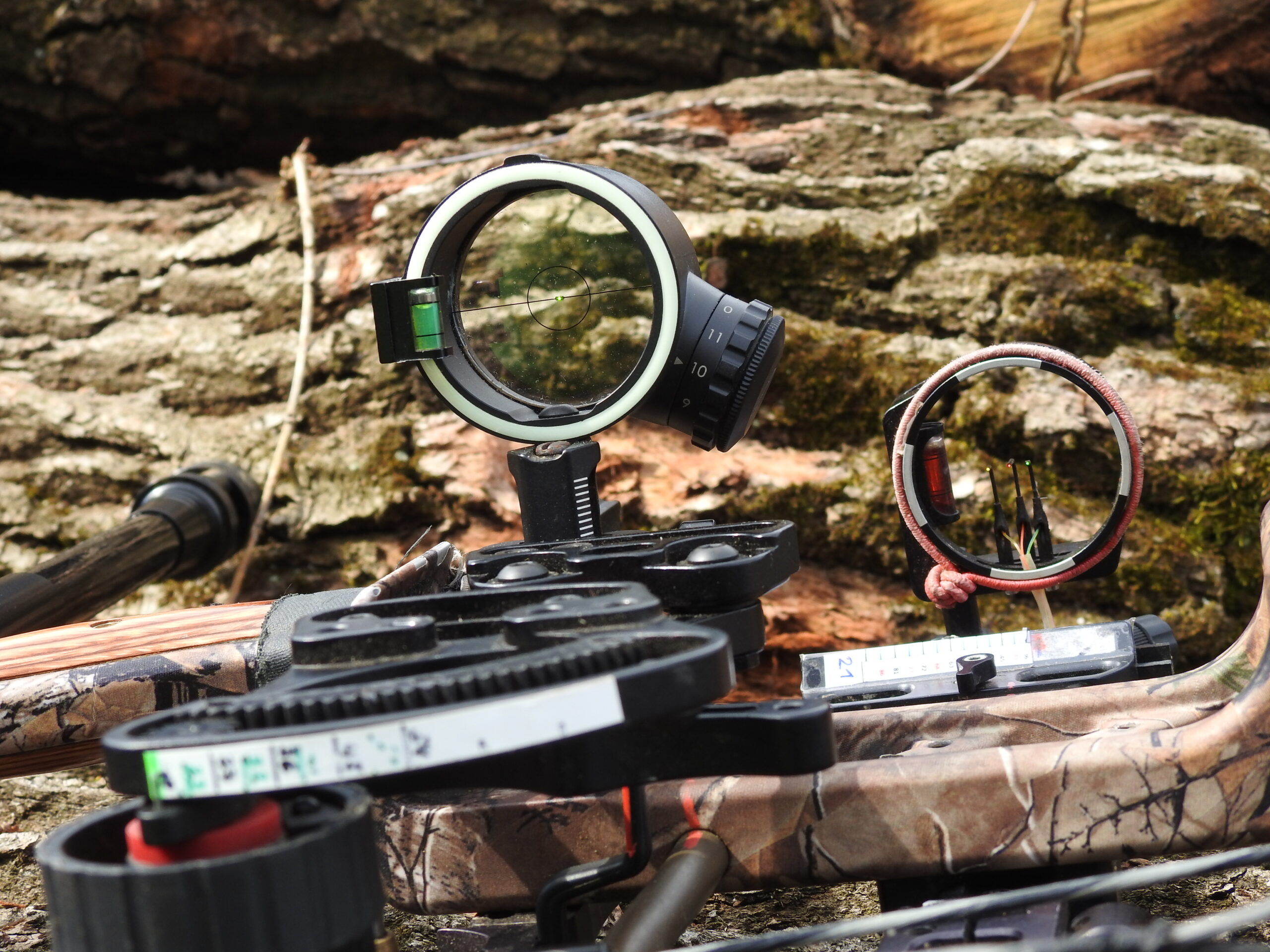
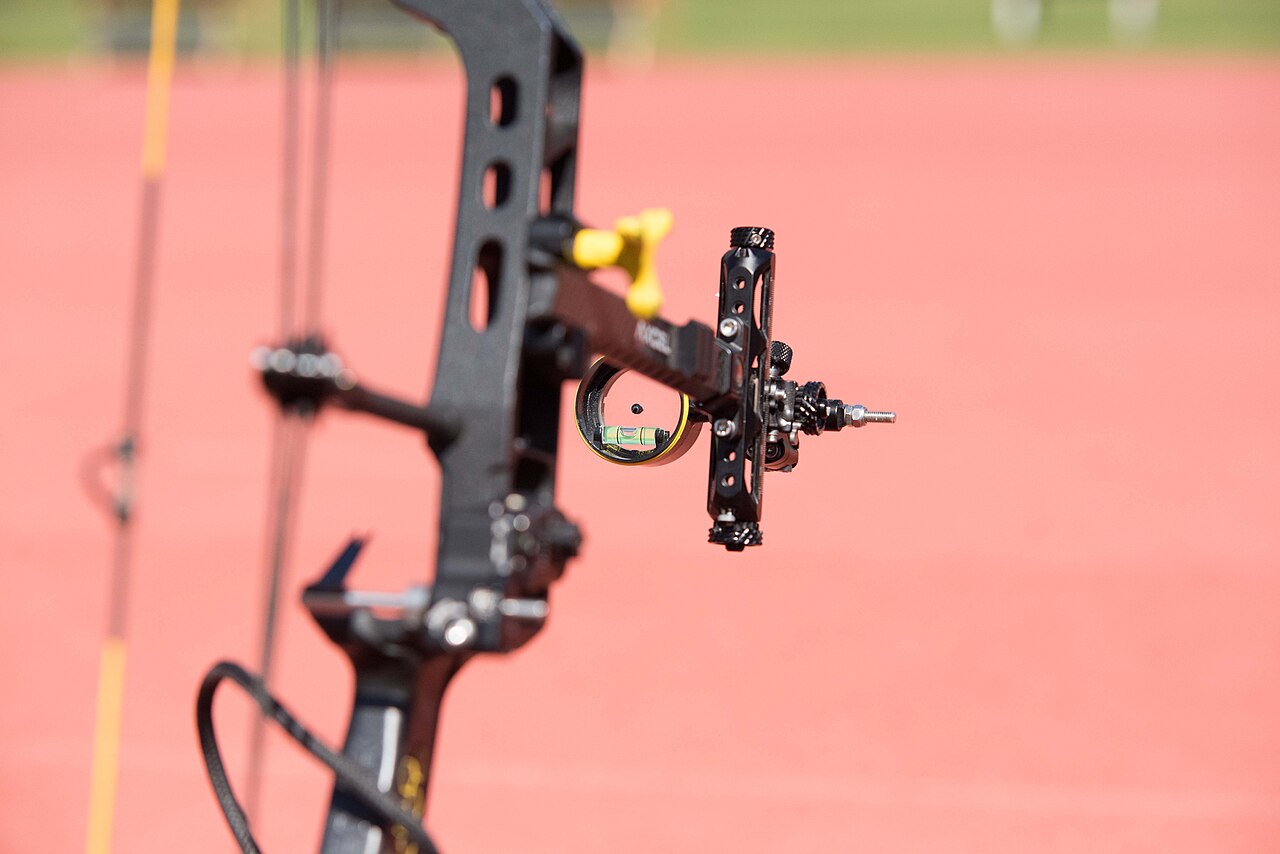
A single pin sight has one fiber-optic pin centered in the scope. To shoot 47 yards, you turn a knob (or pull a slider) until the pin’s yardage indicator reads 47, then aim dead center on the spot you want to hit.
Why archers love single pins
- Uncluttered sight picture. Nothing distracts from your aiming reference. At low light, this matters.
- Dead-on aiming at any yardage. Dial to 43, hold center. No splitting the difference between a 40 and 50 pin.
- Better for target and 3D archery. When the rules let you adjust between shots, a single pin is unbeatable for known-distance work.
- Forces you to range every shot. Sounds like a downside, but it builds discipline that pays off on bigger animals.
Where they fall short
- Slow follow-up shots. A buck steps from 30 yards to 47 in three seconds. You’re not turning a dial in time.
- Mechanical complexity. Sliders, gears, and locks can fail. Cheap ones develop slop that costs you arrow groups.
- Cold-hand operation. In November, with frozen fingers, fine yardage adjustments get clumsy.
- Wrong tape equals miss. If your sight tape isn’t calibrated to your exact arrow speed and bow setup, every shot is off.

Multi-Pin Sights: How They Work
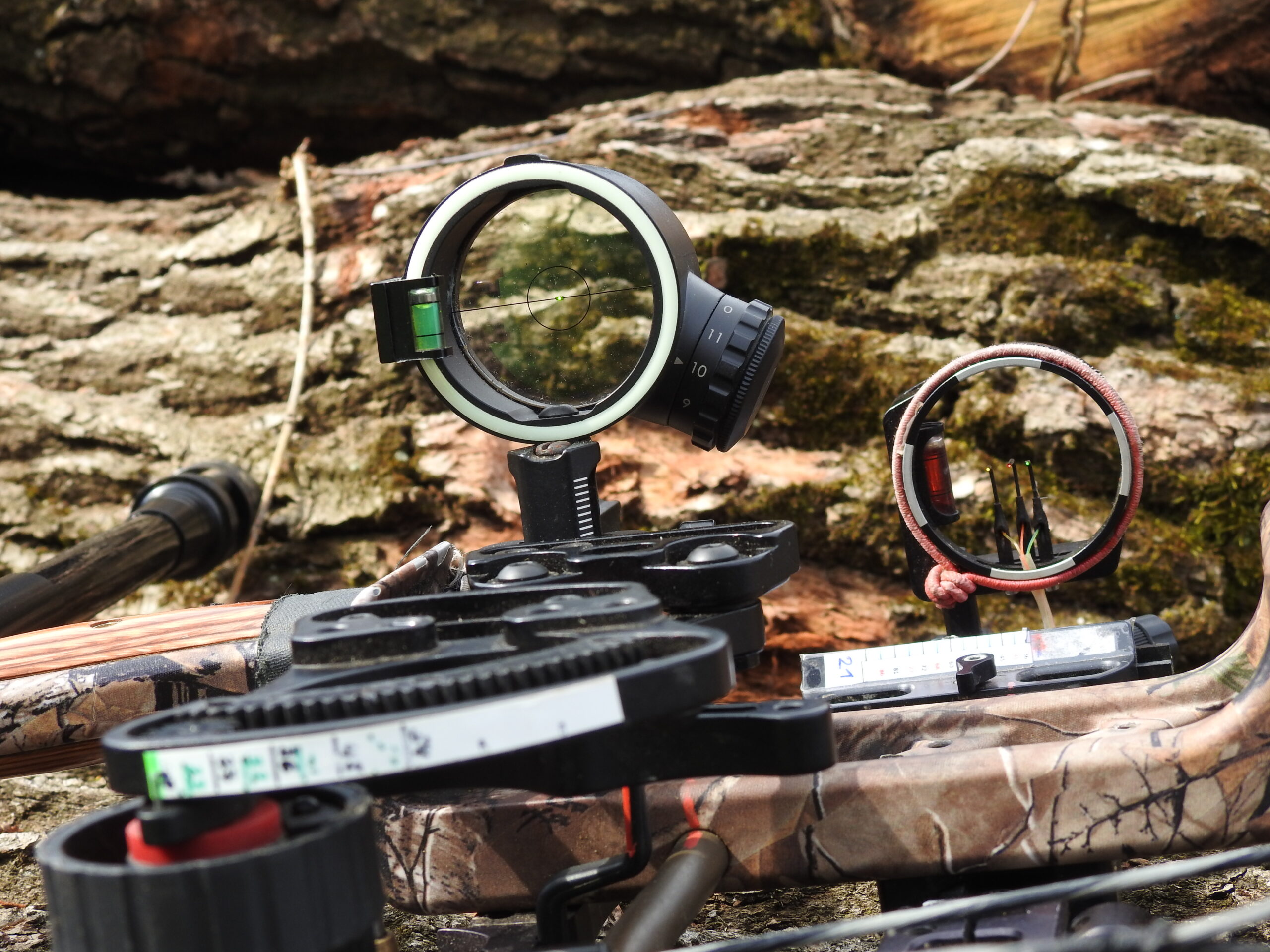
A multi-pin sight stacks pins vertically. The top pin is your closest yardage (often 20), and each pin below adds 10 yards. You sight each pin individually during setup, then commit those yardages to muscle memory.
Why bowhunters reach for them
- Instant range transitions. A spot-and-stalk hunter can pivot from a 30-yard pin to a 60-yard pin in half a second.
- No moving parts to fail. Solid metal housings, fixed pins, dovetail mounts. Drop it from a tree and it usually keeps shooting.
- Confident gap shooting. If a deer steps to 35 yards, you hold between your 30 and 40 pin. Experienced archers do this without thinking.
- Cheaper at the entry tier. A solid 5-pin can run $80-150. Comparable single pins start around $200.
Where they struggle
- Cluttered scope at long range. Five pins inside a small housing crowd your aim point. Some hunters can’t see clearly past the third pin.
- Pin gap problems. Fast bows with fast arrows have tight pin spacing — your 60 and 70 yard pins almost touch.
- Fixed yardages only. A 47-yard shot means holding between pins, which adds estimation error.
- Heavier on the mast. More pins equals more fiber, more housing weight, more bow rebound during a hold.
Single Pin vs Multi-Pin: Head-to-Head
Here’s how the two designs stack up across the criteria that actually matter at full draw:
| Factor | Single Pin | Multi-Pin |
|---|---|---|
| Speed of follow-up | Slow | Fast |
| Long-range precision | Excellent | Good |
| Sight picture clarity | Excellent | Cluttered at distance |
| Mechanical reliability | Moderate | Excellent |
| Entry price | $180-300 | $80-200 |
| Premium price | $400-600 | $250-450 |
| Best at known distance | Yes | No |
| Best for moving game | No | Yes |
| Cold weather operation | Awkward | Easy |
Which One Fits Your Style?
The right sight depends on three things: what you hunt or shoot, how far your shots are, and how often you reset between shots.
Treestand and whitetail hunters
You’re sitting in a stand at predictable yardages — you’ve ranged the trail at 22, the scrape at 35, the field edge at 48. Most of your shots happen in under five seconds. Multi-pin wins. Three pins covering 20, 30, and 40 is enough for 95% of treestand hunting.
Western spot-and-stalk
Mule deer at 70 yards in sage flats. Elk slipping through aspens at unknown distances. Wind and gravity matter. A single pin you can dial precisely from 25 to 80 lets you shoot inside the kill zone at any range. Single pin or hybrid wins.
3D archery
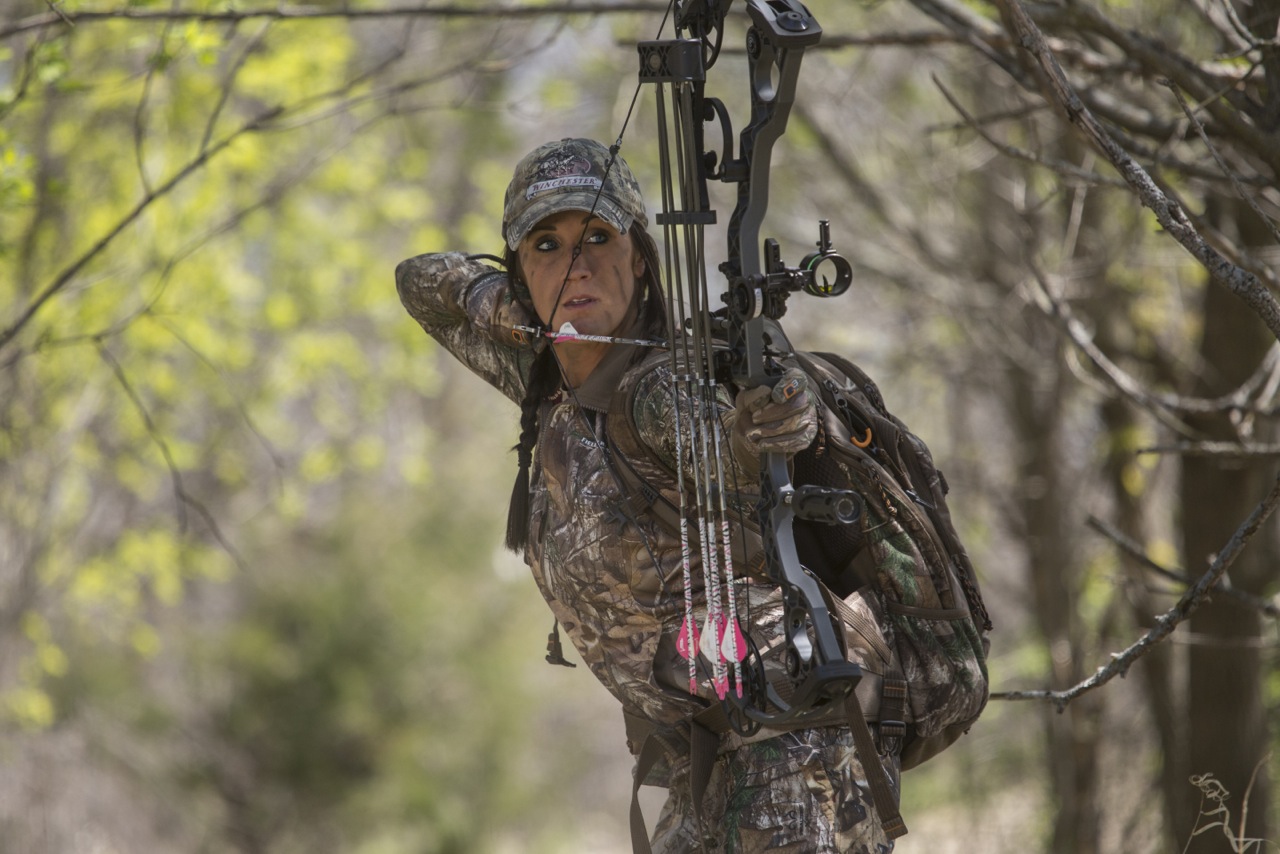
Known distance, unknown distance, sometimes timed. For known-distance 3D, a single pin you can dial is gold. For unknown-distance 3D, multi-pin gives you faster gap reads. Both work — depends on the format.
Target archery (indoor and outdoor)
A single dot scope (technically a single pin variant) on a long-bar competition sight is standard. Single pin wins.
The Hybrid Option Most Archers Don’t Know About
Modern hybrid sights stack two or three fixed pins on top with a sliding pin underneath. You shoot the fixed pins at hunting yardages and dial the slider for longer or precision shots. Spot Hogg’s Fast Eddie XL, Black Gold Ascent Verdict, and HHA Tetra Tournament all play in this space.
The trade-off: hybrids cost more (often $400+), weigh more than a pure single pin, and add complexity. But for the hunter who shoots 3D in the off-season or takes occasional long shots, hybrids are the Swiss Army knife answer.

Setup and Tuning Differences
The two sight styles have very different sighting-in workflows.
Sighting in a multi-pin
- Set up at 20 yards. Adjust your top pin until arrows hit point of aim.
- Move to 30 yards. Adjust the second pin only — leave the top alone.
- Repeat at 40, 50, and so on for each pin.
- Walk back to 20 to verify. If the top pin drifted, you bumped the housing — recheck mounting.
Sighting in a single pin
- Set up at 20 yards. Mark the slider position when arrows hit center.
- Move to 60 yards. Mark the slider position when arrows hit center again.
- Use those two reference points to calibrate the printed sight tape that came with the sight (or use a tape calculator app).
- Verify at 30, 40, and 50. If your tape is off, your bow speed estimate was wrong — try a different tape number.
The single pin process is faster once you understand sight tapes, but it’s less forgiving of arrow speed estimation errors. A multi-pin doesn’t care what your arrow speed is — each pin is sighted in physically.
Common Mistakes With Both Sight Types
After watching hundreds of archers tune sights, the same problems repeat regardless of sight style:
- Adjusting the wrong pin during sighting. With multi-pins, every pin moves together if you adjust the housing instead of just one pin. Touch the right knob.
- Forgetting to lock the slider. A single pin slider that moves under shock will shift your entire sight picture. Always engage the lock after dialing.
- Mounting too far from the riser. A sight bar that’s too long amplifies torque. Keep it as short as your sight picture allows.
- Ignoring third axis level. Both sight styles need third axis adjustment for shots at uphill or downhill angles. Skip this and your 40-yard mountain shot goes wide.
- Buying for the catalog photo, not the use case. A target archer doesn’t need a hunting-grade aluminum housing. A treestand hunter doesn’t need an extension bar.
Pin Color and Fiber Diameter — The Detail Most Buyers Skip
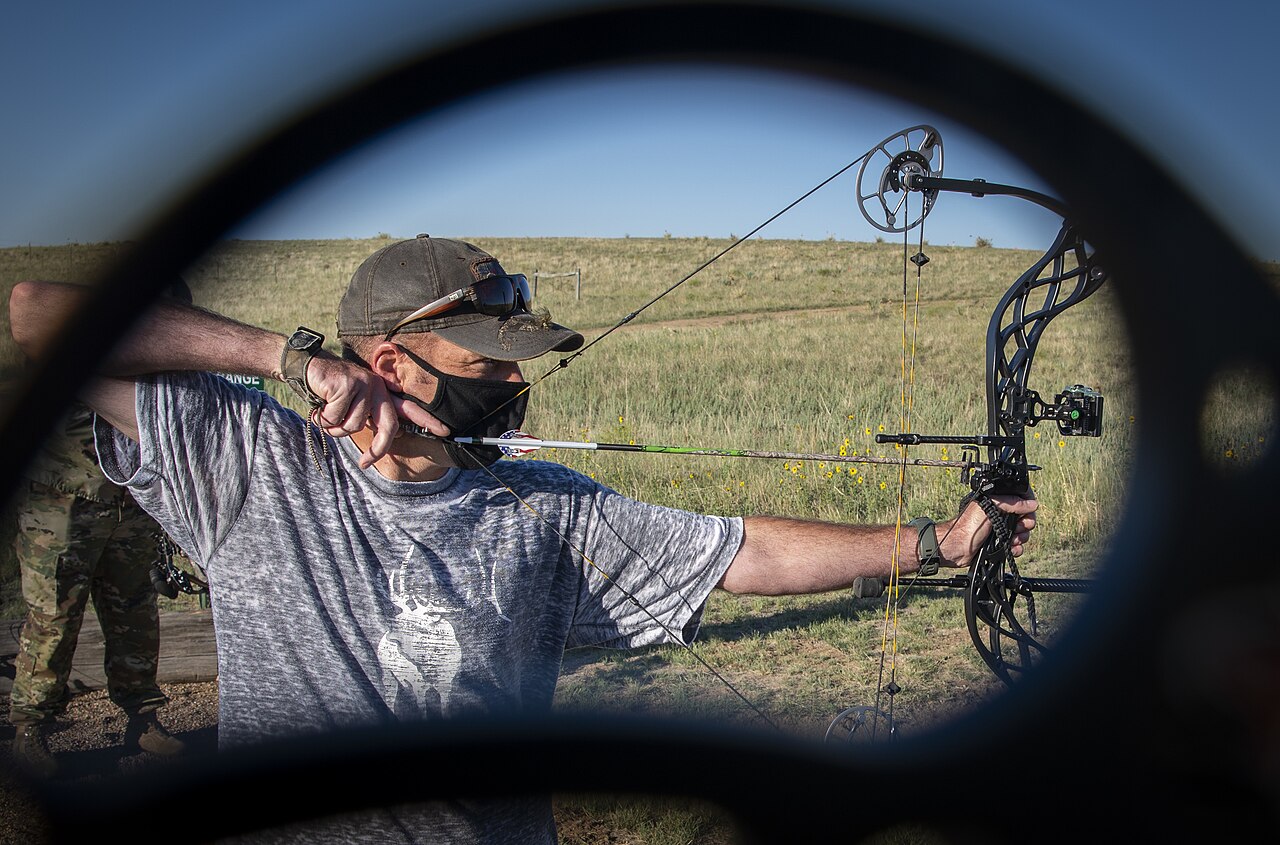
Both sight types let you choose fiber-optic diameter (.010, .019, .029) and pin color. Smaller fibers (.010) give pinpoint accuracy at long range but are dim in low light. Larger fibers (.029) glow brightly at dusk but cover a softball at 60 yards.
For hunting, .019 is the sweet spot. For target work, .010 to .015 is standard. Mix colors to your preference — green is most visible to most eyes, red works well in green foliage but vanishes against autumn brush.

Budget Reality Check
Here’s roughly what each tier gets you in 2026:
- Under $100: Entry multi-pin sights from Trophy Ridge, IQ, and Apex. Decent for first-bow setups but loose tolerances and dim fibers limit long-range use.
- $100-200: Solid mid-range multi-pins (Black Gold Rush, HHA Sport DS). Quality fibers, micro-adjustment, and reliable housings. Most hunters live here.
- $200-400: Entry single pins (HHA Optimizer Lite, IQ Define) and premium multi-pins (Black Gold Ascent, Spot Hogg Hogg-It).
- $400-600: Premium single pins and hybrids (Spot Hogg Fast Eddie XL, Black Gold Ascent Verdict, HHA Tetra Max). This is where mechanical precision becomes invisible.
- $600+: Target-grade single dots (Shrewd, Sure-Loc) for tournament work.
Watch the Difference in Action
Final Verdict
If you mostly hunt from a stand or blind at predictable yardages: multi-pin. Three to five pins, .019 fiber, $150-250 budget. Done.
If you shoot known-distance targets, 3D, or western big game where you have time to range and dial: single pin. The clean sight picture and dead-on hold pay off every time you slow down to make the shot count.
If you do both — and your budget allows: hybrid. The Spot Hogg Fast Eddie XL or Black Gold Ascent Verdict gives you fixed pins for fast shots and a slider for precision, without the compromises of either pure design.
Whatever you pick, sight it in properly with the same arrows and broadheads you’ll actually shoot. The fanciest sight in the world won’t fix poor form, a bad rest, or a worn peep. But the right sight, matched to your shooting style, makes every other piece of your setup work harder.
Sources
- Bowhunter Magazine — sight reviews and field tests
- Lancaster Archery Supply — product specifications and tuning guides
- Archery 360 — gear comparison articles
- Field & Stream — bowhunting equipment coverage
Browse archery bows, arrows, and accessories at the Archery Supplier shop →
