
Archery Blog
Arrow Fletching Guide: 7 Tips for Perfect Vanes Every Time
Mar
Arrow fletching — the vanes or feathers attached near the rear of your arrow — is arguably the most underappreciated component in your entire archery setup. These small fins do the critical work of stabilizing your arrow in flight, correcting minor form errors, and steering broadheads to their mark. Whether you shoot a compound bow at 3D tournaments or a recurve at backyard targets, understanding how fletching works and which type to choose can shave groups tighter and boost confidence at full draw.
What Is Arrow Fletching and Why Does It Matter?
Fletching refers to the vanes or feathers glued to an arrow shaft, typically positioned a few inches forward of the nock. Their primary job is aerodynamic stabilization. When an arrow leaves the bow, it experiences forces from the string release, the rest, and even the archer’s grip torque. Without fletching, an arrow would fishtail, porpoise, or tumble — especially at longer distances or when tipped with a broadhead.
The physics are straightforward: fletching creates drag at the rear of the arrow, forcing the back end to follow the front end. Think of a dart. The flights on a dart serve the same purpose. Larger fletching creates more drag and more corrective force, but also slows the arrow. Smaller fletching preserves speed but offers less steering authority. Finding the right balance for your setup is what this guide is all about.
Fletching also imparts spin. Depending on the orientation you choose — straight, offset, or helical — your arrow will rotate at different rates during flight. That spin acts like rifling on a bullet, gyroscopically stabilizing the shaft and improving accuracy. This is especially critical for bowhunters shooting fixed-blade broadheads, which can act as rudders and steer the arrow off course without adequate spin.
Arrow Fletching Types: Vanes vs Feathers
The two primary materials used for arrow fletching are plastic vanes and natural feathers. Each has distinct advantages, and the right choice depends on your bow type, shooting style, and conditions.
Plastic Vanes
Plastic vanes are the dominant choice in modern archery. Made from vinyl, rubber-compound materials, or proprietary blends (like Bohning’s Blazer vane material or AAE’s MAX compound), they offer several key advantages:
- Durability: Vanes withstand rain, humidity, and repeated target impacts far better than feathers. They maintain their shape through hundreds of shots.
- Consistency: Factory-made vanes are uniform in weight, height, and profile, which helps arrow-to-arrow consistency.
- Weather resistance: Unlike feathers, vanes do not absorb moisture, making them reliable in wet conditions.
- Low maintenance: No waterproofing needed. Just wipe them clean occasionally.
Popular vane brands include Bohning Blazer vanes (the best-selling hunting vane for over a decade), AAE Max Hunter and Max Stealth, TAC vanes, and Flex-Fletch. The Blazer vane’s 2-inch, high-profile design has become the standard for bowhunters because it provides excellent broadhead steering in a compact package.
Natural Feathers
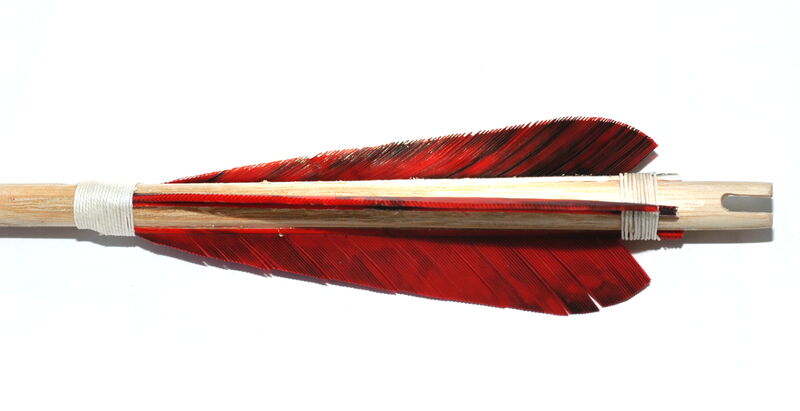
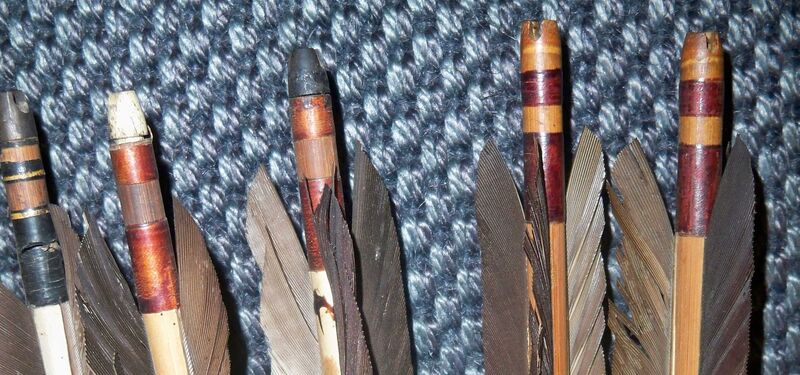
Feather fletching — typically from turkey wing feathers — is the traditional choice and still preferred by many recurve, longbow, and traditional archers. Feather advantages include:
- Weight: Feathers weigh roughly one-third as much as comparable plastic vanes, giving a slight speed advantage.
- Forgiveness: When a feather contacts the riser or arrow shelf, it collapses flat and springs back. This makes feathers ideal for bows without elevated rests, where the arrow slides directly over the shelf.
- Drag and spin: The natural texture of feathers creates more drag and imparts more spin than smooth plastic vanes, which improves stabilization — particularly at lower arrow speeds typical of traditional bows.
The main downsides of feathers are their vulnerability to moisture (wet feathers mat down and lose their aerodynamic profile) and shorter lifespan compared to vanes. Feather shooters often apply a water-repellent powder or spray before shooting in damp conditions.
Straight, Offset, and Helical Fletching Explained
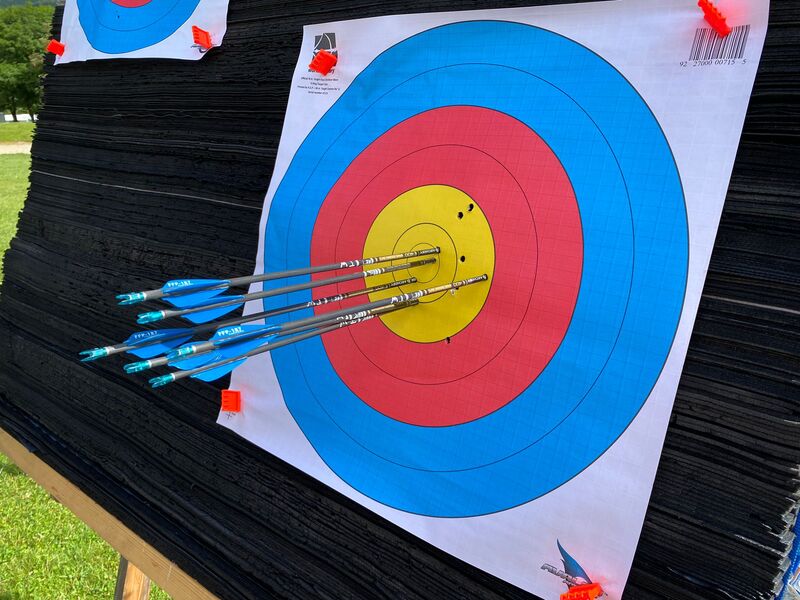
Beyond the material, how you orient the fletching on the shaft makes a massive difference in arrow performance. There are three orientations to choose from:
Straight Fletching
Straight fletching runs parallel to the arrow shaft with no angle. This setup creates minimal drag and preserves maximum arrow speed. However, it provides the least amount of spin and corrective stability. Straight fletching works best for indoor target archers shooting field points at short distances (typically 20 yards or less), where speed matters more than long-range stabilization.
Offset Fletching
Offset fletching is attached straight to the shaft but angled slightly — typically 1 to 4 degrees — from front to back. This small angle causes the air flowing over the vane to push the arrow into a gentle rotation. Offset provides a good balance between speed retention and stabilization, making it the most popular choice for compound bow hunters. Most factory-fletched hunting arrows come with an offset orientation.
Helical Fletching
Helical fletching features a curved or twisted orientation, wrapping slightly around the shaft. This creates the most aggressive spin and the greatest stabilization, but also generates the most drag and the greatest speed loss. Helical fletching is ideal for:
- Fixed-blade broadhead hunting at distances beyond 30 yards
- Archers who prioritize accuracy over flat trajectory
- Crossbow bolts (many crossbow manufacturers recommend helical)
- Arrows with high FOC (front-of-center) weight configurations
Bohning recommends fletching their popular Blazer vanes with a helical orientation for optimal results. Most experienced bowhunters eventually settle on either offset or helical, depending on their broadhead choice and typical shooting distance.
How to Choose the Right Vane Size
Vane size — measured in length and height — directly affects steering authority, speed, and noise. Here are the general guidelines:
Short Vanes (1.5–2 inches)
Short, high-profile vanes like the 2-inch Bohning Blazer or the AAE Max Stealth are the go-to for most bowhunters. The compact length keeps weight down and reduces drag, while the tall profile still provides adequate steering. These vanes are particularly effective with mechanical broadheads that don’t plane as aggressively as fixed blades.
Medium Vanes (3–4 inches)
Mid-length vanes offer more surface area for increased stabilization. They work well for fixed-blade broadheads, long-range hunting, and 3D archery where arrow flight consistency matters at varying distances. The added drag is modest and usually worth the trade-off in accuracy.
Long Vanes (4–5 inches)
Long vanes (or 4–5 inch feathers) provide maximum steering correction. Traditional archers and recurve shooters often prefer longer feather fletching because their arrows travel at lower speeds and benefit from the added stabilization. These are also common on hunting arrows tipped with large fixed-blade broadheads.
Quick Sizing Reference
| Vane Size | Best For | Speed Impact | Stability |
|---|---|---|---|
| 1.5–2″ | Hunting with mechanicals, speed bows | Minimal loss | Moderate |
| 3–4″ | Fixed blades, 3D archery, all-around | Moderate loss | High |
| 4–5″ | Traditional bows, large broadheads | Significant loss | Maximum |
How to Fletch Arrows: Step-by-Step
Learning how to fletch arrows yourself is one of the most valuable skills an archer can develop. It saves money, lets you customize your setup, and means you can repair arrows in the field during hunting season. Here is how to do it:
Tools You Need
- Fletching jig: A clamp system that holds vanes at the correct angle while glue dries. Popular options include the Bohning Helix Tower Jig, Bitzenburger Dial-O-Fletch, and Arizona EZ-Fletch.
- Fletching glue: Cyanoacrylate (super glue) or specialized fletching cement. Bohning Fletch-Tite Platinum and Goat Tuff Glue are widely used.
- Alcohol or acetone: For cleaning the shaft before gluing.
- Vanes or feathers: Your chosen fletching material.
- Paper towels and a razor blade: For cleanup and trimming.
The Process
- Clean the shaft: Wipe the rear portion of the arrow shaft with rubbing alcohol or acetone. Any oil, dust, or residue will prevent the glue from bonding properly. This step is non-negotiable — poor adhesion is the number-one cause of lost vanes.
- Clean the vane base: Similarly, wipe the base of each vane. Some manufacturers apply a release agent during production that needs to be removed.
- Set up the jig: Adjust your fletching jig for the desired orientation (straight, offset, or helical) and the number of vanes (three-fletch is standard; four-fletch is sometimes used for crossbow bolts or extra stability).
- Load the first vane: Place a vane in the jig clamp with the base facing out. Apply a thin, even bead of glue along the entire base.
- Press and hold: Clamp the vane to the shaft and let the glue set. Follow the glue manufacturer’s recommended cure time — typically 30 seconds to 2 minutes for cyanoacrylate, or 5–10 minutes for fletching cement.
- Rotate and repeat: Rotate the arrow in the jig 120 degrees (for three-fletch) or 90 degrees (for four-fletch) and attach the next vane. Repeat until all vanes are attached.
- Cure: Let the completed arrow sit for at least an hour before shooting to ensure full bond strength.
The entire process takes about 10–15 minutes per arrow once you have a rhythm. A dozen arrows can be reflectched in an evening while watching TV.
Best Arrow Vanes for Hunting and Target Shooting
With dozens of vane options on the market, narrowing down the best choices can be overwhelming. Here are the top performers in each category based on real-world testing and professional endorsement:
Best Hunting Vanes
- Bohning Blazer Vane (2″): The gold standard. High-profile, 2-inch length, 6-grain weight. Excellent broadhead steering with minimal speed loss. Used by more bowhunters than any other vane worldwide.
- AAE Max Stealth (2.6″): A quieter alternative with AAE’s ribbed MAX material. The stealth profile reduces wind noise — a real advantage when hunting wary game at close range.
- Bohning Heat Vane (2.5″): Slightly longer than the Blazer with a lower profile. A good compromise for hunters who want a touch more stability without going to a 3-inch vane.
Best Target and 3D Vanes
- AAE Max Hunter (2.1″): Lightweight, low-profile, with excellent consistency. Popular in 3D archery competition circuits.
- Flex-Fletch SK-200: Known for uniformity and bonding quality. A favorite among competitive target archers.
- TAC Vane (various sizes): These vanes use a textured base that improves glue adhesion, reducing the chance of lost vanes during high-volume practice.
Best Feather Fletching
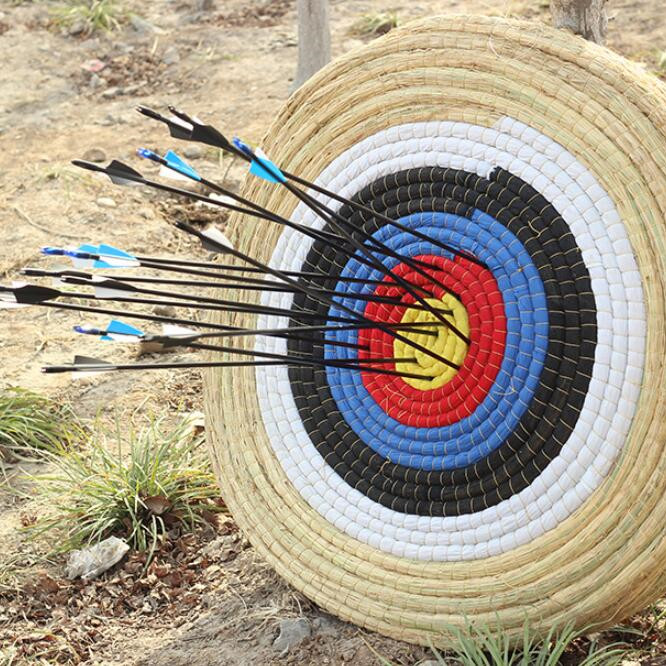
- Trueflight Feathers: The industry standard for natural feather fletching. Available in full-length, die-cut shield, and parabolic shapes. Their 4-inch and 5-inch shield-cut feathers are the most popular for traditional bowhunting.
- Gateway Feathers: Another top-quality feather option with a wide color selection and consistent quality.
Common Fletching Mistakes and How to Fix Them
Even experienced archers make fletching errors. Here are the most frequent problems and their solutions:
1. Vanes Peeling Off
This is almost always a surface preparation issue. The shaft was not cleaned thoroughly enough, or residue remained on the vane base. Fix: always clean with alcohol or acetone, let it dry completely, and use fresh glue. Avoid touching the cleaned surface with your fingers.
2. Inconsistent Arrow Flight
If some arrows fly well and others wobble, check for uneven fletching placement. A vane that is even slightly crooked or set at a different angle than the others will cause erratic flight. Use a spin tester to check — spin the arrow on a flat surface and watch the vanes. Any wobble indicates a problem.
3. Fletching Contact with the Rest
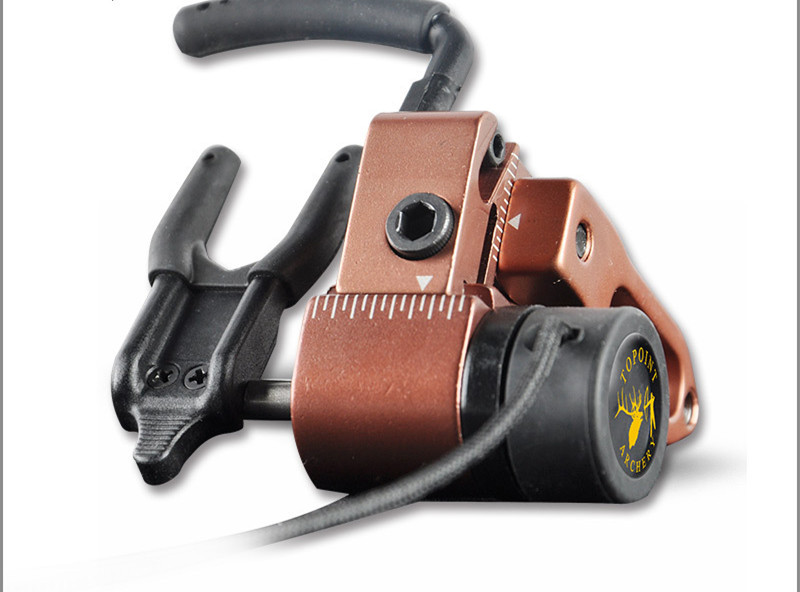
If you see scuff marks on your vanes or hear a “tick” sound at the shot, your fletching is contacting the arrow rest. Solutions include: rotating the nock so a different vane clears the rest, switching to a drop-away arrow rest (which eliminates contact entirely), using lower-profile vanes, or switching from vanes to feathers (which compress on contact).
4. Too Much or Too Little Glue
Too much glue creates a mess and adds inconsistent weight. Too little glue fails to bond. Apply a thin, continuous bead along the full length of the vane base — no gaps, no blobs.
5. Wrong Fletching Orientation for Your Broadhead
Fixed-blade broadheads need aggressive fletching (offset or helical with 3-4″ vanes) to counteract the broadhead’s planing effect. Mechanical broadheads are more forgiving and work well with shorter vanes and straight or offset orientations. Matching your fletching to your broadhead is essential for proper arrow tuning.

Three Vanes or Four? Choosing Your Fletch Count
Standard fletching uses three vanes spaced 120 degrees apart. However, four-fletch configurations (vanes spaced 90 degrees apart) have gained popularity in recent years, particularly among crossbow hunters and long-range compound shooters.
Three-fletch advantages: Lighter overall weight, less drag, easier clearance with arrow rests, and simpler jig setup. Three-fletch is the default for a reason — it works well for the vast majority of archery applications.
Four-fletch advantages: Faster spin-up (the arrow begins rotating sooner after leaving the bow), more forgiving of slight tuning imperfections, and improved stability with heavy broadheads. Some archers report tighter groups at 50+ yards with four-fletch configurations.
The trade-off is slightly more drag, slightly more weight, and potentially more rest-contact issues. If you shoot a drop-away rest and hunt with fixed blades at distances beyond 40 yards, four-fletch is worth testing.
YouTube: How to Fletch Arrows
Watch this detailed video tutorial from John Dudley of Nock On Archery, one of the most respected voices in competitive archery and bowhunting, showing the complete fletching process from start to finish:
Frequently Asked Questions About Arrow Fletching
How often should I replace my fletching?
Inspect your vanes before every shooting session. Replace any vane that is torn, creased, partially detached, or significantly worn. For high-volume target archers, this might mean reflectching every few months. For casual shooters, vanes can last a year or more.
Can I mix feathers and vanes on the same arrow?
No. Mixing materials creates inconsistent drag and weight distribution, resulting in erratic flight. Always use all vanes or all feathers on a single arrow.
Do fletching colors affect performance?
The color of your fletching has zero effect on aerodynamic performance. However, bright or high-visibility colors (like fluorescent orange, green, or white) make it significantly easier to track your arrow in flight and find it after the shot — a real advantage for bowhunters and 3D shooters.
What is a cock vane?
On a three-fletch arrow, the “cock” vane (also called the index vane) is the single vane that points away from the bow’s riser when the arrow is nocked. It is typically a different color from the other two “hen” vanes for quick identification. Proper cock vane orientation ensures optimal rest clearance.
Does fletching affect arrow spine?
Fletching does not change the static spine of an arrow shaft. However, it does affect dynamic spine (how the arrow flexes during the shot) by adding weight to the rear, which slightly reduces the effective FOC (front-of-center) balance. This effect is minimal with modern lightweight vanes but becomes more noticeable with heavy 5-inch feather fletching.
Sources
- Bohning Archery. “Blazer Vane Product Specifications.” shop.bohning.com
- Advanced Hunter. “Arrow Basics: Fletching with Feathers vs Vanes.” advancedhunter.com
- World Archery. “How to Fletch an Arrow with Plastic Vanes.” worldarchery.org
Browse archery bows, arrows, and accessories at the Archery Supplier shop →
Shop on Amazon
Archery Arrows on Amazon →
As an Amazon Associate we earn from qualifying purchases.
