
Archery Blog
Broadhead Grain Weight: 100 vs 125 Grain for Bowhunting
Jul
A 100-grain broadhead and a 125-grain broadhead sit 25 grains apart — roughly the weight of a single dime split into six pieces. Yet hunters argue about that gap on forums every August like it decides the season. It rarely does. What the debate really hides is a more useful question about how broadhead grain weight shapes arrow speed, balance, and penetration once the arrow leaves the string. Get that relationship right and the exact number stamped on the ferrule becomes almost an afterthought.
What Does Broadhead Grain Weight Actually Mean?
Grain weight is a unit of mass, not size. One grain equals 1/7,000th of a pound, so a 100-grain head weighs about 6.5 grams and a 125-grain head about 8.1 grams. That figure covers only the broadhead itself — not the insert, shaft, nock, or fletching. When you screw a 100-grain head onto a finished arrow, you are adding those 100 grains to the very front of a shaft that already weighs 300 to 500 grains on its own.
Broadheads come in a handful of standard weights: 75, 85, 90, 100, 125, 150, and 175 grains, with 100 and 125 doing the overwhelming majority of the work in the field. The reason 100 grains dominates is simple availability. Nearly every manufacturer builds their flagship head in 100 grains first, so you get the deepest catalog of blade counts, cutting diameters, and price points at that weight.
100 vs 125 Grain Broadheads: The Core Trade-Off
The honest version of this comparison fits in one sentence: more mass buys momentum and durability at the cost of speed and arrow drop. A 125-grain head carries more energy forward and tends to have a beefier ferrule that resists bending on bone. A 100-grain head keeps your arrow faster and flatter, which flattens your sight picture and buys forgiveness on misjudged yardage.
| Factor | 100 Grain | 125 Grain |
|---|---|---|
| Arrow speed | Faster (~3-5 fps) | Slightly slower |
| Trajectory | Flatter | More drop past 40 yds |
| Momentum / penetration | Ample for deer | Edge on heavy bone |
| FOC contribution | Standard | Higher |
| Model selection | Widest | Limited |
Across a chronograph the real-world speed gap between the two weights usually lands between three and five feet per second on a typical compound setup. You will not see that on an animal. Where 125 grains earns its keep is on elk, moose, or hogs behind a heavy shoulder, and for shooters chasing a specific FOC number.
How Broadhead Grain Weight Changes Your FOC
Front-of-center, or FOC, is the percentage of an arrow’s total weight sitting in the front half of the shaft. It is the single most useful number that broadhead weight influences. A higher FOC drives the arrow point-first and stabilizes it in flight, the same way a dart flies nose-heavy while a straw flutters. If you are new to this number, our primer on hunting arrow weight breaks down grains per pound in plain terms. Most bowhunters target an FOC between 10% and 15%, and heavier hunters chasing maximum penetration push toward 15% to 19%.
Adding 25 grains to the tip moves FOC roughly 1.5 to 2 percentage points on an average hunting arrow. That is a meaningful nudge if you are sitting at 9% and want to reach 12%. It is pointless if you are already at 14% and comfortable. The lesson is that grain weight is a tuning lever, not a badge — you choose it to hit an FOC target, not because a bigger number sounds tougher.
Does a Heavier Broadhead Penetrate Better?
Yes, but the effect is smaller than most hunters assume, and it comes from momentum rather than the grain number itself. Penetration tracks momentum — mass multiplied by velocity — and momentum is stubborn once it meets resistance, which is why a heavier arrow keeps driving through hide, muscle, and bone after a lighter one has stalled. A 25-grain bump at the tip raises total arrow momentum only slightly, so on a broadside whitetail lung shot, 100 and 125 grains punch nearly identical holes.
The story shifts on marginal shots. Catch a shoulder blade on a bull elk and the extra mass, paired with a stronger ferrule, is what keeps the head from deflecting or folding. If you hunt big-bodied animals or expect quartering angles, the heavier head is cheap insurance.
Grain Weight and Arrow Spine: The Connection Hunters Miss
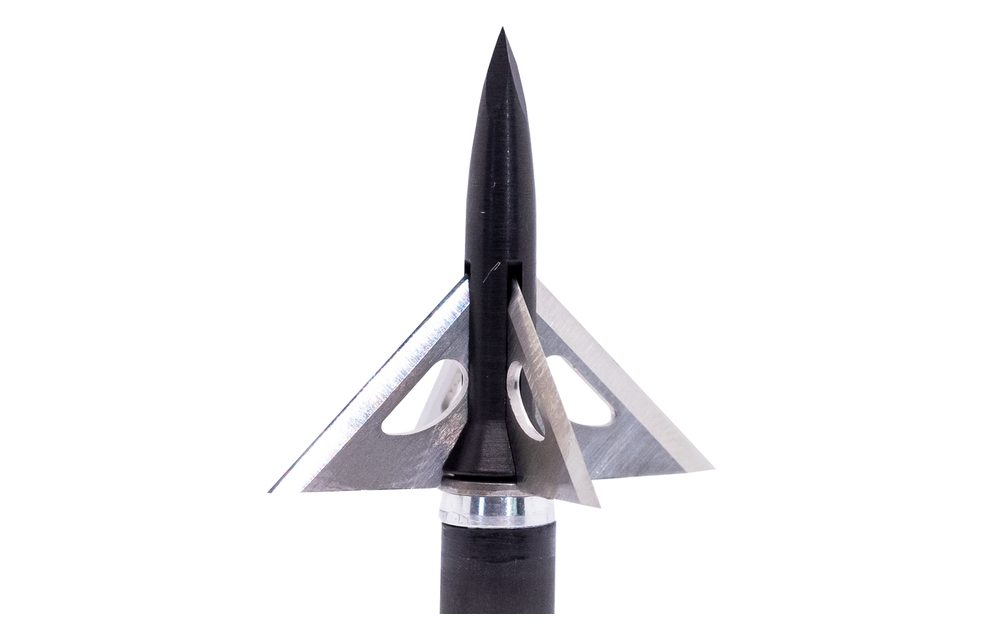
Here is the part that trips people up. When you add weight to the front of an arrow, you effectively weaken its dynamic spine — the shaft flexes more on release. Jump from a 100-grain to a 150-grain head without adjusting anything and a perfectly tuned arrow can start planing, tail-kicking, or hitting left of your field points. This is why swapping broadhead weight is never a plug-and-play decision.
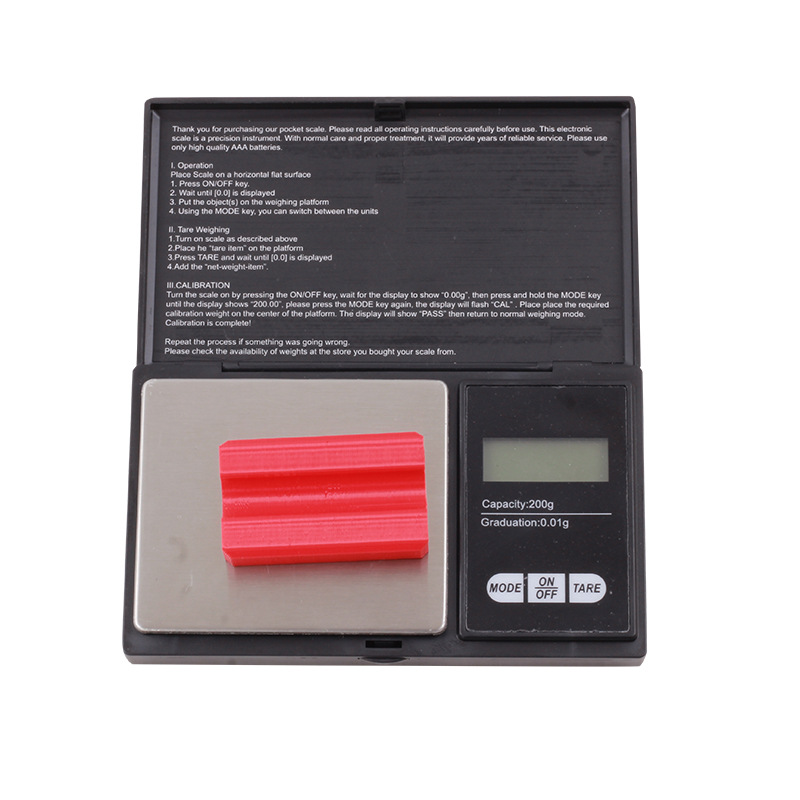
Every 25 to 50 grains you add up front may call for a stiffer spine, a shorter shaft, or slightly lighter fletching to rebalance the system. The safe move is to pick your broadhead weight first, then build the arrow around it — not the other way around. A grain scale earns its place on the bench here, letting you weigh finished arrows and match components so every shaft in the quiver flies to the same point.
What About 150-Grain and Heavier Broadheads?
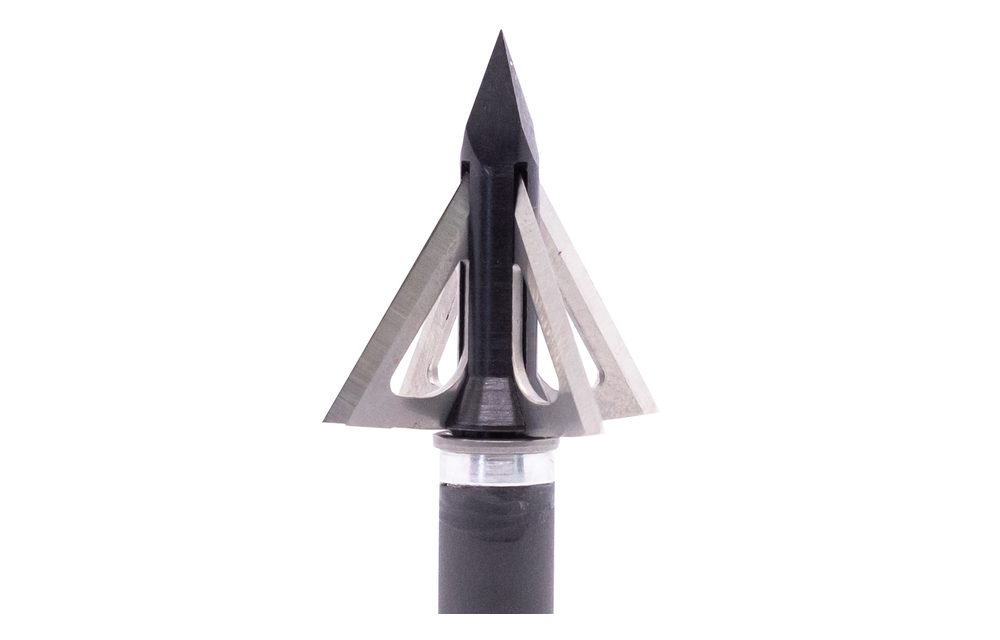
The heavy-head movement has real momentum right now, and for good reason. Traditional shooters and single-bevel devotees have run 150 to 200-grain heads for decades to build extreme FOC and bone-crushing penetration. On a modern compound, a 150-grain head can push FOC past 18% and turn a mid-weight arrow into a slow, deep-driving projectile.
The catch is trajectory and tuning difficulty. A 150-grain head noticeably drops your arrow past 40 yards and demands a stiffer spine to fly clean. Unless you are hunting the largest North American game or committed to a heavy-arrow philosophy, the extra mass solves a problem most whitetail hunters do not have.
How to Choose the Right Broadhead Grain Weight
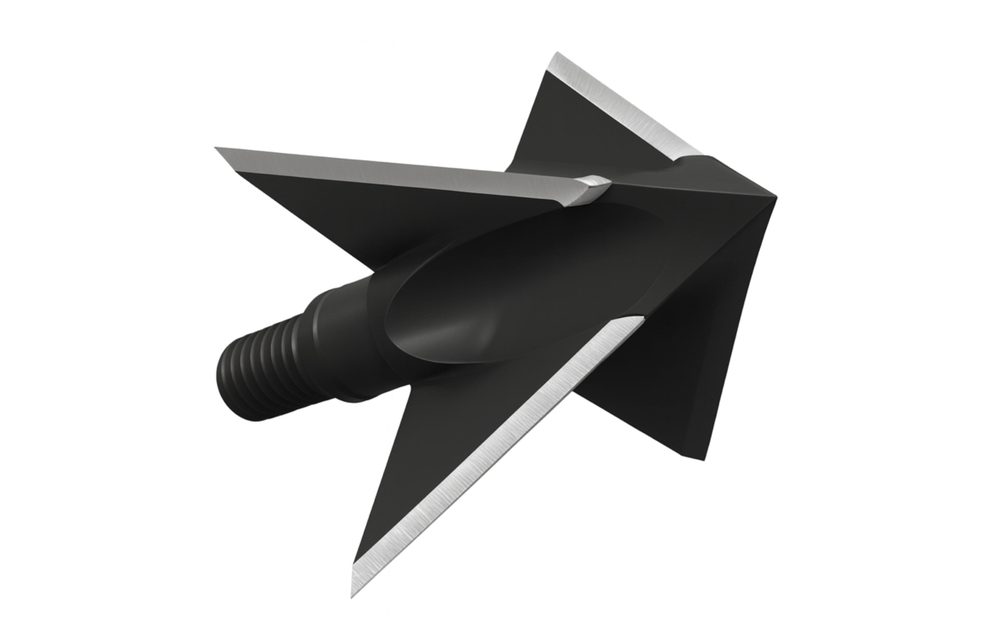
Match your broadhead grain weight to the field points you practice with, then let your target game and FOC goal break the tie. The overwhelming majority of hunters practice with 100-grain field points, so a 100-grain broadhead keeps your point of impact consistent with zero re-tuning. Only deviate when you have a specific reason.
- Whitetail, antelope, turkey: 100 grains. Fast, flat, and endless model options.
- Elk, moose, hogs, bear: 125 or 150 grains for extra momentum and a tougher ferrule.
- Low draw weight (under 55 lbs): 100 grains to preserve arrow speed and a usable trajectory.
- Chasing high FOC or deep penetration: 125 to 175 grains, rebuilt with matching spine.
- Traditional or single-bevel shooters: 150 grains and up is standard territory.
Whatever weight you land on, buy your field points to match. Practicing with 100-grain tips and hunting with 125-grain heads guarantees a point-of-impact shift you will discover at the worst possible moment.
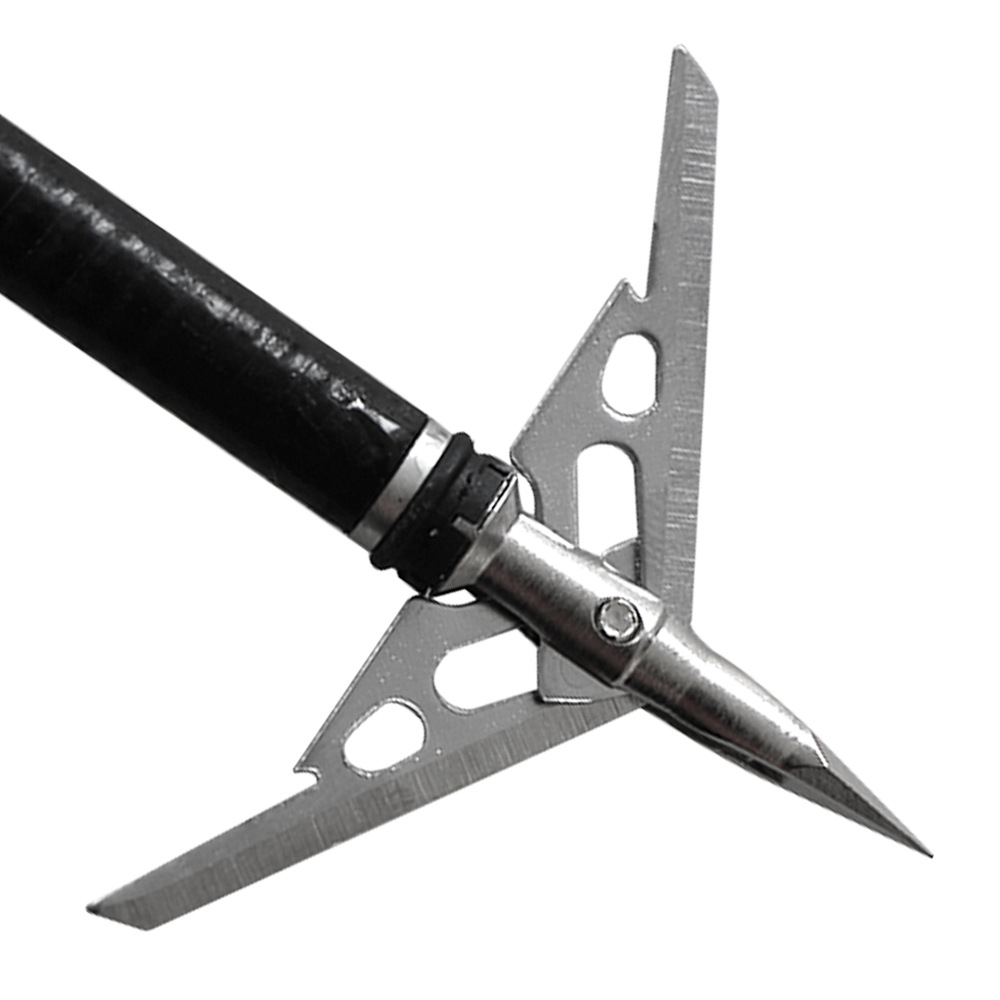
Common Mistakes When Matching Broadhead Weight
The most expensive error is changing broadhead weight late in the summer and skipping a re-tune. Blades that flew with your field points in June can drift three inches off at 30 yards once you swap to a heavier head, because dynamic spine changed and nobody checked. Give any weight change two weeks of broadhead practice before opening day.
The second mistake is chasing grains for their own sake. A 125-grain head bolted onto an under-spined arrow penetrates worse than a 100-grain head on a properly tuned shaft, because a wobbling arrow bleeds energy on impact. And the third is ignoring your own draw weight — a 45-pound setup does not need a 150-grain anchor dragging its trajectory into the dirt. Weight helps only when the whole system is built to carry it. If your heads are flying true, dial in the edge next with our broadhead sharpening guide before the season opens.
The Bottom Line
Pick your broadhead grain weight the way you’d pick tire pressure — by the load you’re carrying, not by the biggest number on the shelf. For most hunters chasing whitetails with a modern compound, 100 grains is the right default and always has been. Reach for 125 or heavier when you have a concrete reason: bigger game, a higher FOC target, or a shaft you’re rebuilding around it. Then commit, re-tune, and put in the reps. A well-matched 100-grain head in a confident shooter’s quiver kills cleaner than a heavy head that never got sighted in. For the next step, dial your whole arrow in with our guide to arrow weight and FOC tuning.
Sources
- Outdoor Life — The Easiest Way to Tune Your Bow for Broadheads — practical broadhead-to-field-point tuning process and impact testing.
- Petersen’s Hunting — Why Aren’t You Shooting 125-Grain Broadheads? — the case for added forward mass and FOC.
- Field & Stream — How to Broadhead Tune for In-Field Accuracy — spine and centershot’s role in true broadhead flight.
Browse archery bows, arrows, and accessories at the Archery Supplier shop →
