Archery Blog
Olympic Archery Perfect Score: 719 Out of 720

Mar
On March 5, 2026, in Mexico City, a 22-year-old compound archer did something no one in the history of the sport has ever done. Sebastian Garcia stood at the shooting line during phase three of Mexico’s national selection trials, drew his compound bow 72 times, and put 71 of those arrows into the 10-ring — an eight-centimetre circle at 50 metres — finishing with a score of 719 out of a possible 720.
One arrow. One single point. That’s all that separated Garcia from absolute perfection.
The score doesn’t just set a new Mexican national record. It exceeds the current World Archery world record of 718, shot by American Braden Gellenthien at the USA Archery National Target Championships in Decatur, Alabama, on July 13, 2016. But because Mexico’s selection trials were not registered on the international calendar, Garcia’s 719 cannot be ratified as an official world record under World Archery rules.
It doesn’t matter. The arrows don’t lie. No compound archer in history has ever scored higher in the outdoor 72-arrow round.
What Is the 720 Round?
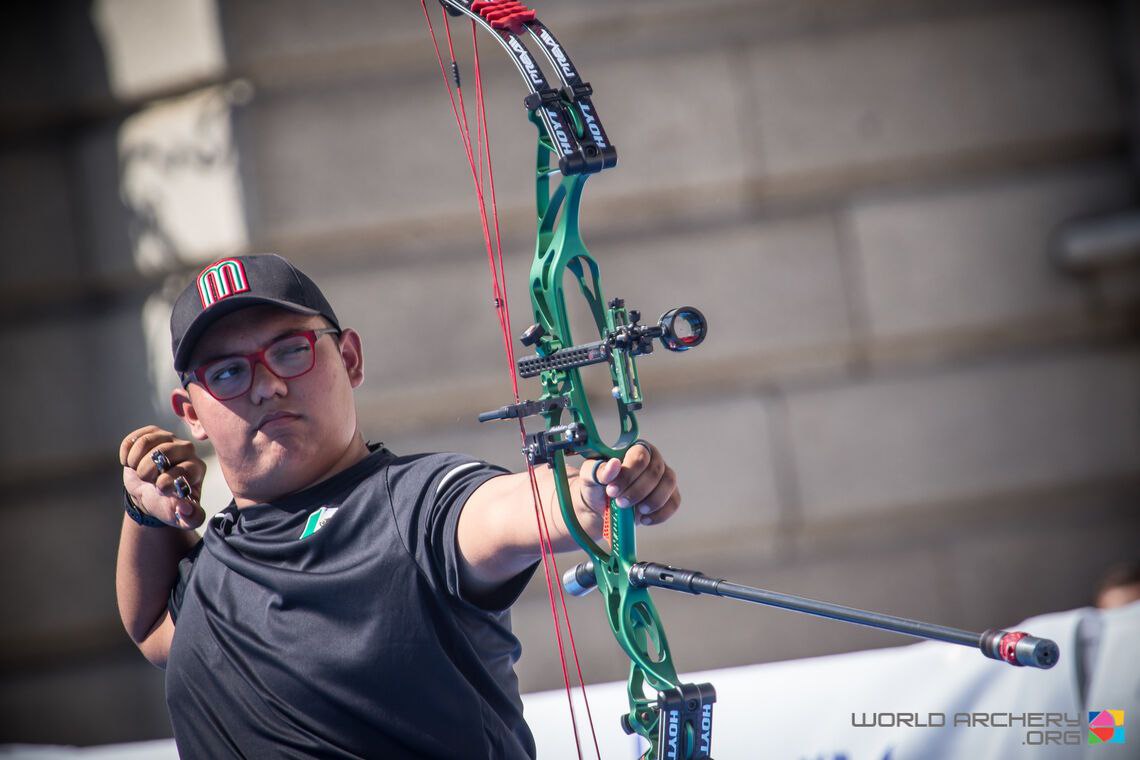
For those unfamiliar with target archery’s scoring format, the 720 round is the standard qualification format used in international competition, including the Olympic Games and World Archery events. Archers shoot 72 arrows at a target face divided into concentric scoring rings, with each arrow worth a maximum of 10 points. A perfect score: 720.
Compound archers shoot at 50 metres. Recurve archers shoot at 70 metres. The target face for compound uses a smaller inner-10 ring — just 8cm in diameter at 50 metres. That’s roughly the size of a standard baseball, viewed from half a football pitch away.
The arrows are shot in 12 ends of six arrows each. Each end, the archer walks to the target, scores, pulls arrows, and walks back. Twelve times. Six arrows at a time. At this level, every single shot is a 10 or a 9. The margins are vanishingly small — the difference between a world record and a merely excellent score often comes down to a single millimetre of arrow placement.
To understand Garcia’s 719: he shot 71 perfect 10s and one 9. Out of 72 arrows. At 50 metres. In competition conditions, under the pressure of national team selection.
A Brief History of the Compound 720 World Record
The compound men’s outdoor world record has always been one of the sport’s most closely watched benchmarks. Unlike recurve archery, where scores in the 690s are considered world-class, compound archers routinely operate in the 700-710 range at major events. The very best push into the 710s.
Braden Gellenthien’s 718, set in July 2016, has stood as the official world record for nearly a decade. To put that in perspective: 718 out of 720 means hitting the 10-ring on 70 out of 72 arrows, with two 9s. That was considered an almost unfathomable level of precision when it happened.
Garcia just beat it by a point — and did it in his own country’s domestic trials, not at an international competition. The irony isn’t lost on the archery world: the highest score ever recorded in this format cannot officially be called a world record because of where it was shot.
Who Is Sebastian Garcia?
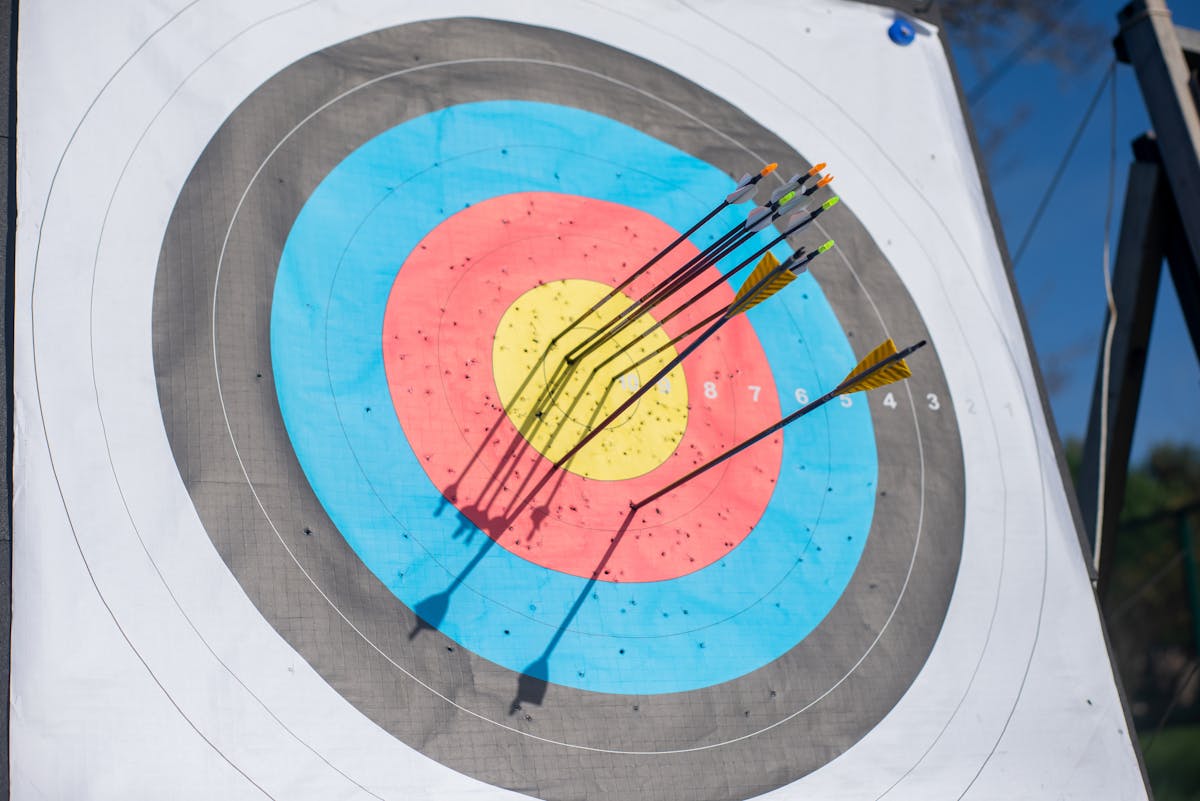
Garcia isn’t an unknown quantity. He’s one of Mexico’s most accomplished compound archers and has been competing at the international level since his teenage years. In 2019, at just 15 years old, he became Mexico’s first outdoor individual world champion when he won the compound cadet men’s gold at the World Archery Youth Championships in Madrid, beating Russia’s Daniil Kosenkov 146-142 in the gold medal match.
Since then, Garcia has been a fixture on Mexico’s national compound team. At the 2025 Hyundai Archery World Cup in Central Florida, he seeded first in the compound men’s qualifying field with a 709, outscoring world number one Mike Schloesser (707) and World Cup Final silver medallist Mathias Fullerton (707).
Now 22, Garcia appears to be entering his prime. And his 719 suggests that the ceiling for this sport hasn’t been reached yet — not even close.
Why Can’t 719 Be an Official World Record?
World Archery has specific requirements for a score to be ratified as an official world record. The competition must be registered on the international calendar, with approved judges and proper documentation procedures in place. National selection trials, like the Mexican event where Garcia shot his 719, typically aren’t registered in this way.
This isn’t a new problem. Throughout the history of competitive archery, some of the most extraordinary performances have occurred at domestic events that fall outside the ratification framework. The system exists for good reason — it ensures standardised conditions and independent verification — but it means the record books don’t always reflect the full truth of what’s been achieved on the shooting line.
Garcia’s score was achieved in official competition conditions under the governance of the Mexican Archery Federation. It was real. It counted for team selection. It just doesn’t count for World Archery’s record books.
The Math Behind Near-Perfection
Let’s break down what 719/720 actually means in practical terms, because the numbers alone don’t capture how absurd this performance is.
The compound target face at 50 metres uses a 10-ring that measures 80mm (8cm) in diameter. The inner X-ring — used for tiebreakers — is just 40mm across. From 50 metres, the 10-ring subtends an angle of about 0.09 degrees. For reference, a human hair held at arm’s length subtends roughly the same angle.
Garcia hit that circle 71 times in a row (with one near-miss that still landed in the 9-ring). Consider what that demands: identical body position, identical draw length, identical anchor point, identical release, identical follow-through — 72 times, under pressure, in outdoor conditions where wind, light, and temperature can all shift between ends.
A compound bow helps. The let-off at full draw, the magnified sight, the mechanical release — all of these reduce human error compared to a recurve bow. But they don’t eliminate it. At this level, the archer isn’t fighting the bow. The archer is fighting their own nervous system, their own heartbeat, their own breathing pattern. Every micro-tremor in a finger, every slight shift in shoulder alignment, every gust of wind sends the arrow somewhere other than dead centre.
To score 719, Garcia had to control all of that to within millimetres, 72 times. And he only missed once.
Indoor Perfection Has Already Happened
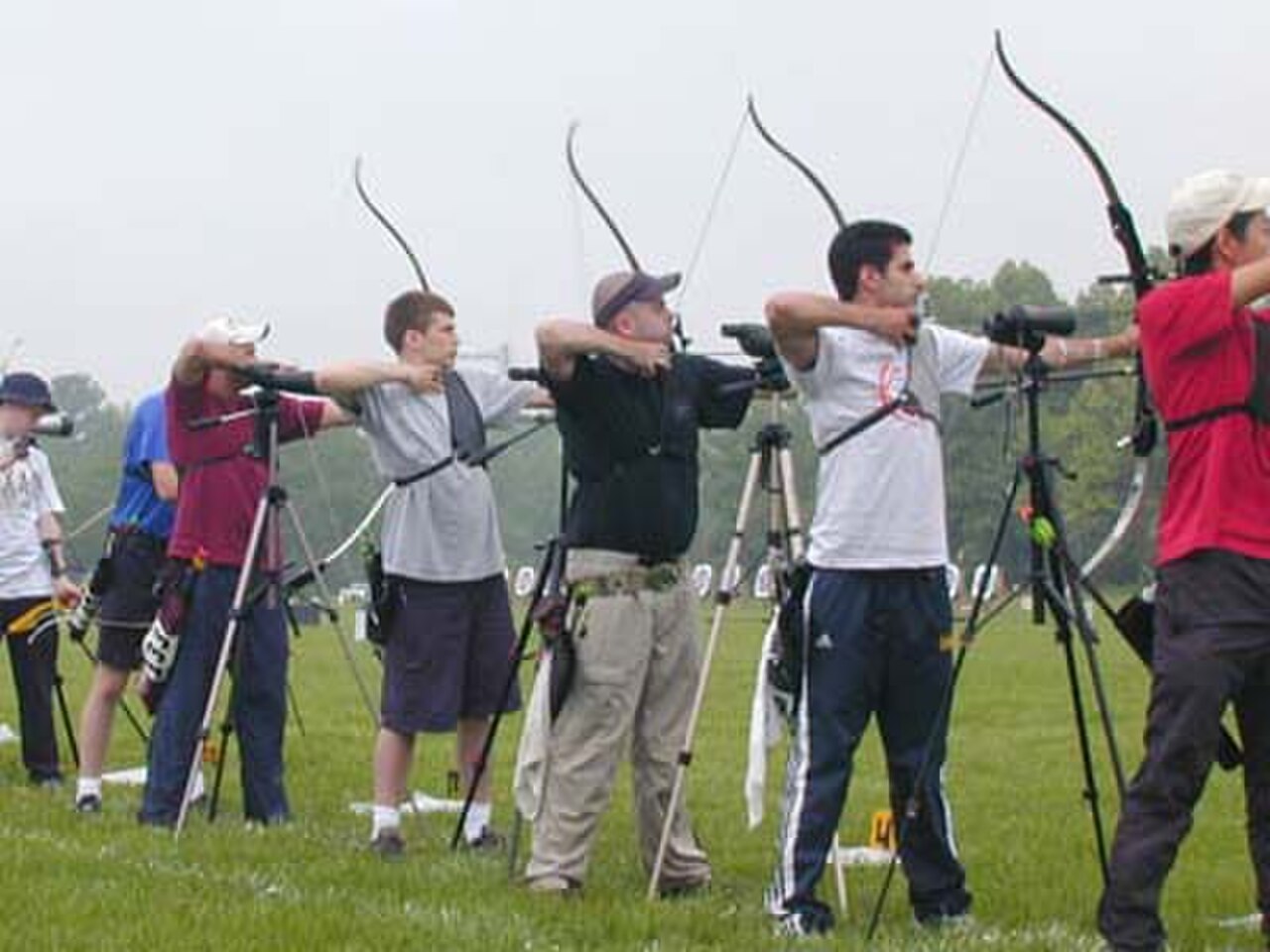
To appreciate where outdoor archery stands, it helps to look at what’s happened indoors. The Netherlands’ Mike Schloesser was the first to shoot a perfect 600 out of 600 in the men’s compound 18-metre indoor round — and that record has since been tied by at least four other archers.
Indoor archery at 18 metres is a fundamentally different challenge from outdoor archery at 50 metres. The target is closer, there’s no wind, temperature is controlled, and lighting is consistent. That’s not to diminish indoor perfection — it’s an extraordinary achievement — but it explains why a perfect outdoor score remains the sport’s ultimate frontier.
Garcia’s 719 shows that frontier is now within reach.
Who Will Shoot the First Perfect 720 Outdoors?
This is the question that Garcia’s score has thrust to the forefront of compound archery. If someone can shoot 719 at a domestic trial, it’s not a question of if a perfect 720 will happen outdoors — it’s a question of when and who.
The obvious candidates include Garcia himself, who has now proven he’s capable of operating at that level. Braden Gellenthien, the current official record holder, remains one of the most consistent compound archers in history. Mike Schloesser, the indoor perfection pioneer, is always in the conversation. And the depth of talent in countries like Colombia, India, Turkey, and South Korea means the first perfect 720 could come from almost anywhere.
There’s a certain poetry to the chase. In a sport defined by precision, the pursuit of mathematical perfection — every arrow in the 10-ring, no room for a single error — represents the ultimate test. It demands not just technical skill but mental fortitude of a kind that very few athletes in any sport ever achieve.
Garcia came within one arrow of crossing that line. Whoever does it first will cement their name in archery history permanently.
What Happens Next for Garcia and Mexico
Mexico’s national selection trials aren’t over. The final phase is scheduled for March 15, and the results will determine the country’s top eight archers — four men and four women — in both recurve and compound divisions for international competition. After his 719, Garcia’s spot on that team looks all but certain.
For the broader archery world, Garcia’s score is a signal. Equipment continues to improve. Training methods are more refined than ever. The athletes themselves are younger, stronger, and more mentally prepared than previous generations. If the trajectory continues, a perfect 720 outdoors isn’t a matter of years away — it could happen at the next major event.
We covered Garcia’s 719 and other major stories in our Weekly Archery Roundup for March 3-8, 2026. If you’re new to compound archery and want to understand the precision required at this level, check out our step-by-step compound bow tuning guide and our breakdown of how scoring works in target archery.
Until then, the number to beat is 719. One arrow from perfection. The clock is ticking.
